
When the Pose Followed the Dog: HSSA Editorial Staff Headshots in Tucson
Three days before the Humane Society of Southern Arizona's full staff portrait session, Cody Half-Moon and Sparky helped me find most of the problems with the set. I set up the studio in a different orientation, opened the working area around the V-flats, changed how people would move through the training room, and left the furniture available without assuming a dog would have any interest in using it.
On August 20, I rebuilt my mobile studio in the same HSSA training room and started putting those decisions to work. The background planes and directional lighting looked much like they had during the test, I finally had enough camera distance for the full-length portraits, and the room around the set had more space for handlers and animals.
Then the dogs arrived.
Keeping the portraits consistent without making the people identical
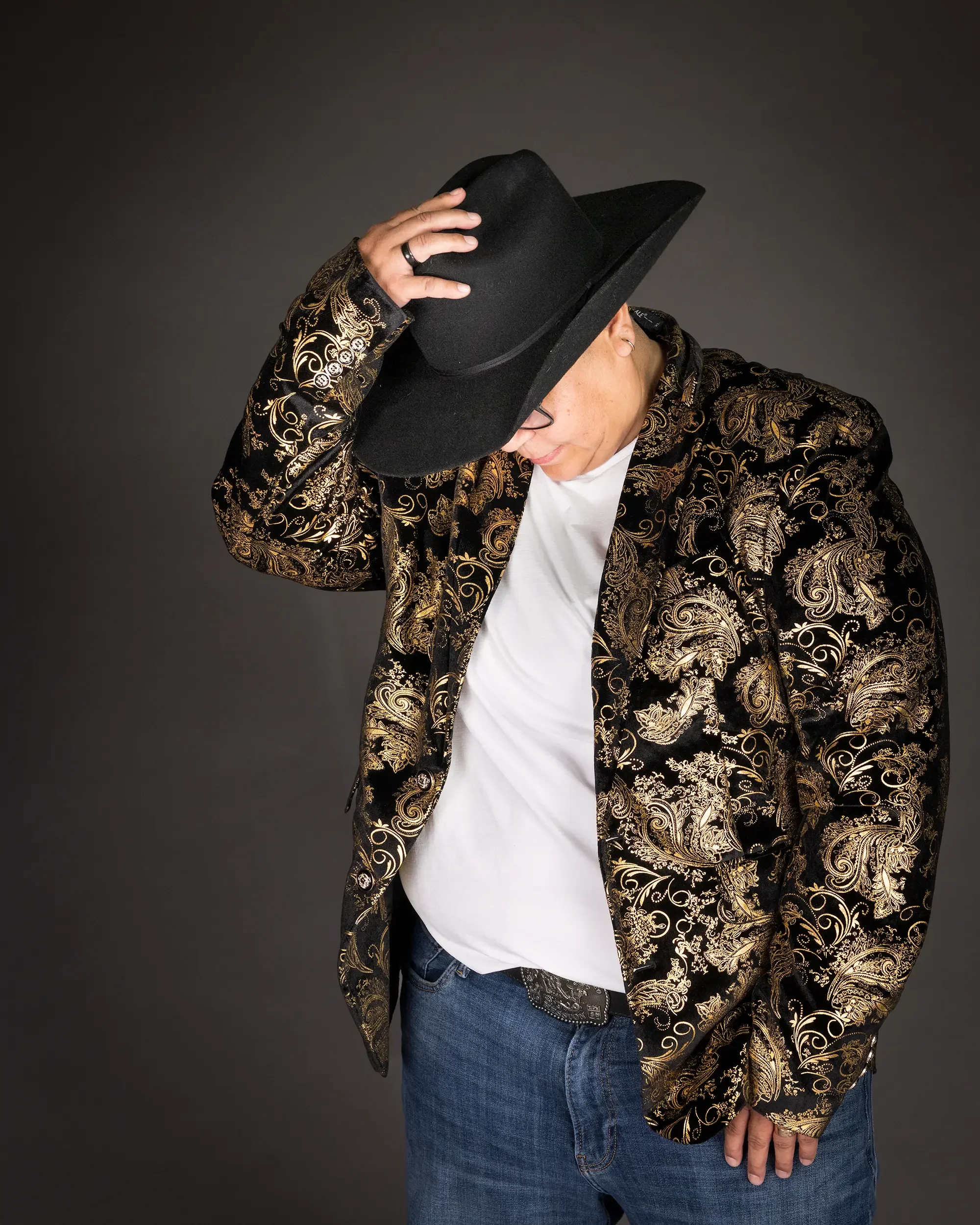
HSSA executives have a lot of style
Every staff member needed an individual portrait before we added an animal. That gave HSSA the flexible image library we had planned in the first place, and it also meant the visual consistency had to come from the lighting, background, finishing, and overall direction rather than asking everyone to stand in exactly the same pose.
That became clear fairly quickly. Some people naturally looked right with a straighter, more direct stance. Others needed more angle or movement before the portrait felt like them. One staff member used a cane, so we worked through standing and seated options that kept the cane accessible and comfortable while still fitting the visual language of the rest of the series. The background and light could stay consistent. The person didn't need to adapt to a pose designed for somebody else's body.
Wardrobe changed the photographs too. One staff member photographed first in a patterned shirt and later came back in a gold-and-black jacket. Same person, same set, same lighting, different professional signal. The jacket produced a sharper, more formal portrait, and looking at the photographs on the tether made that difference obvious while we could still do something about it.
That's one of the reasons I tether during commercial portrait sessions. The monitor isn't there only so someone can decide whether they like a smile. We can look at the expression, glasses, clothing, body position, background, and overall tone while the person is still standing in the room. If the photograph is saying something different from what they intended, we haven't discovered it two days later.
The pose followed the dog
The human portraits gave us a controlled starting point. The dogs removed most of the control.
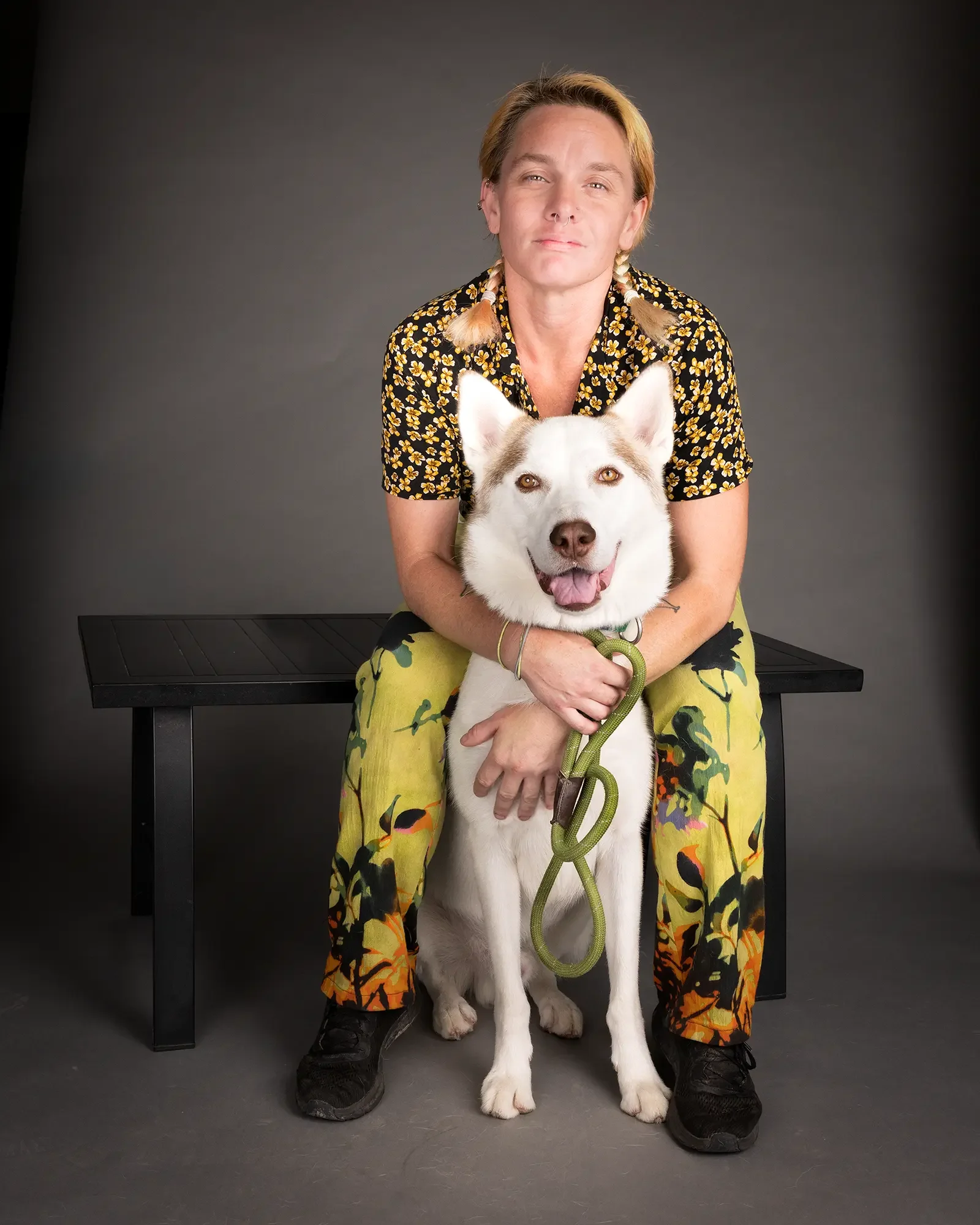
Another great example of high fashion at the HSSA.
With one large white dog, we started by trying to decide where the dog should sit relative to the person. Within a few minutes the more useful question was where the dog wanted to settle and how the person could join him there. At one point I said that I might have to adjust to him when he sat.
That became the working rule for much of the day.
One dog settled beside the person and produced the best expressions once they started interacting rather than concentrating on holding a fixed pose. Another large dog had little interest in toys or treats and cared much more about people. After trying different standing and seated arrangements, the staff member eventually joined the dog on the floor. Bringing their faces onto the same level produced the strongest interaction of that sequence.
A small dog created the opposite problem. Floor-level interaction made very little sense when the person could simply pick the dog up. Another fluffy dog was happiest being held, kissed, and settled into the staff member's arms. The person changed height, distance, and physical contact because each animal gave us a different answer to the same photographic problem.
The setup stayed recognizable throughout the day. The poses didn't.
Every dog had a different currency
I brought the usual collection of things that might attract an animal's attention. HSSA had handlers, treats, toys, food, and people who knew the dogs. None of those worked equally well from one animal to the next.
Some dogs worked for food. Peanut butter made an appearance during one session, including a point where getting the dog and person into roughly the same visual plane mattered more than preserving anyone's dignity around the peanut-butter spoon. Later in the day, a particularly crunchy piece of cow jerky became useful enough that the room stopped briefly to discuss just how unpleasant it sounded.
Other dogs cared very little about food. Toys could create interest in one dog and too much excitement in another. Some responded to a handler just outside the frame. Some gave us a better expression when the person stopped looking at me and interacted directly with them. The equipment kit can be standardized but the animal can't.
That matters because a dog's look toward the camera is often a very short event. During one session, the practical instruction became simple: anytime the dog looked at the camera, that was the photograph. I didn't need the dog to maintain eye contact while I refined the pose for another ten seconds. I needed the person ready, the light ready, my framing ready, and everyone else to recognize that the glance itself might last less than a second.
Connection created the expression
The photographs I like most from the day tend to happen after the staff member stops trying so hard to make a portrait.
Someone leans toward the dog. Someone gets down on the floor. A small dog gets lifted into someone's arms. A staff member kisses the dog they are holding. Another dog settles beside the person and finally gives us the physical relationship we had been trying to arrange a few minutes earlier. Those interactions weren't breaks between the posed photographs. They were often the reason the posed photograph worked.
This is also where the editorial treatment we planned made sense as a cohesive series. The individual portraits can introduce these people as executives, veterinarians, program leaders, fundraisers, communicators, and other professionals. The photographs with animals put the same people back into the work that connects all of those roles. HSSA doesn't have to ask one photograph to do both jobs every time.
Reviewing before someone leaves
The tether stayed useful all day. We could make a portrait, walk a few feet to the monitor, and see whether the expression, body position, clothing, glasses, dog position, and overall feel were actually doing what we thought they were doing. That feedback was important to me, the HSSA creative team lead by Cody, and to each person having their portraits made. Seeing the result immediately meant we could make adjustments if needed and we could stop when we had the shot.
By the end of the day, the process had become fairly consistent: make the individual portrait, review it, bring in the animal, find the version of the pose that worked for that particular pairing, and check the result before anyone left. The consistency came from experience and by developing the system around the portrait rather than from expecting the people or dogs to repeat the same behavior, from person to person, and from animal to animal.
