
Unseen: Kentucky | Fine Art Infrared Imagery
Series Introduction
I moved to Lexington, Kentucky, in 2001. I started taking photography seriously there, began graduate school there, and built the first version of the career I still have. By the time I started this series in 2007, Kentucky had long since stopped feeling like a place I had moved to. It was home.
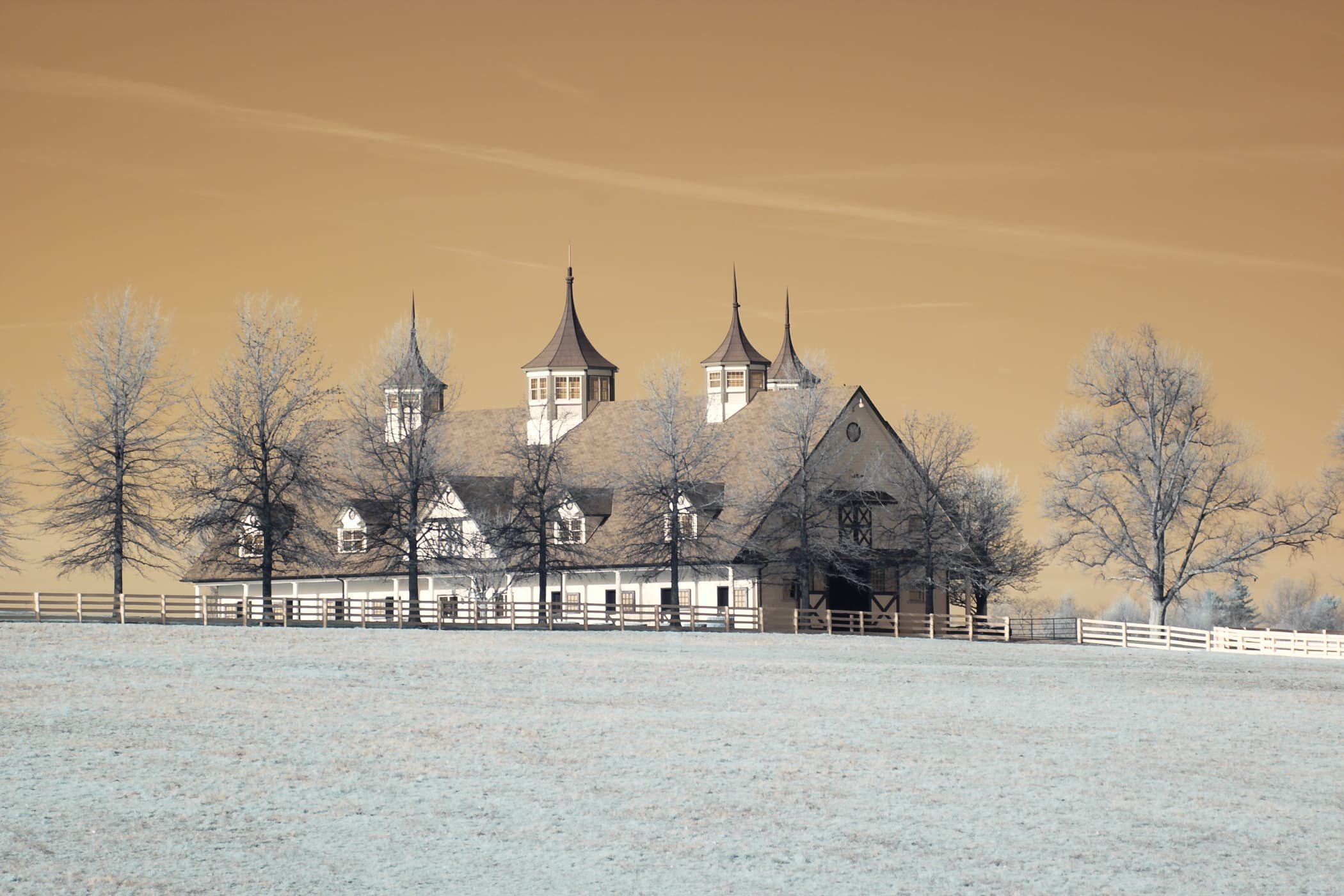
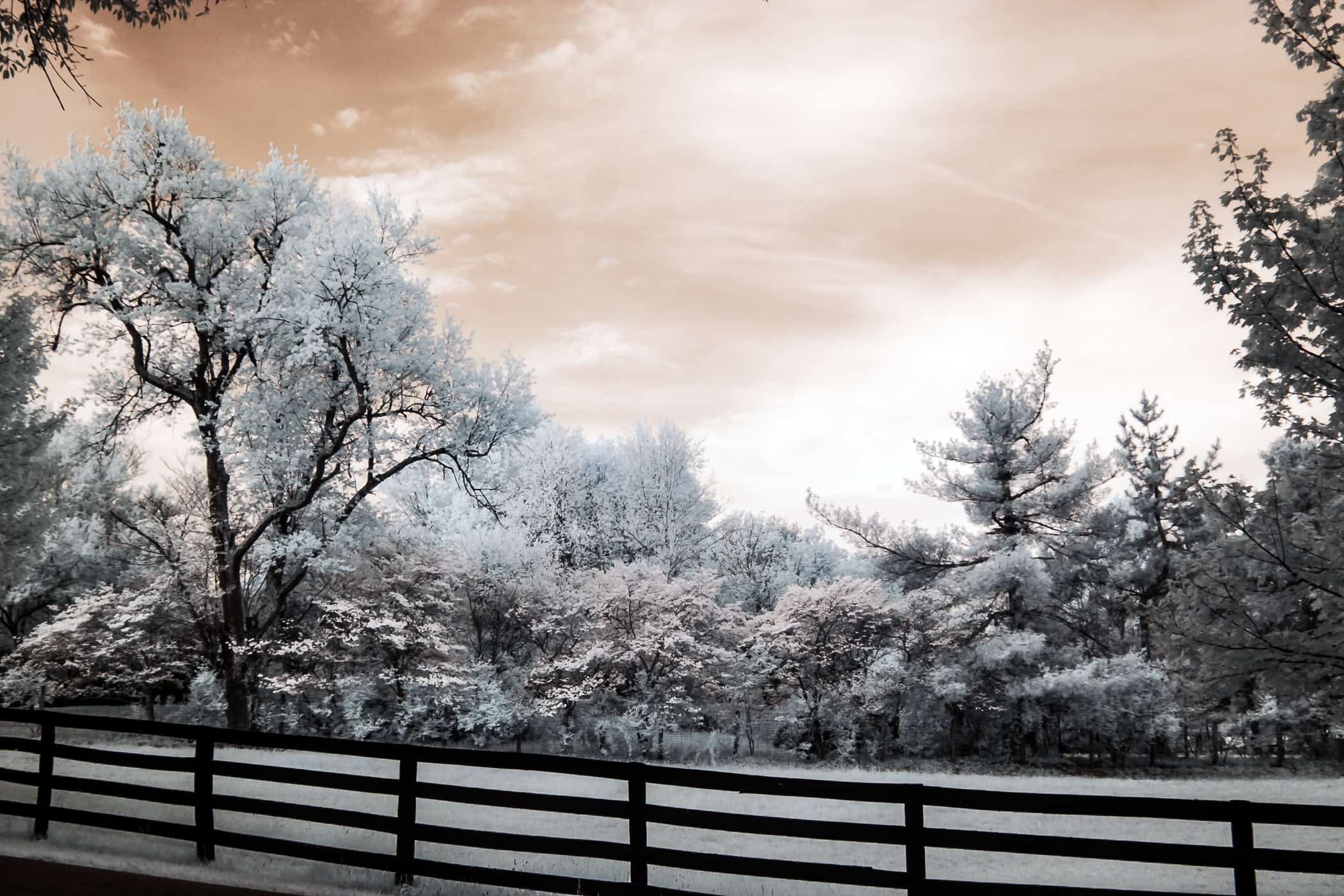
I lived about three miles from Keeneland Race Course, in a neighborhood built on what had once been a horse farm. The developers had kept the black plank fencing, so even the suburban streets carried traces of the landscape around them. Drive a few miles toward Keeneland and the houses gave way to thoroughbred farms, stone entrances, long fences, and barns built with the kind of money that changes what the word barn means.
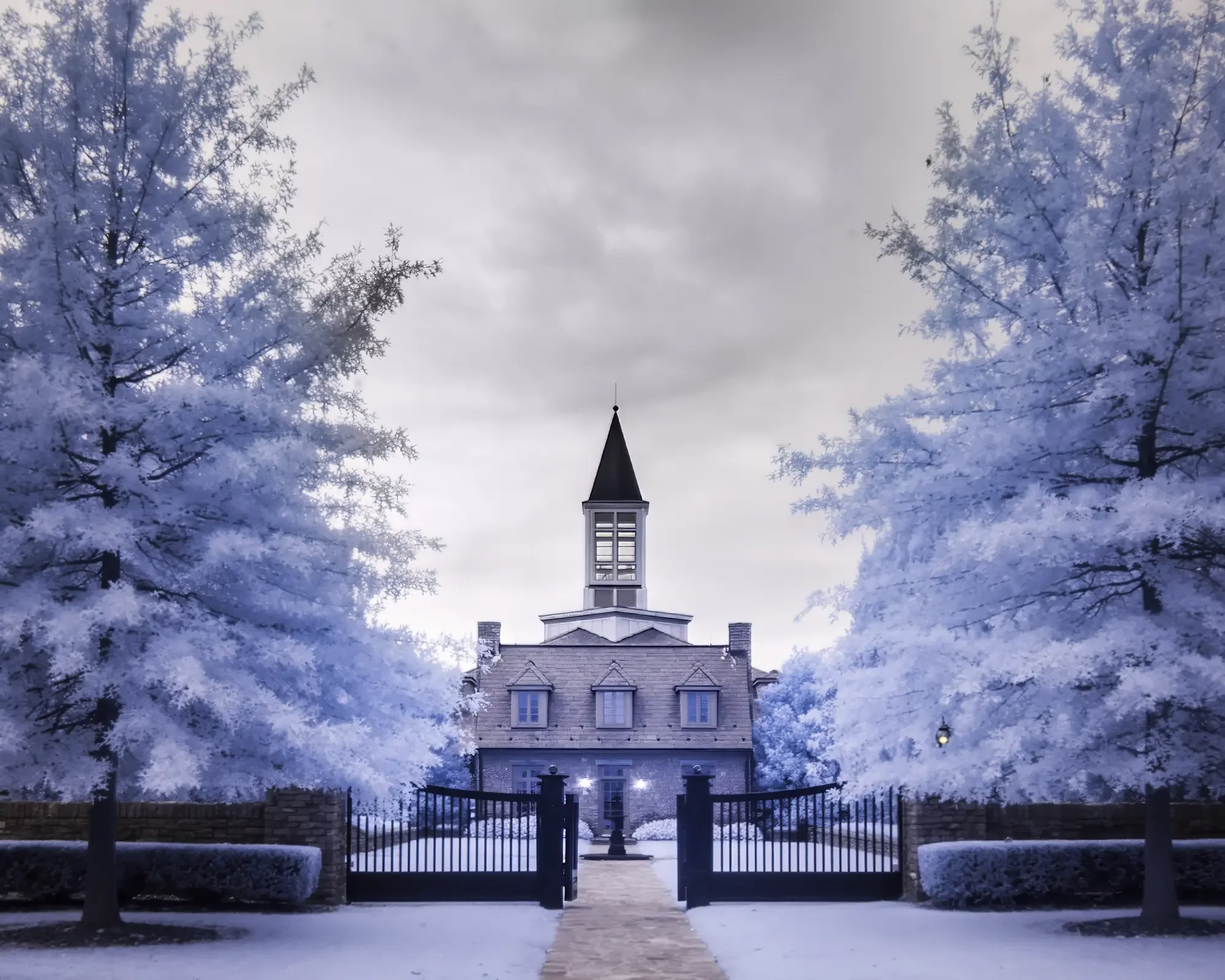
I had begun experimenting with a camera modified to record infrared light. I originally thought it might offer an interesting way to photograph animals. It did not. Fur absorbed and reflected the light in ways that muted much of what I wanted from an animal portrait, so I pointed the camera somewhere else.
Kentucky gave me plenty to point it toward.
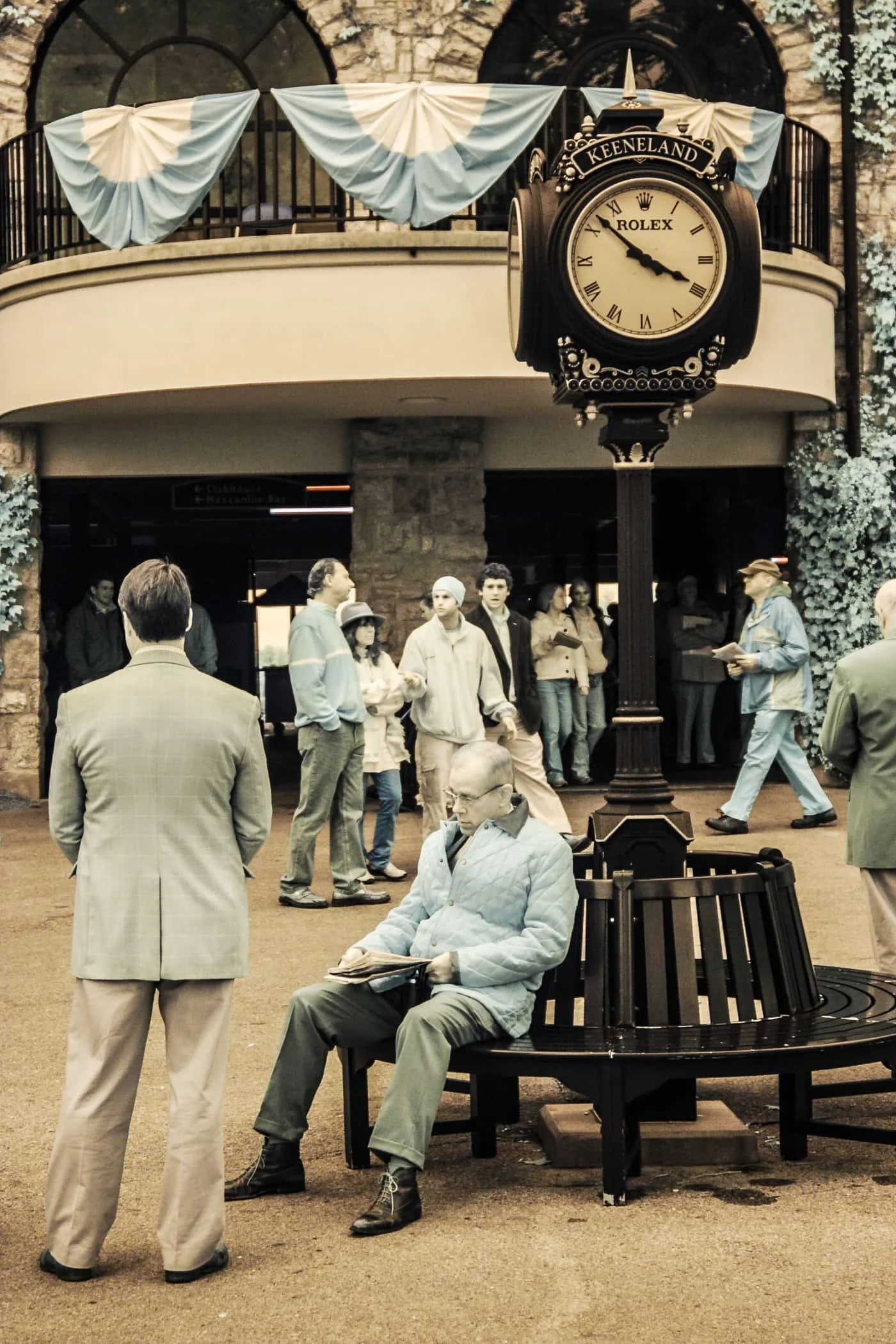
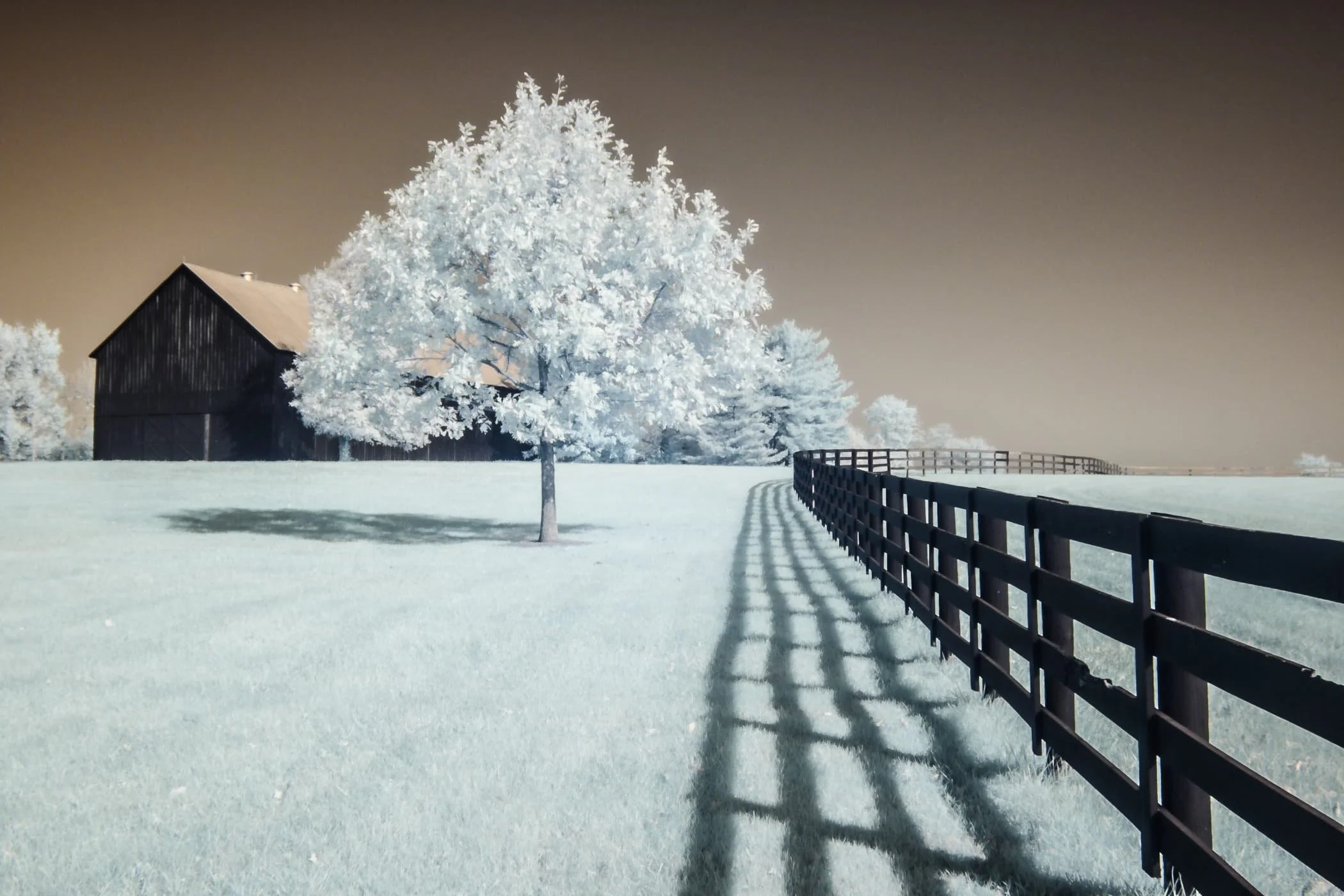
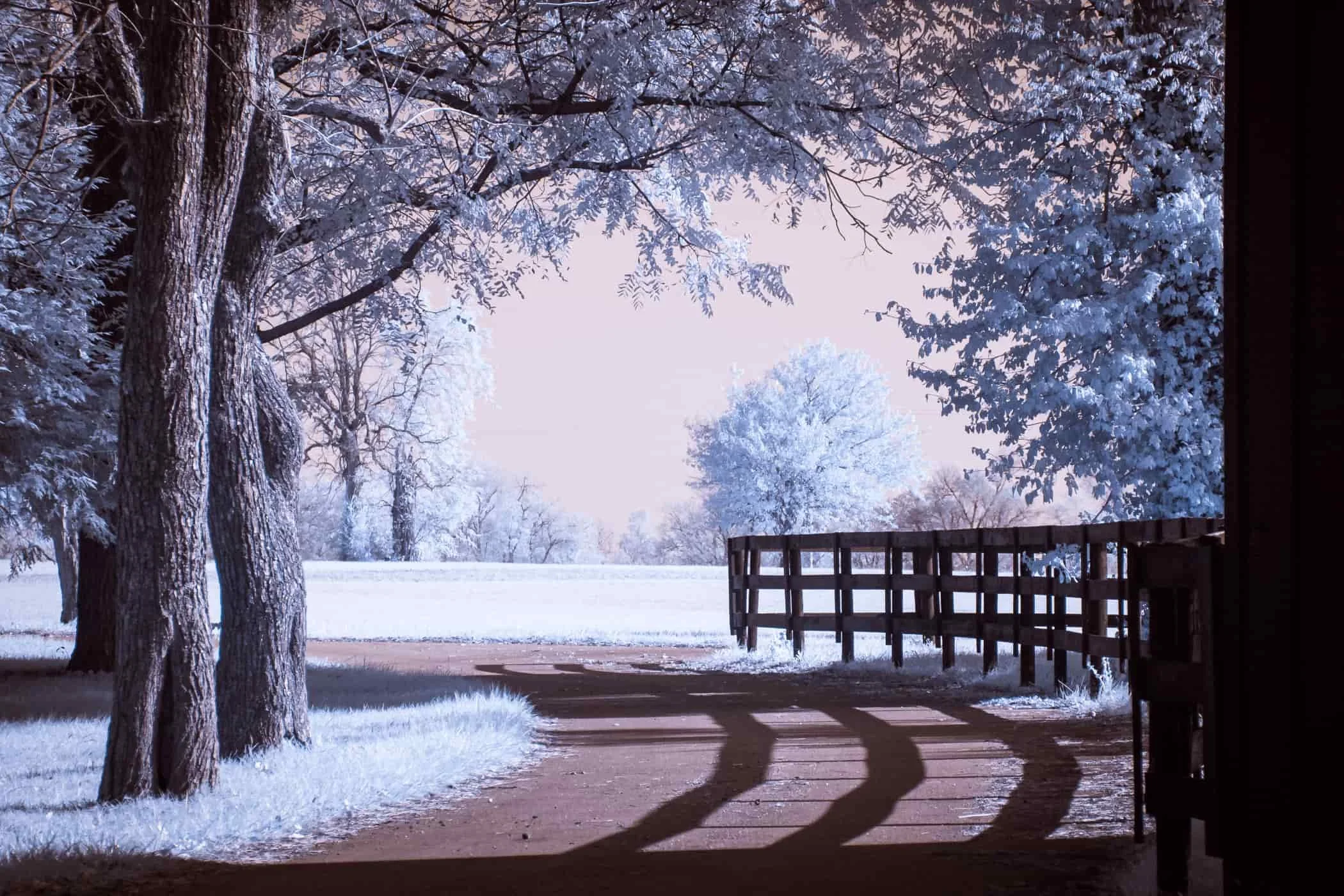
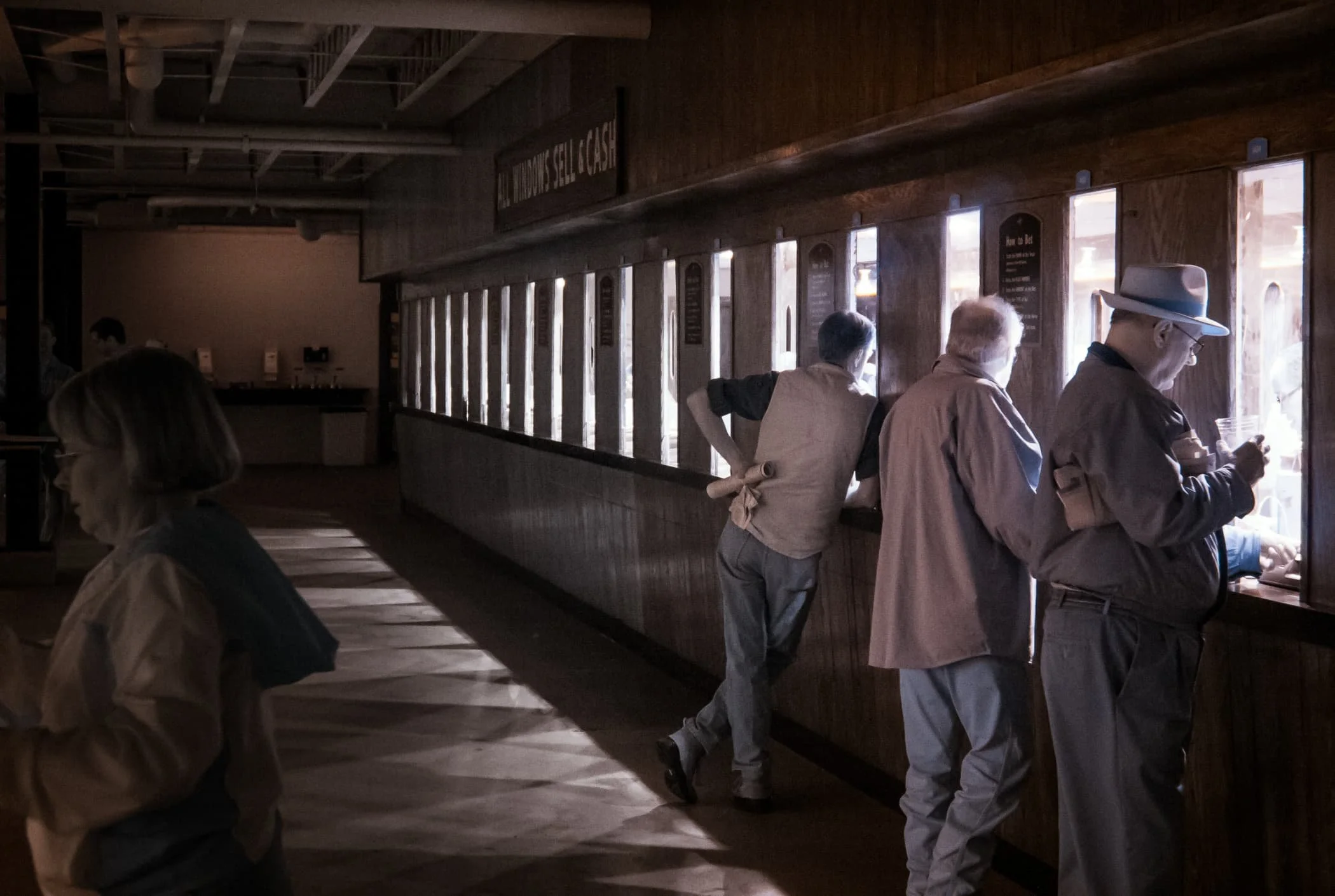
Keeneland presents several versions of itself at once.
On race days, people arrive for the horses, the betting, the burgoo, and the experience of being at Keeneland. The Rolex clock is prominent enough that nobody could mistake the economics surrounding the place. Some visitors wear suits. Others arrive in sweaters or jeans. Between races, they share the same terraces, concession lines, and patches of shade.
Keeneland Race Interlude records one of those ordinary pauses. Nothing decisive is happening. People wait beneath the clock while the spectacle resets for the next race. That mixture of formality and familiarity matched the Keeneland I knew.
A different version existed just outside the main event. Visitors drove past fields and tree lines while looking for parking, then walked toward the track without much reason to examine what they had passed. On weekday mornings, people trained horses on the grounds with little ceremony. You could show up, watch, and make photographs. The place that felt highly controlled on race day became casual when the crowd left.
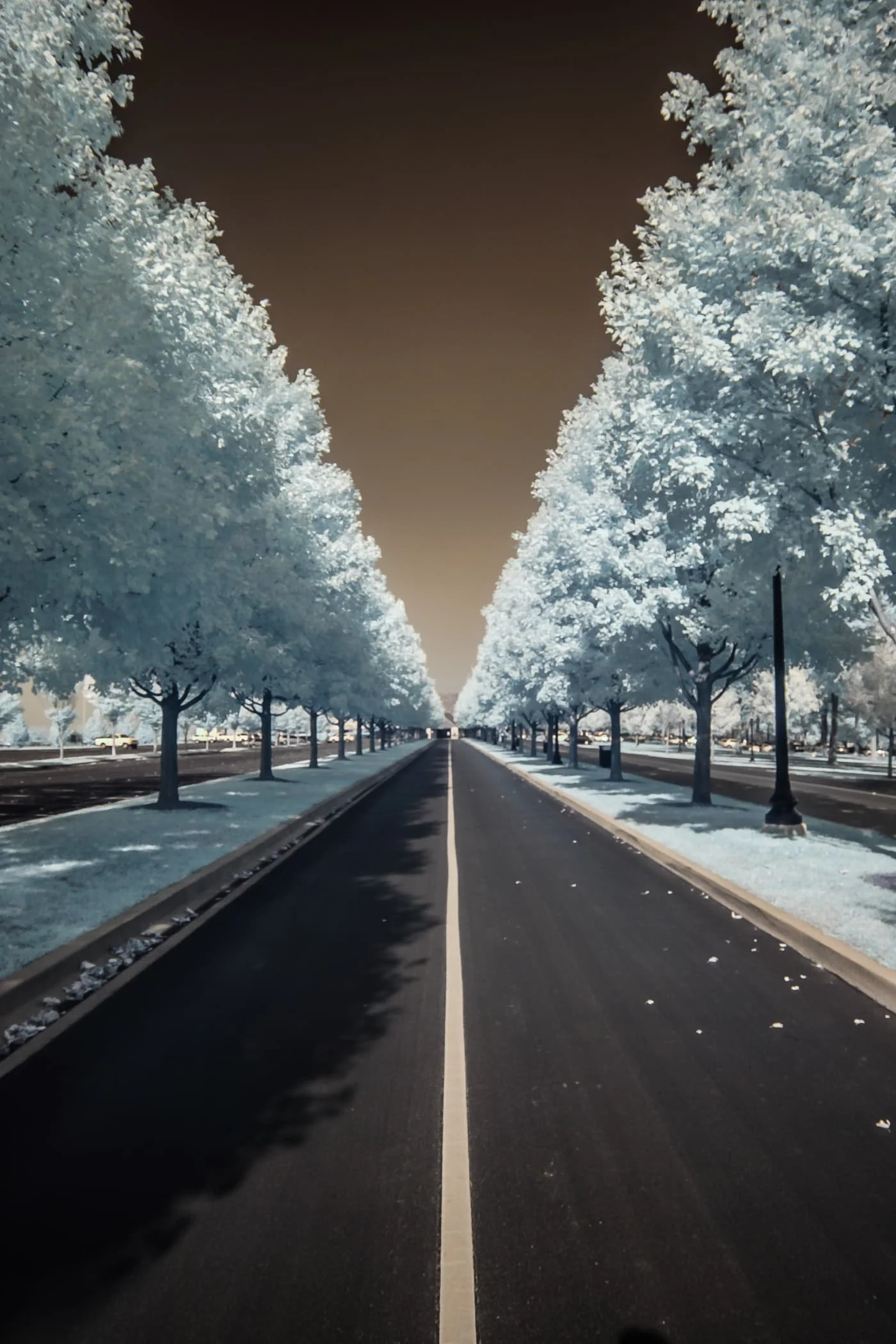
Summer Reverie at Keeneland and Ethereal Keeneland came from that adjacent landscape. Both sit close to the public entrance, but neither depends on the race itself. They look toward the place beside the attraction, which often interests me more than the attraction.
The farms worked the same way. From my house, I could reach some of the most elaborate thoroughbred properties in the region in a few minutes. Manchester Farm was about four miles away. Through relationships connected to Woodford Humane Society, I also gained access to farms that I could not have entered simply by pulling off the road, including Ashford Stud.
That access changed what I could photograph. From the road, I could see gates, fences, and distant buildings. Once I knew people connected to the farms, I could enter spaces that had previously existed as part of the background of daily life.
Related Work: Woodford Humane Society Freedom Fest
Woodford Humane Society’s Freedom Fest fundraiser brought interior designers into working breeding barns and asked them to turn individual stalls into dining rooms.
They worked around the existing wood walls, stall rails, barred windows, and exposed ceiling structure, adding formal place settings, chandeliers, curtains, artwork, flowers, and furniture. One stall might hold gold chairs and black goblets. Another became a blue-and-yellow room built around custom china and a centerpiece filled with lemons.
The transformations were elaborate, but the stalls never stopped looking like stalls.
That tension said a great deal about the horse culture around Lexington. The working architecture remained visible beneath the temporary luxury, much as it did throughout the farms themselves. These were functional spaces, but function did not prevent people from building them with extraordinary materials, scale, and attention.
Freedom Fest also gave me something more practical: relationships. The people I met through Woodford Humane Society brought me inside farms and barns that had previously existed for me mostly as entrances, fences, and distant buildings seen from the road.
These photographs sit outside the Unseen: Kentucky series, but they belong to the same period of my work. They document one of the ways my animal-welfare photography and my growing interest in the Kentucky landscape began to overlap.
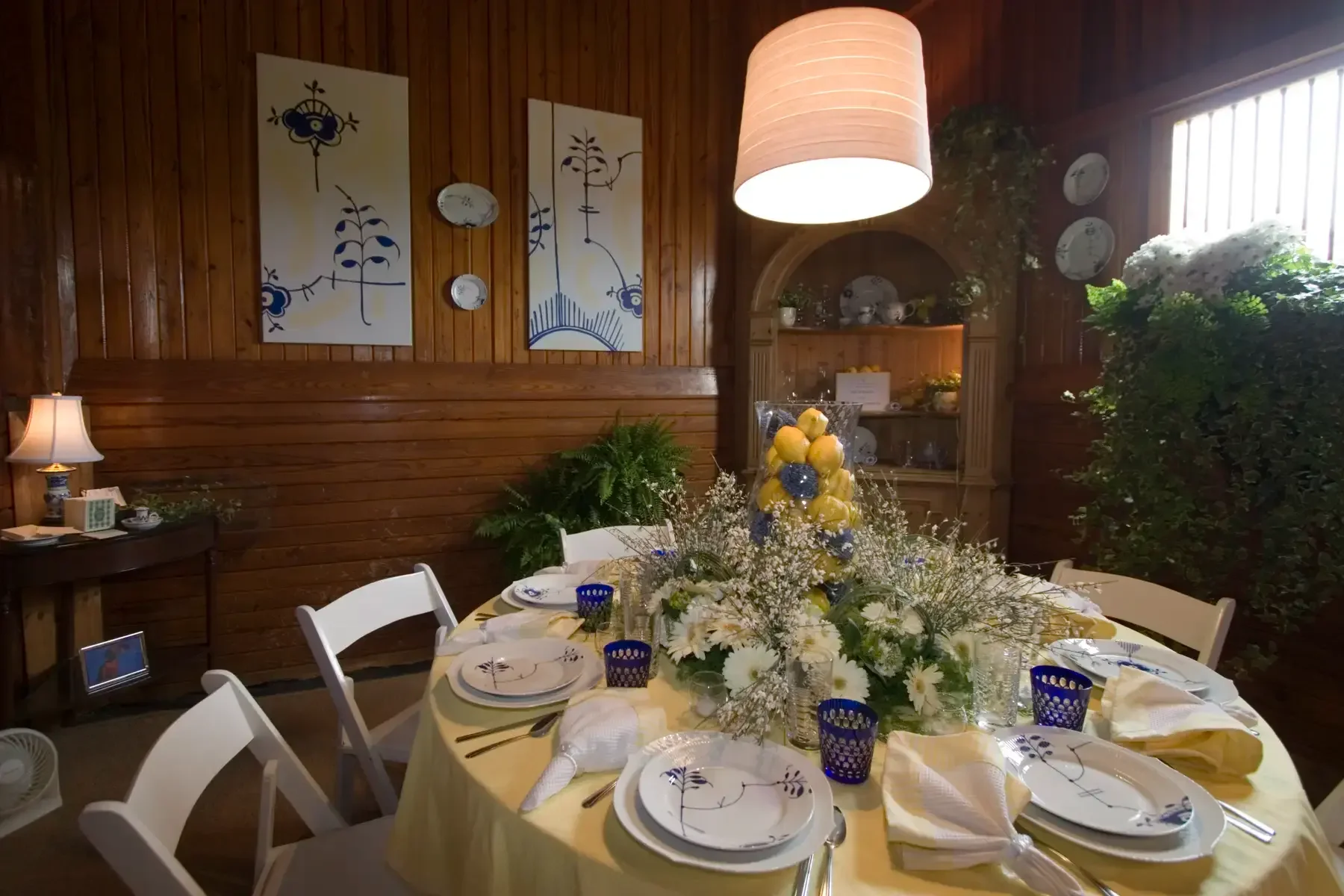
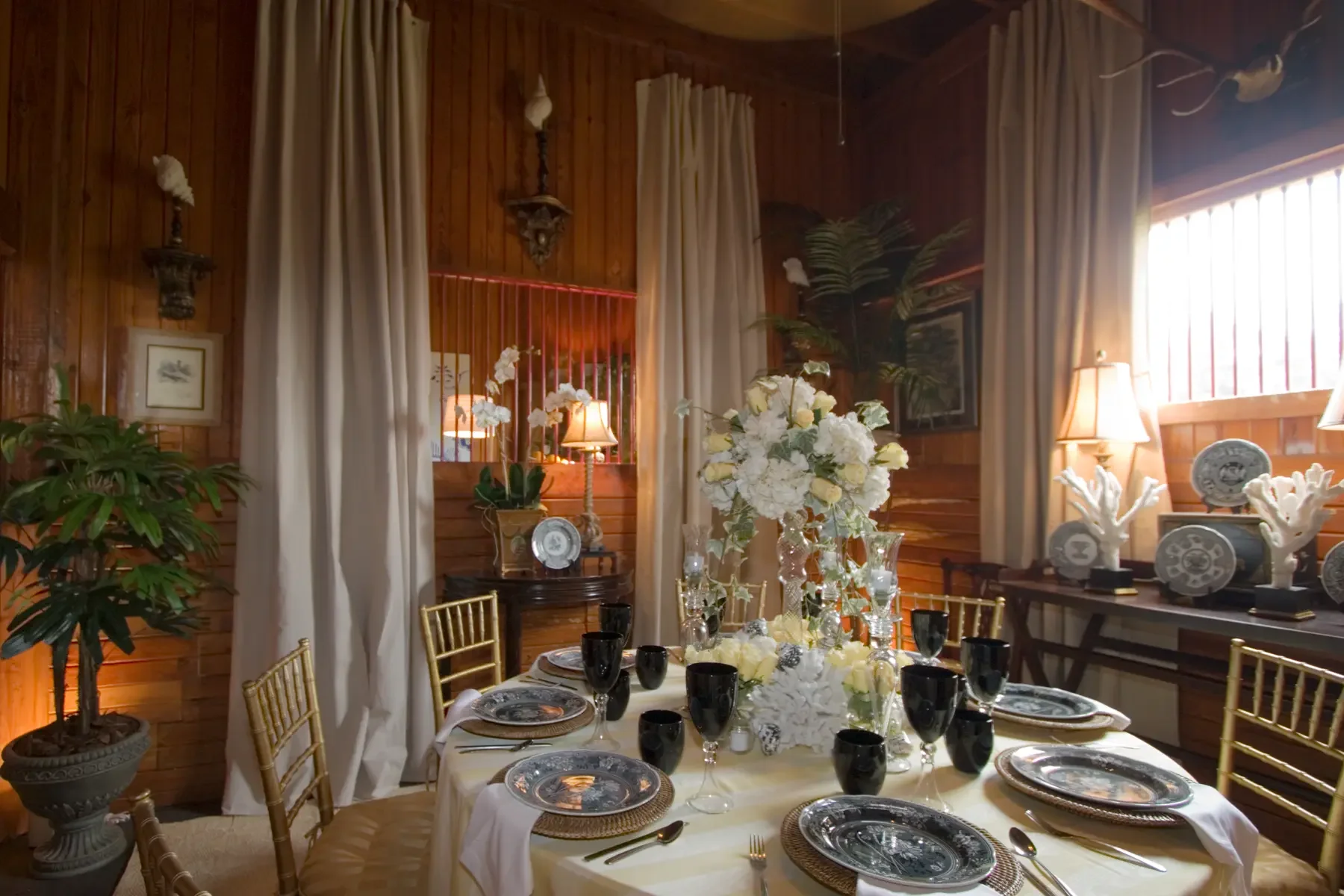
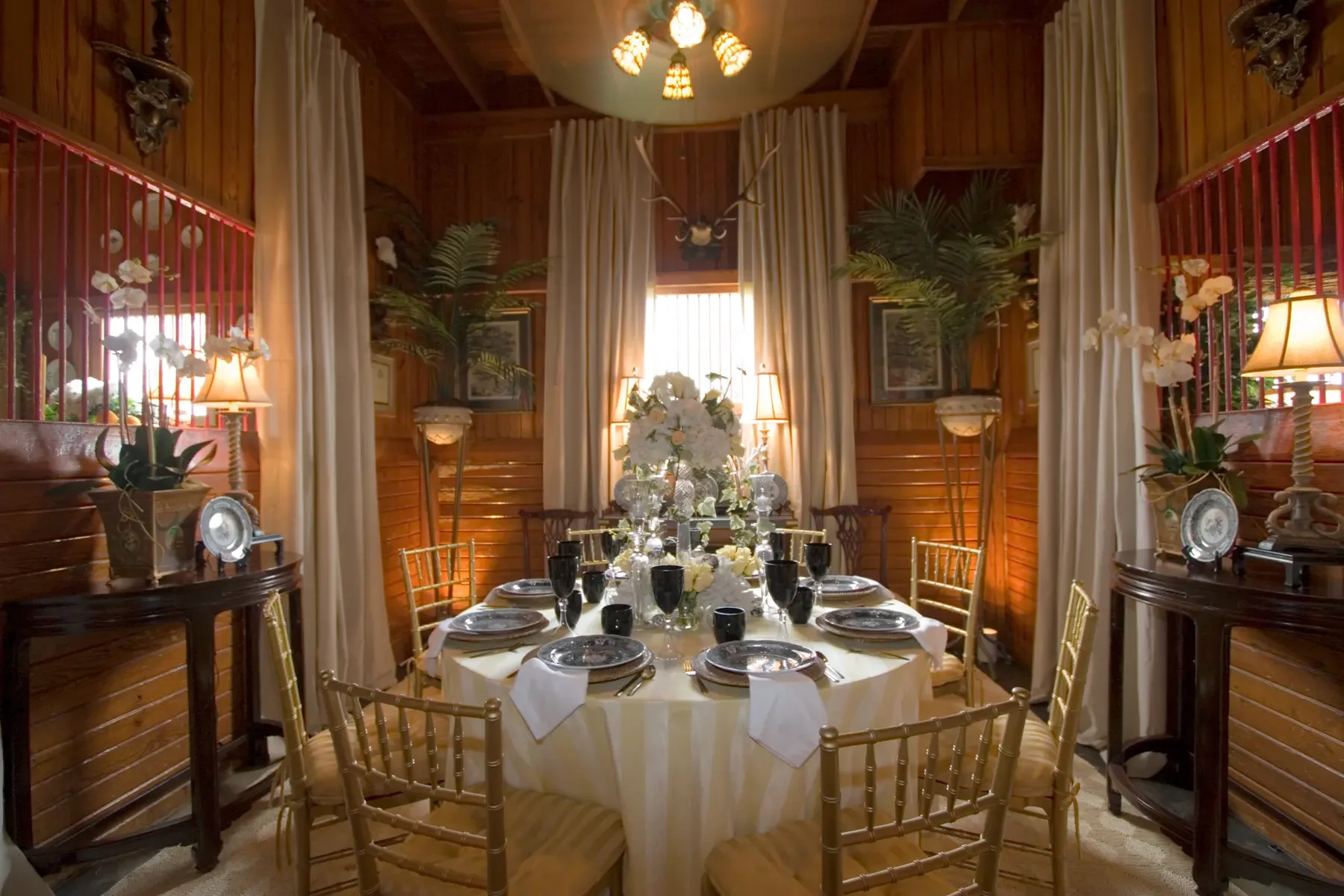
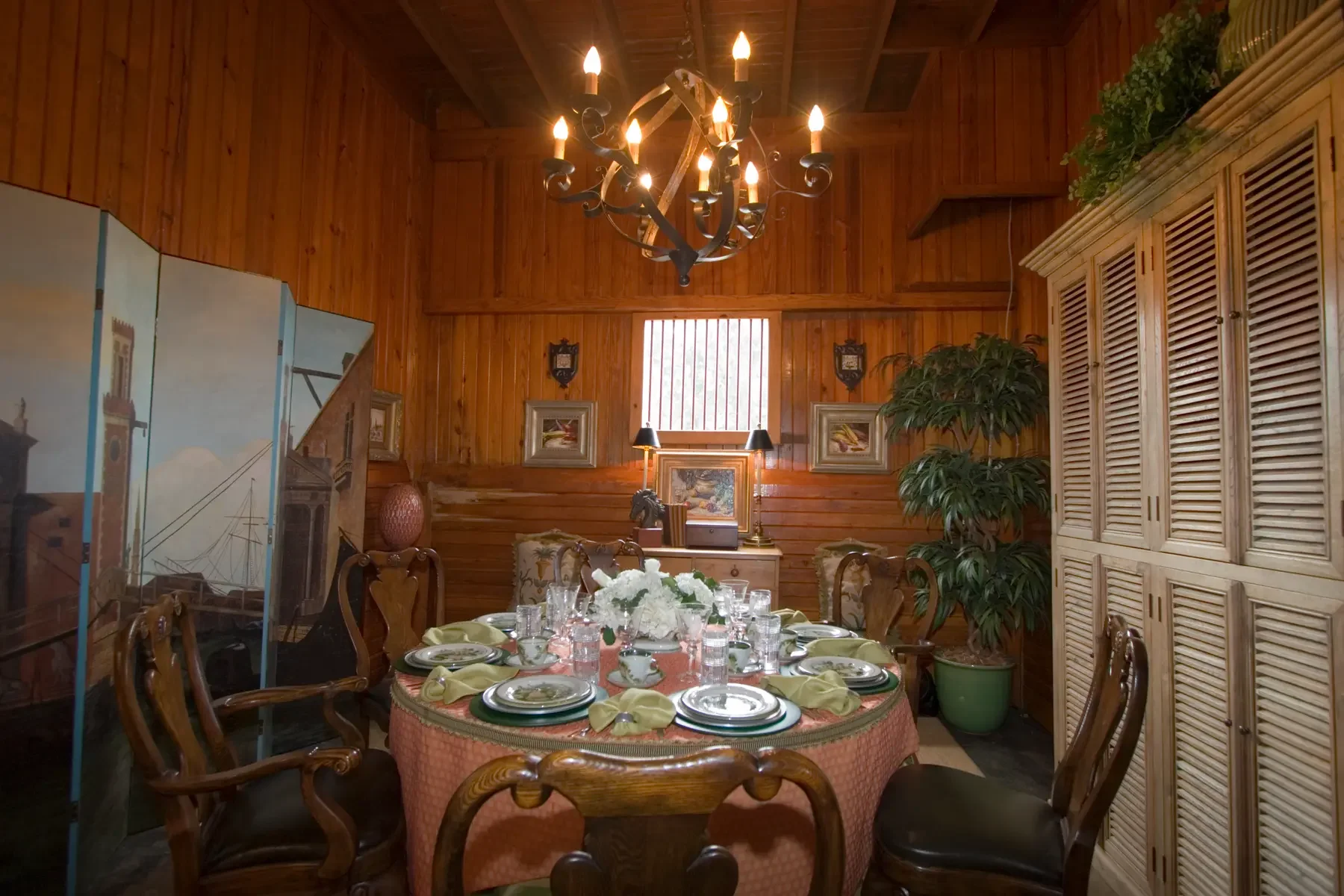
Woodford Humane Society's Freedom Fest, Lexington, Kentucky, July 2006. Interior designers transformed individual stalls in a working breeding barn into formal dining rooms for the fundraiser. The stall rails, barred windows, and plank walls stayed visible behind the chandeliers and place settings, which was the point, whether the designers intended it or not.
Beyond the Thoroughbreds
Thoroughbred racing announces itself throughout Lexington, but it does not account for the whole horse culture.
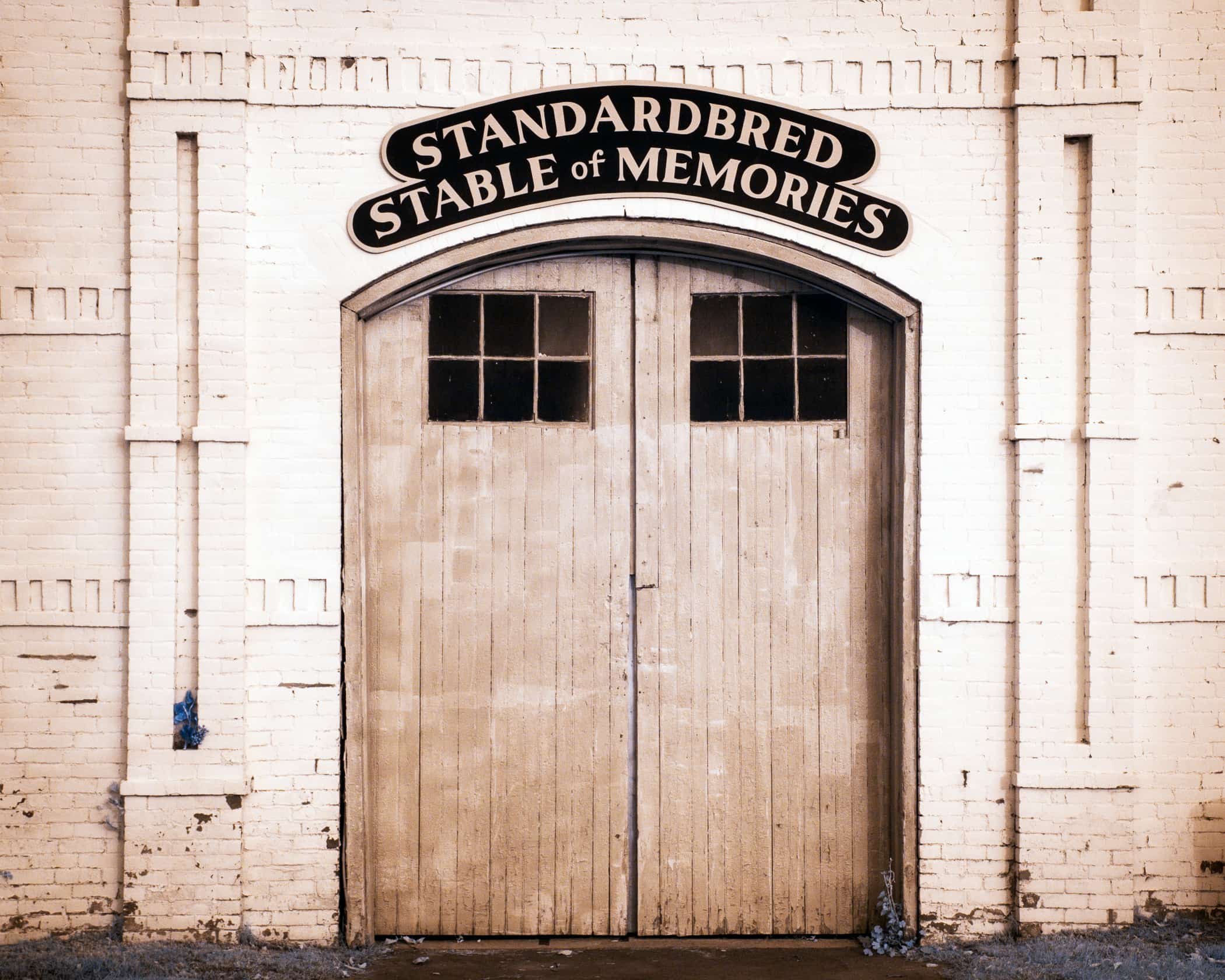
Before living in Kentucky, I knew little about Standardbred racing. At the Stable of Memories and the surrounding training grounds, I encountered another version of the industry, one with sulkies, older facilities, and a history that felt different from Keeneland’s public grandeur. As with Keeneland, you could often visit during training without treating the experience as something rare or precious. The work continued whether spectators were present or not.
That access mattered. The photographs did not require a statewide search for hidden Kentucky. Most came from within twenty miles of my house, and many came from much closer. I am a homebody. I like to go out, find what I need to find, then return home before being away starts to feel like a condition.
This series grew within that limited radius.
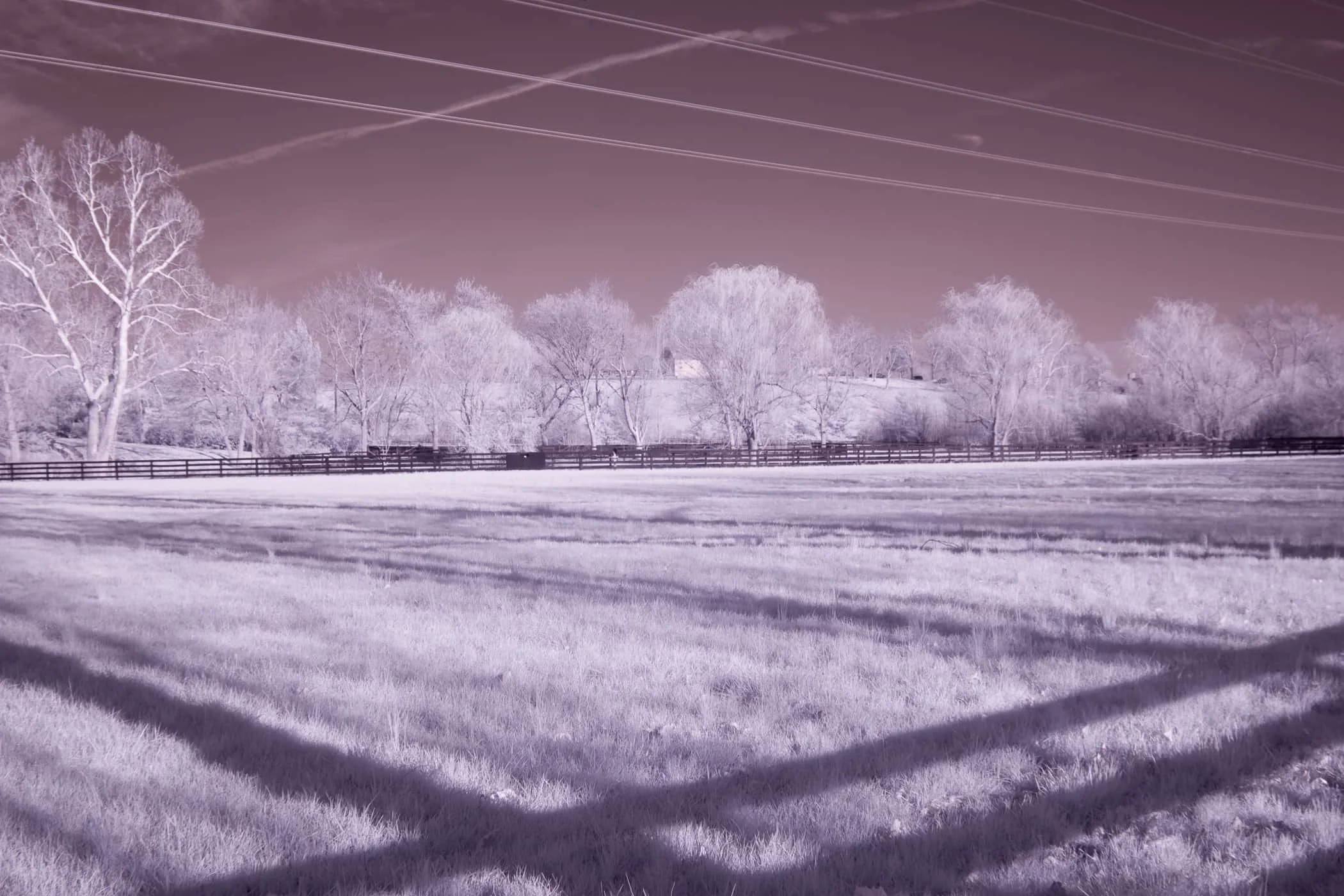
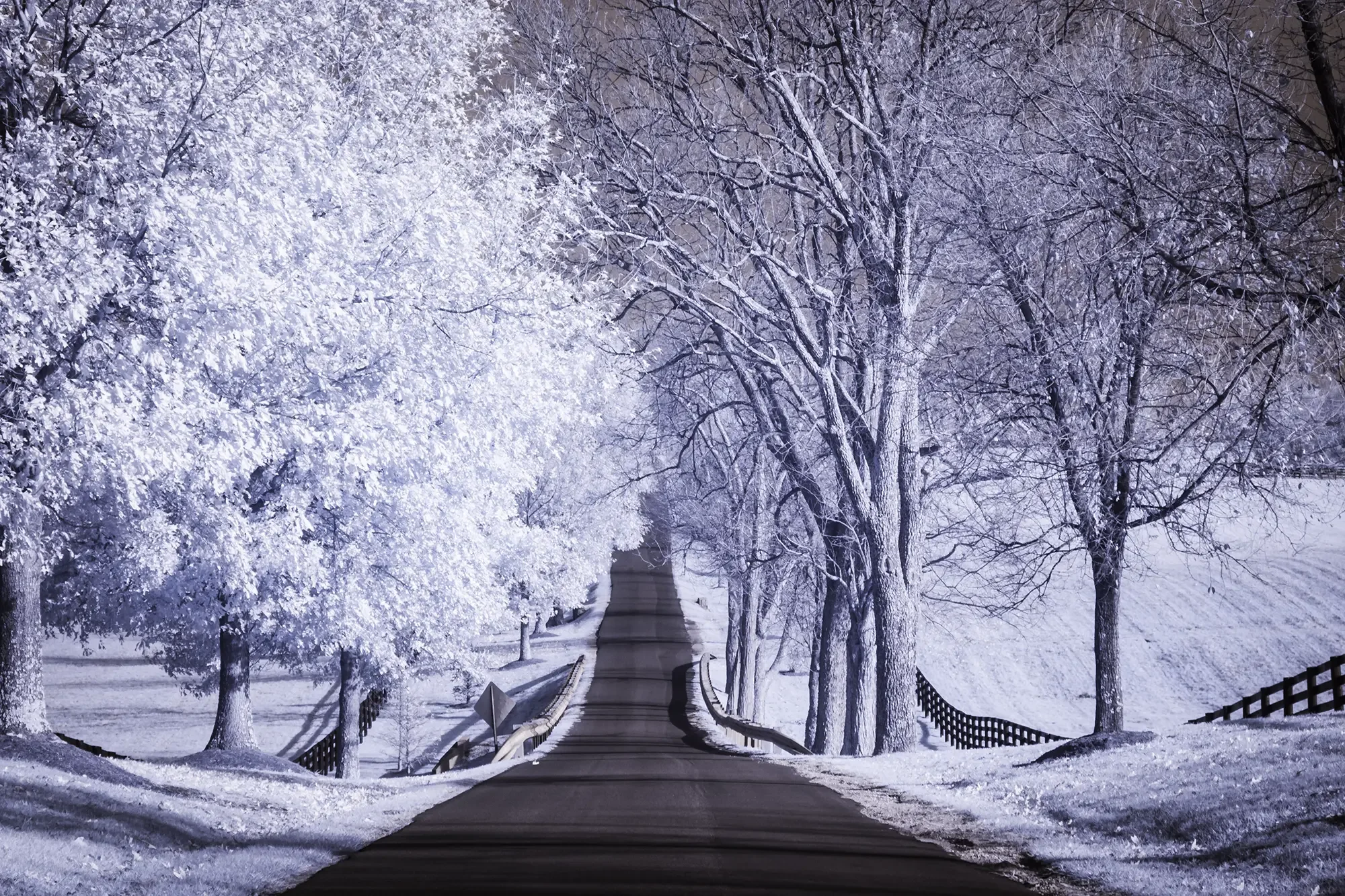
I drove the back roads through Lexington, Versailles, Nicholasville, and the surrounding countryside. When something held my attention, I pulled over. Sometimes it was a barn or a line of black fencing. Sometimes it was the way trees on one side of a road still carried their fall leaves while the trees across from them stood bare.
The distance was small. The amount of Kentucky contained inside it was not.
What Infrared Removed
Central Kentucky can become almost aggressively green.
During the growing season, grass, trees, vines, and roadside vegetation fill the color photograph. That lushness belongs to the place, but it can also dominate the frame so completely that the structure underneath becomes secondary. A red object can pull the eye away from everything around it. A bright field can become the subject whether I intended it to or not.
Black-and-white photography changes those relationships. Infrared does too, although it reaches them by another route.
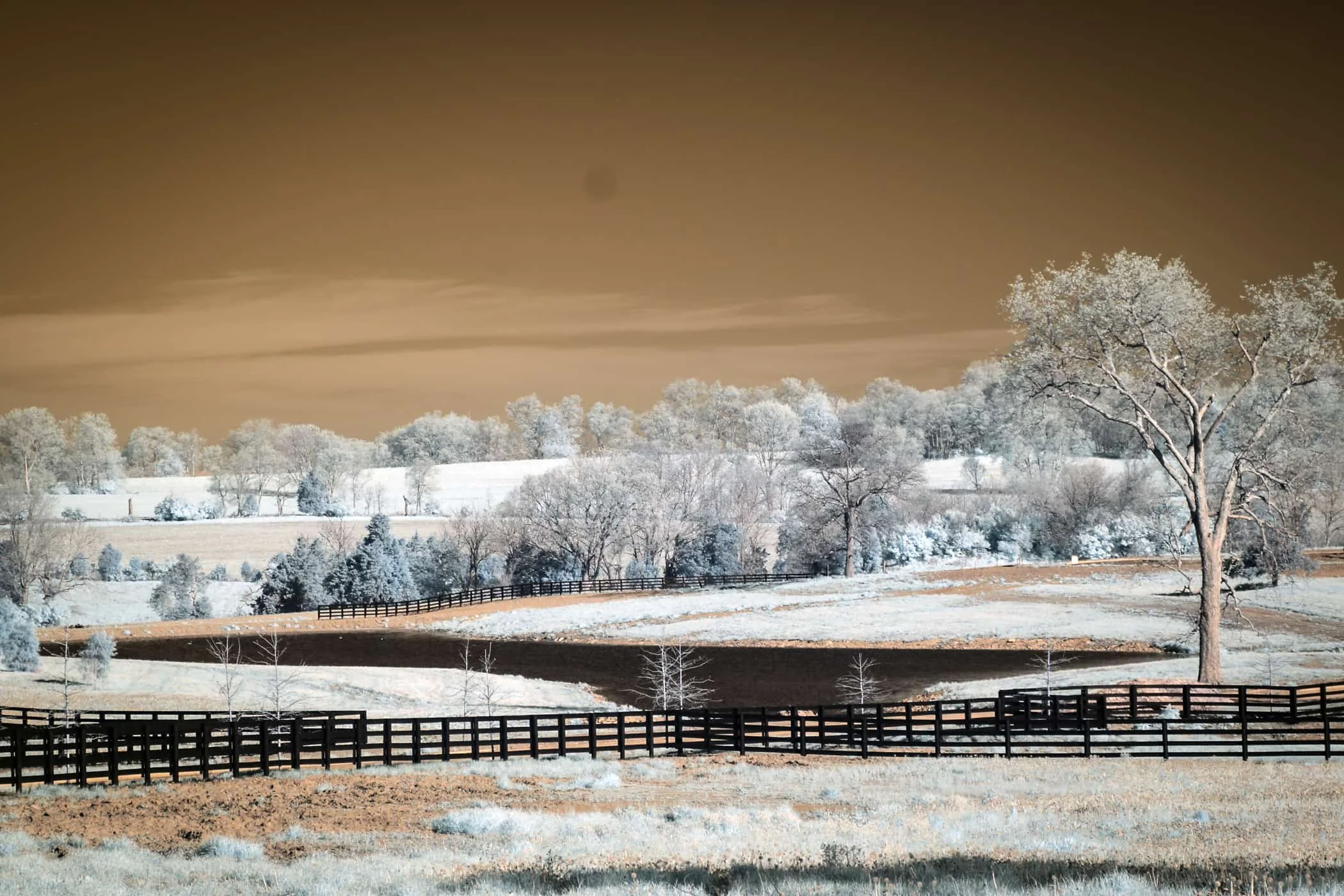
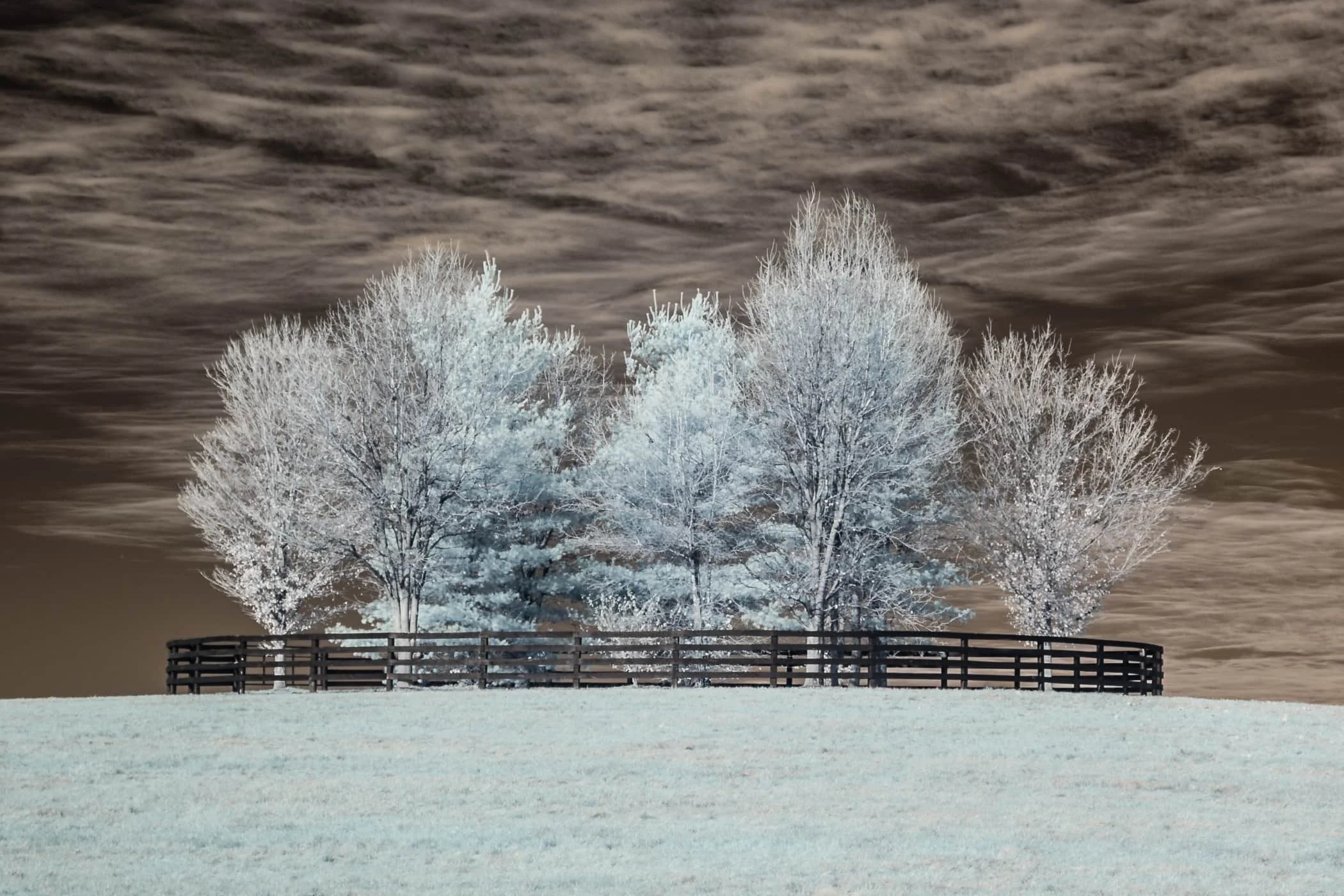
Infrared light renders foliage pale and luminous. Skies and built structures shift according to the light, the filter, and the processing. The camera records information that my eyes cannot see, then asks me to decide how much of that information belongs in the final photograph.
Early in the series, I leaned into the false color. I had seen infrared photographs in magazines and advertisements, thought the process looked interesting, and started trying variations of my own. I went through several approaches before gradually reducing the intensity. The versions I now present use quieter browns, blues, and muted tones that sit closer to black and white without fully becoming it.
At first, I thought mostly about the ghostly foliage and the dreamlike quality of the results. I still see those things. First impressions tend to stay attached to photographs.
After living with the work for nearly two decades, I pay more attention to what the process clarified. Infrared reduced the authority of Kentucky’s green vegetation and returned my attention to the fences, tree trunks, barns, stonework, shadows, and divisions of the land. The photographs became less literal, which gave me enough distance from the specific memory of a place to consider its broader feeling.
The color also records where I was as a printer and photographer. Kentucky was the beginning of the process. By the time I photographed eastern Washington, I had moved toward black and white. The transition remains visible here.
[Suggested gallery: a range of false-color treatments, including an architectural image, an atmospheric landscape, and a quieter documentary frame]
Close to Home
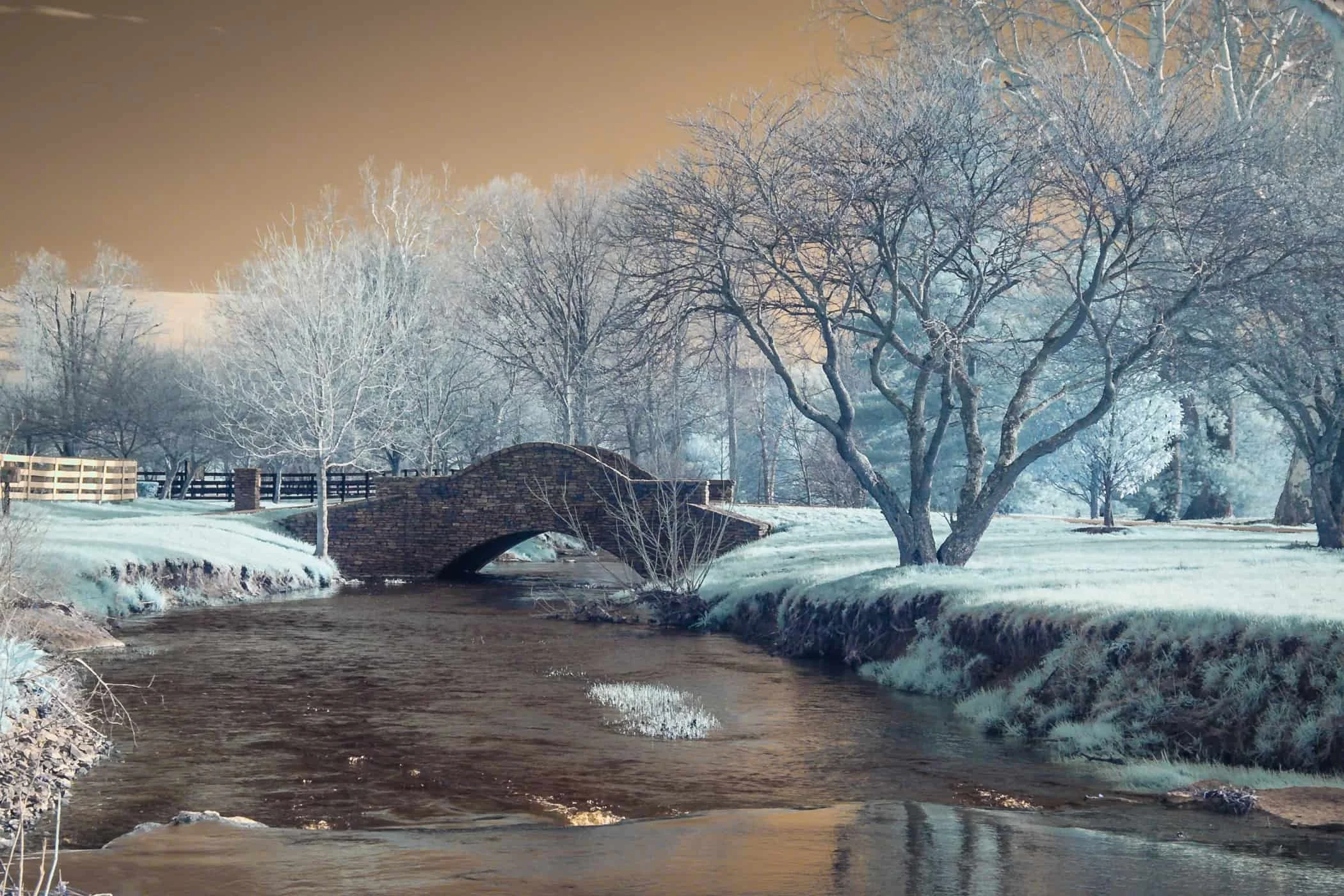
Frog Creek Passage remains my favorite photograph in the series.
The bridge stood only a few miles from my house, but far enough from the routes most people used that many Lexington residents probably never saw it. The creek passes beneath carefully constructed stonework, surrounded by bare winter trees. Someone put considerable labor into building that bridge, just as generations of people put labor into the dry-laid limestone fences that still divide parts of the Kentucky landscape.
I found it because I drove down a road and looked.
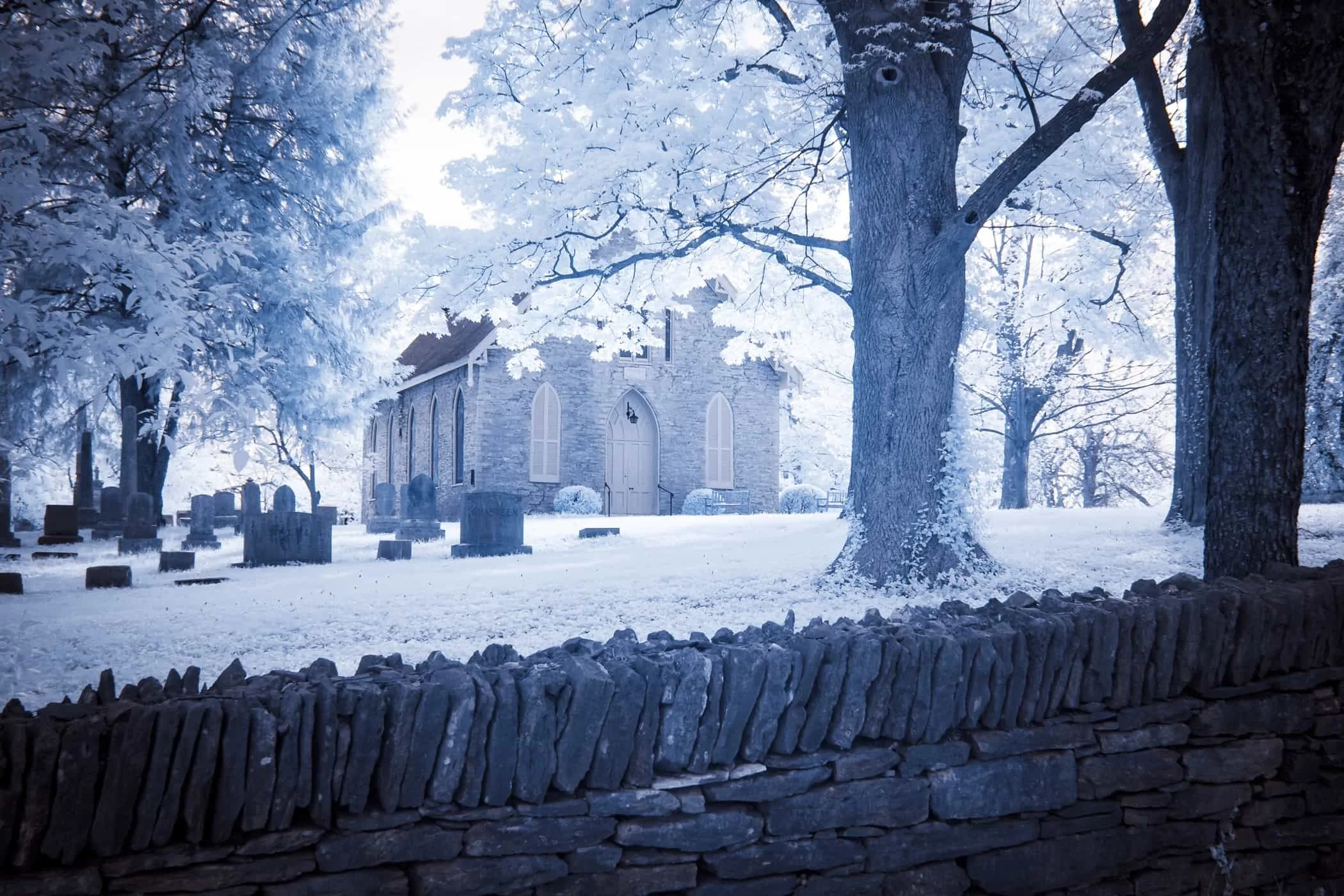
The cemetery offered another kind of discovery. It sat close to ordinary residential life, enclosed partly by limestone and filled with mature trees. The infrared process shifted the foliage and sky, but the photograph did not need the process to invent its atmosphere. The place already held it.
These were not hidden locations in any formal sense. Nobody had sealed them away. They remained unseen because daily routines directed attention elsewhere.
Tobacco
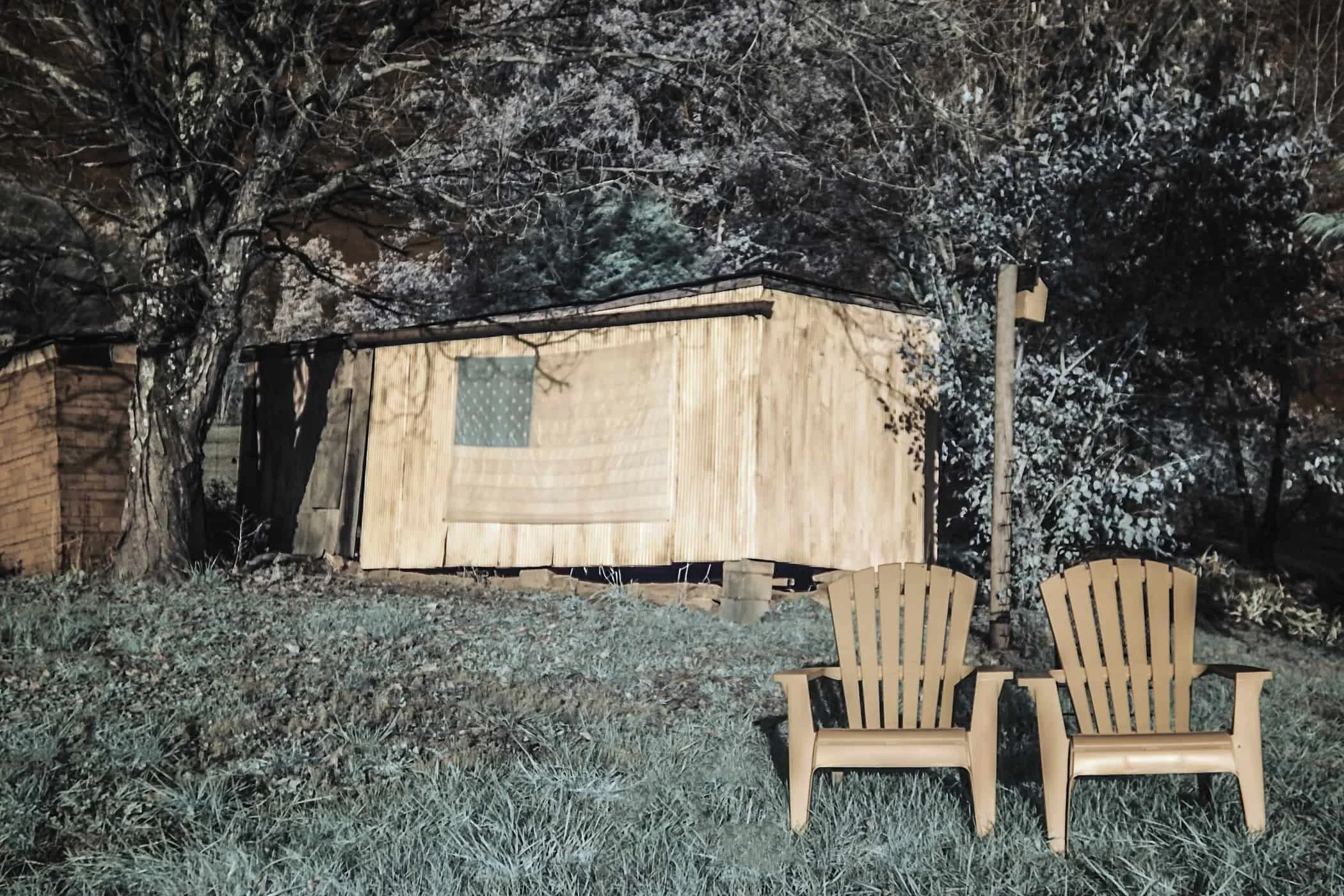
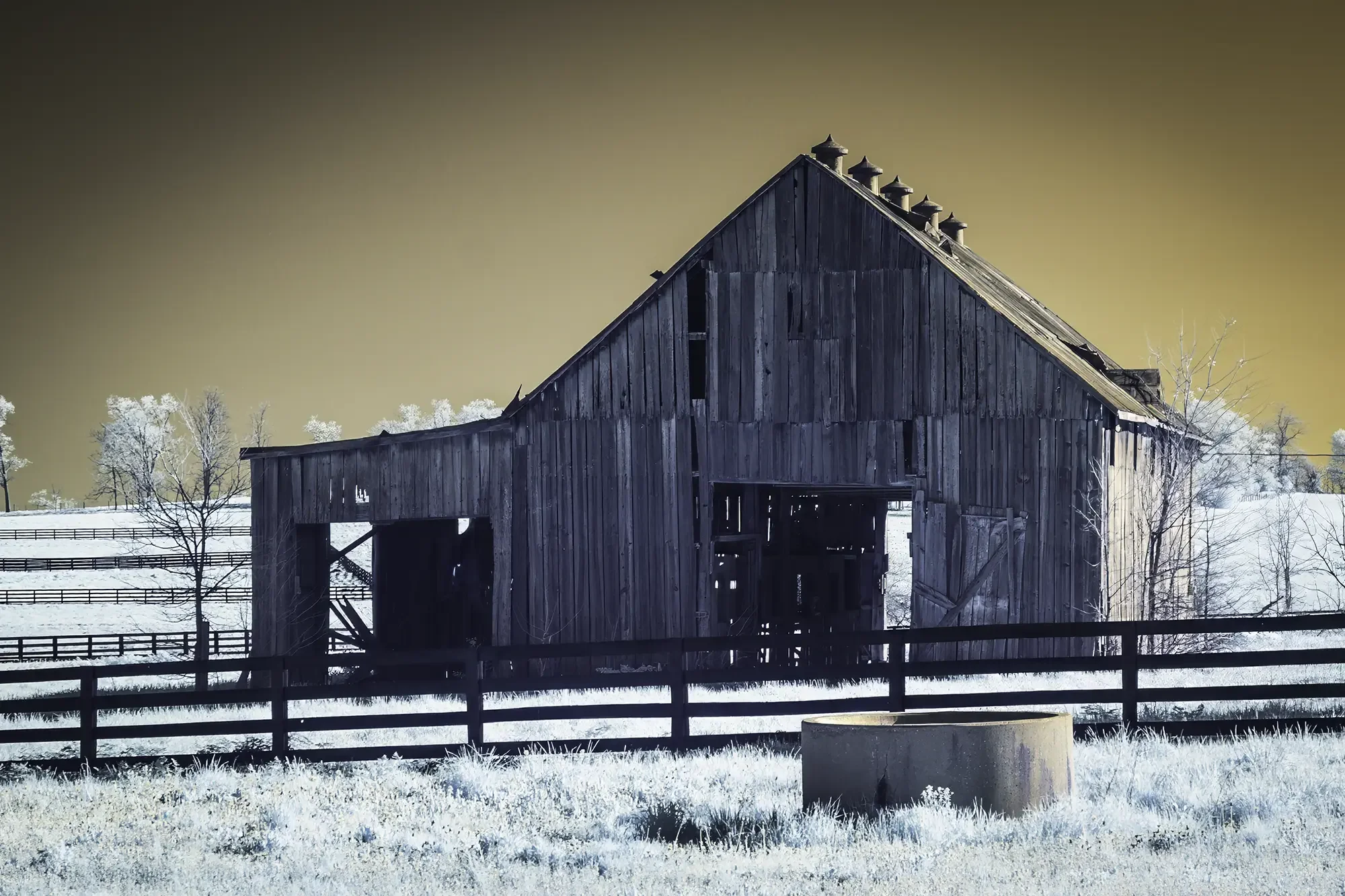
Tobacco belonged to central Kentucky’s history and to the lives of people I knew. Professionals who had long since moved into other careers told stories about harvesting tobacco when they were young. Barns and warehouses carried that history into the landscape even as the industry changed around them.
I have always opposed tobacco and what it does to people. That position did not disappear when I photographed the buildings, but I did not need the photographs to deliver a verdict. The structures existed as part of the place. Their weathered siding, scale, and practical design recorded an economy that had shaped generations of Kentucky life.
The United Tobacco Warehouse may have changed or disappeared since I photographed it. Much of the surrounding horse country probably looks similar. Central Kentucky places a value on continuity, especially where that continuity supports the identity of the region.
The tobacco buildings occupy a less comfortable part of that continuity.
Leaving Kentucky
I began the series before we had firmly decided to leave.
The possibility arrived first as a small thought, something easy to set aside. Over time it became a plan, then a collection of practical tasks involving realtors, houses, moving trucks, dogs, and a drive across most of the country. We left Lexington for Richland, Washington, in 2008.
I do not know whether I started photographing Kentucky because some part of me already understood that I would leave. That explanation may assign too much foresight to the work. I usually begin projects visually. I respond to a subject, make photographs, and only later start understanding what I have been gathering.
Still, the timing remains.
I had lived in Kentucky for six years before beginning the series. I knew the landscape before I photographed it. I knew where the suburban streets became horse country, which roads led toward Versailles, and how close a quiet creek or cemetery could sit to the routes I drove every week. These were not arrival photographs. They came from familiarity, followed by the first pressure of departure.
I am not someone who leaves easily. I keep objects longer than I need them and attach memories to things that were not designed to carry that much responsibility. Kentucky felt like home, and I expected to miss it.
I was also excited to go west.
Both things were true.
Printing the Work Somewhere Else
I made most of the photographs in Kentucky, but the series took its finished form in Washington.
During graduate school, I used some of the images in printing and alternative-process courses. I developed the archival printing methods that still guide my work, then converted digital files into large negatives printed on Pictorico transparency material. From those negatives, I made cyanotypes and Van Dyke brown prints.
The process moved the photographs through several technologies. An infrared-sensitive digital camera recorded the original scene. A digital printer produced the negative. I then used that negative to make a print through a nineteenth-century photographic process.
In 2008, I exhibited false-color infrared prints through the Washington State University Tri-Cities Chancellor’s Exhibition Series. I presented them with double mats, including a narrow dark-purple inner mat and a wide crushed-velvet purple outer mat.
They were not subtle objects.
The following year, I returned with Van Dyke brown prints from the series. The exhibitions introduced me to people on campus and helped establish relationships that led to my employment at Washington State University Tri-Cities.
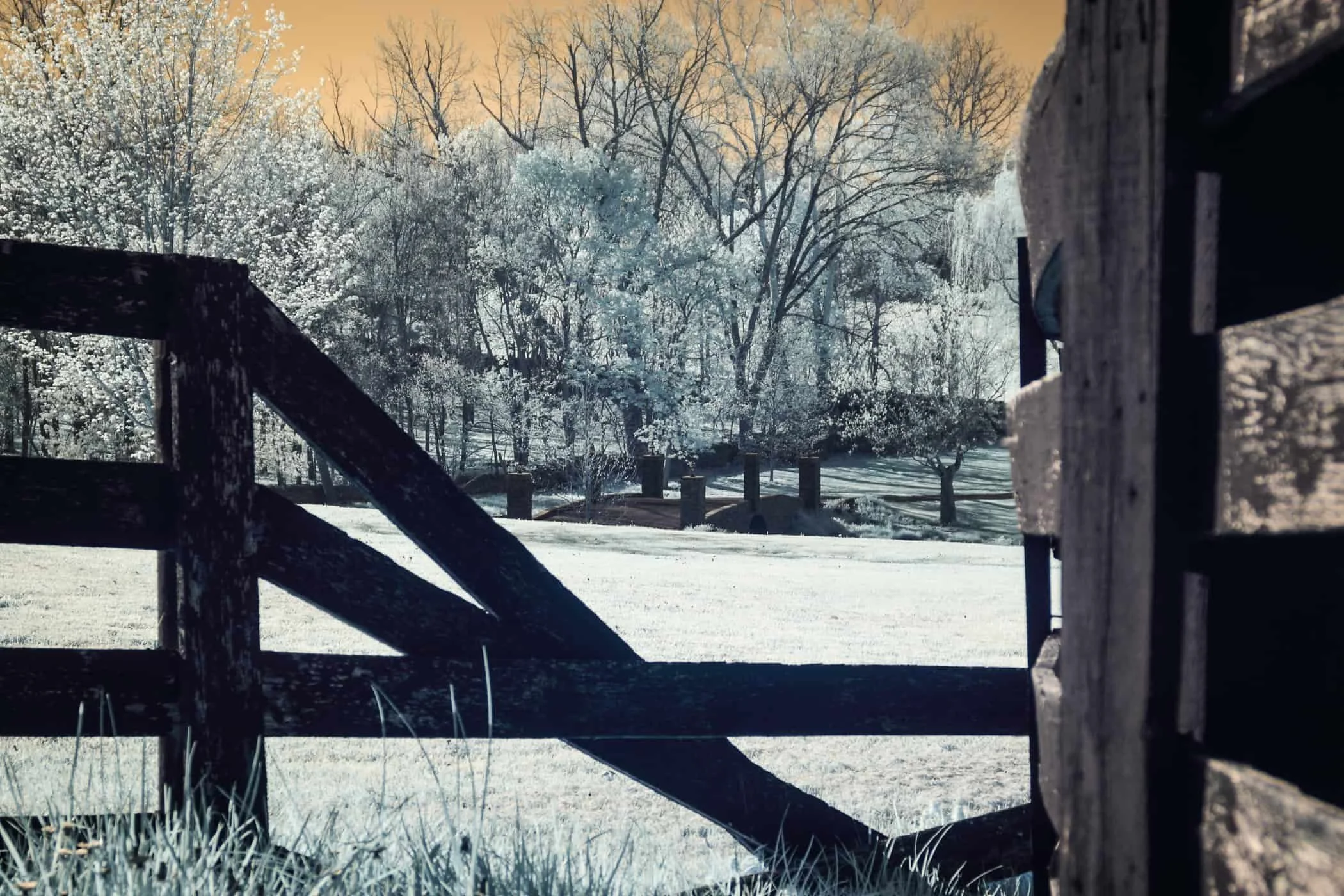
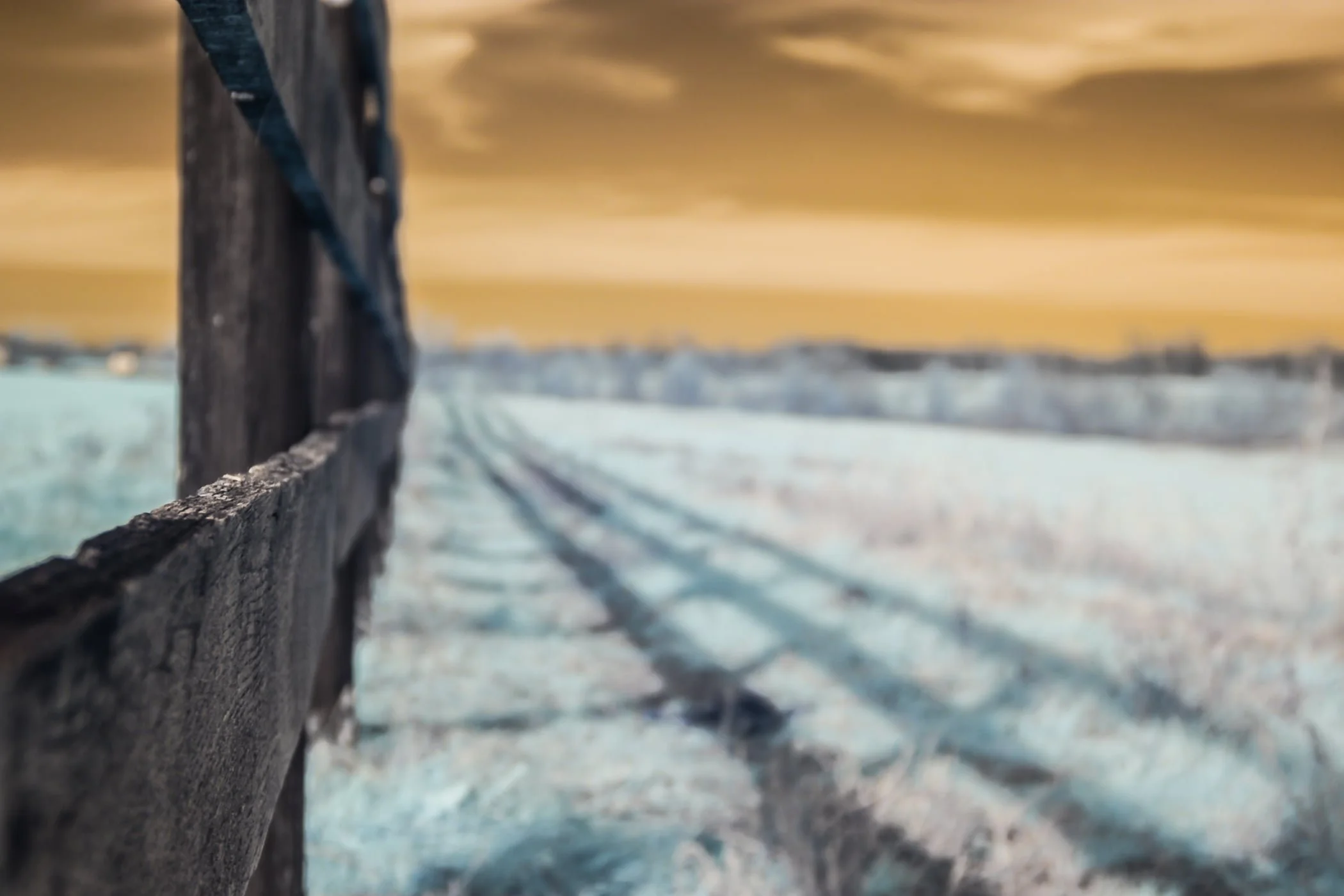
One of those Van Dyke brown prints later sold for $600 at a Benton-Franklin Humane Society fundraiser. The photograph looks through a gateway whose heavy fence planks have dropped diagonally across the opening. Beyond them, the infrared light turns the pasture and trees pale.
The gate does not invite the viewer into the landscape so much as hold the viewer at its edge.
The animal-welfare work had followed me west too.
The First Chapter of Unseen
My photography and animal-welfare work developed beside each other in Kentucky. Woodford Humane Society gave me relationships, access, and reasons to enter parts of the horse world I otherwise would have seen only from the road.
When I traveled to Washington to look for a house, I stopped at Benton-Franklin Humane Society and persuaded them to let me photograph their animals.
That work, along with some photography at the Tri-Cities Animal Shelter, became the thesis project I completed for my MFA.
At the same time, I began photographing eastern Washington. The high desert required a different use of infrared. Kentucky had taught me to work through dense foliage, humid air, fences, barns, and closely divided land. Washington gave me open plateaus, irrigation circles, basalt, and a sky large enough to become the subject.
The lessons did not transfer neatly. They gave me a place to begin.
I started revisiting the Kentucky files within six months of arriving in Richland. As I printed them, I also began learning the Washington landscape. One series changed how I edited the other. The false color grew quieter, then largely disappeared from the new work. Lines, shadows, and geometric forms became more prominent. Ideas that had appeared briefly in Kentucky found more room farther west.
Kentucky now feels like a completed chapter. I would happily return, but I no longer feel the pull of a place I need to recover.
The photographs remain because I started collecting them before I understood that collecting was what I was doing.
[Suggested closing gallery: Frog Creek Passage, the gateway pasture image, Keeneland Race Interlude, and a final photograph that leaves the landscape visually open]
Explore available archival prints in the Kentucky Collection, or continue to the next chapter, Unseen: Pacific Northwest.