
My Dog Has Issues. Is a Photo Session Even Realistic?
When someone asks whether a photo session is realistic for their rescue dog “with issues,” I want to separate those two things before we talk about photography. Dogs from any background can struggle with unfamiliar people or become overwhelmed in certain situations. I’ve worked with clients whose dogs have those difficulties, and I know people who bought dogs from breeders and face similar challenges. Having a rescue dog doesn’t tell me how a session will go. I need to know about your particular dog, what gets them worked up, and where they feel comfortable.
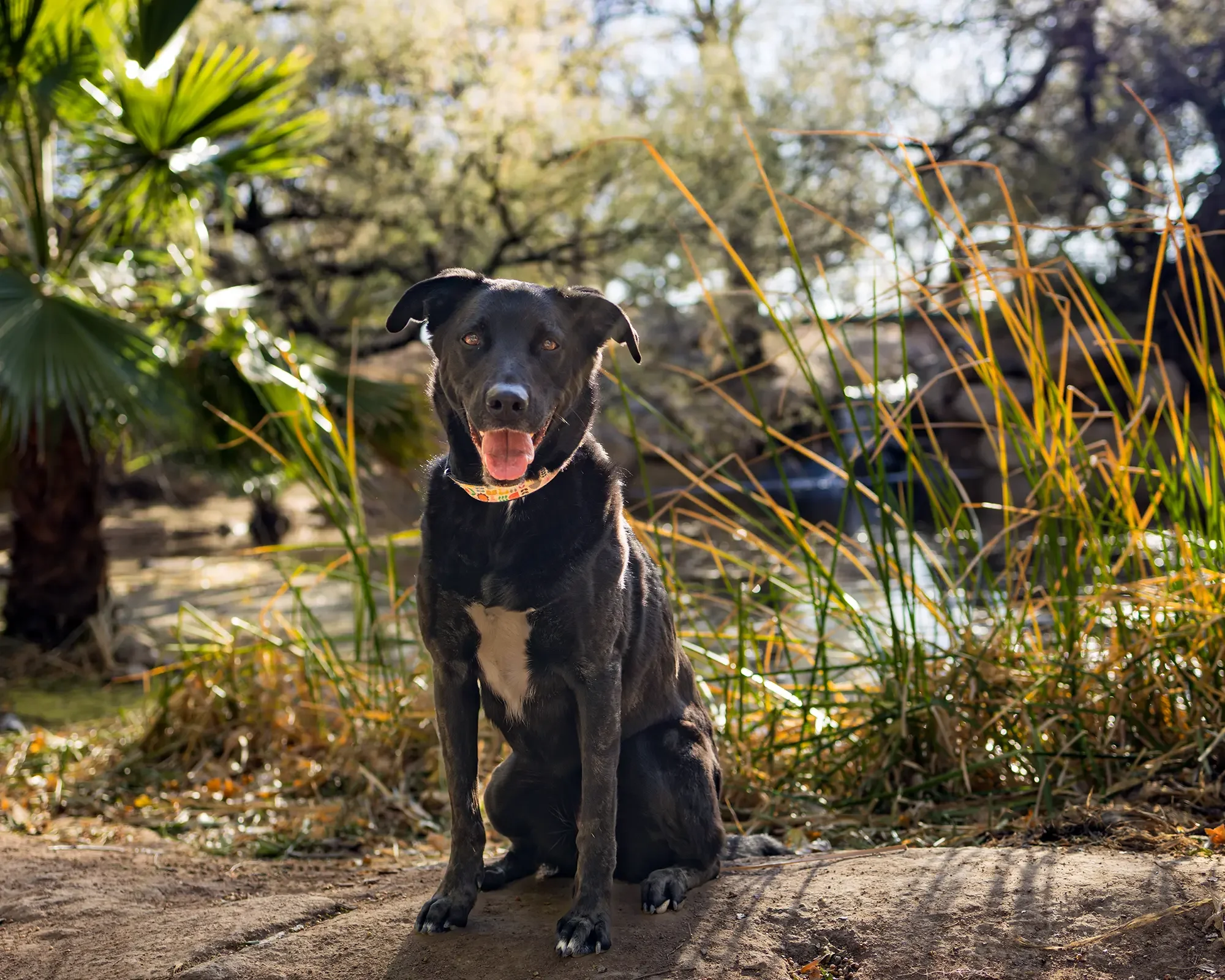
No Amazon deliveries here to disrupt her session.
A friend’s rescue dog gets very excited about delivery trucks. She recognizes the sounds of the trucks coming through her neighborhood and starts barking, much to her owners’ frustration. When we photographed her, we went to a park she enjoys. We took the neighborhood delivery traffic out of the equation, and we were able to have a successful session. Her behavior at home was something we could plan around once we understood what prompted it.
That’s why we have a pre-session consultation. You know your dog best, and I need your help understanding what I might encounter. We’ll talk about how they respond to strangers, which situations frighten or overexcite them, and what they enjoy. Knowing their favorite treat or toy helps me prepare, although whether they’ll want it from me is a separate question. My dog Chica likes meeting people, but she’s reserved at first. She wouldn’t necessarily take a cookie from someone she’d just met. Given time to get acquainted, she might become interested in that person’s supply of her favorite treats. I’d miss quite a bit about her if I judged her interest in people by whether she accepted the first cookie.
We can hold the consultation over Zoom, but for a dog who’s nervous around strangers, meeting in person gives us time to get acquainted. That might consist mostly of me sitting and talking with you while your dog watches from a comfortable distance. If they seem ready, I might place a treat on the floor seven or eight feet away. They may collect it while I’m there, or wait until I’ve stopped watching. When I return with unfamiliar equipment and all the interesting smells it’s probably collected from other pets, they’ve at least met the person carrying it.
I bring professional studio lighting and a background to your home, so your dog can stay in familiar surroundings. For many dogs, that’s helpful. For my friend’s dog, whose familiar surroundings included listening for delivery trucks, going somewhere else made more sense. If other dogs get yours worked up, we’ll look for somewhere we’re less likely to encounter them. A favorite spot in your yard might give us more to work with than a busy park. We’ll choose based on what you know about your dog and how they respond when we meet.
During the session, I’m watching how your dog responds to me and to what we’re asking. A wagging tail alone doesn’t tell me they’re happy. I need to consider their whole body and what’s happening around them before deciding whether to move closer or give them more space. If they’re getting worked up, we might take a break to play in the backyard. If they’re starting to shut down, I may suggest making the session shorter. Sometimes they need us to sit for a while and ask very little of them.
Occasionally, another photographer will be a better fit. A dog with a strong fear of men, for example, may never become comfortable enough with me for us to work together. If that’s what we’re seeing, a refund and a referral may make more sense than rescheduling. I know you’ve set aside time for the appointment, and changing plans can be inconvenient. You should also know that I’m willing to make that decision when it’s the better choice for your dog.
Tell me what worries you about a session and where your dog is most comfortable. We’ll work out where to begin together.
