
Unseen: Pacific Northwest
Series Introduction
Kentucky was the wrong preparation for eastern Washington, and also exactly the right one.
I'd spent two years photographing central Kentucky with a camera modified to record infrared light, pointing it at horse farm pastures and tobacco barns and creek-bottom tree cover until I thought I understood what the camera did. The infrared process makes foliage luminous and pale, turning familiar fields otherworldly, strange enough to actually look at. I had learned to see that.
Eastern Washington has almost no foliage.
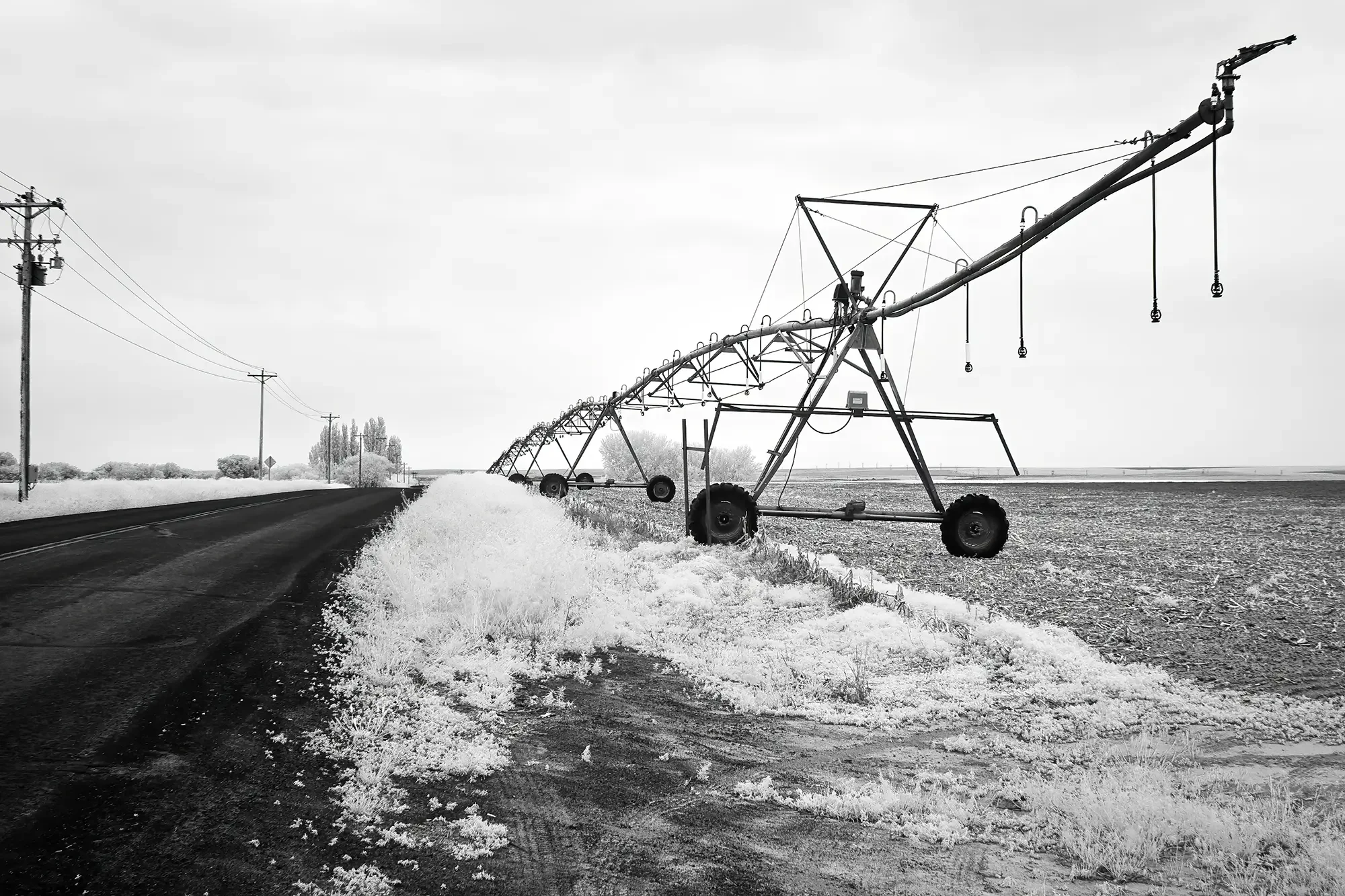
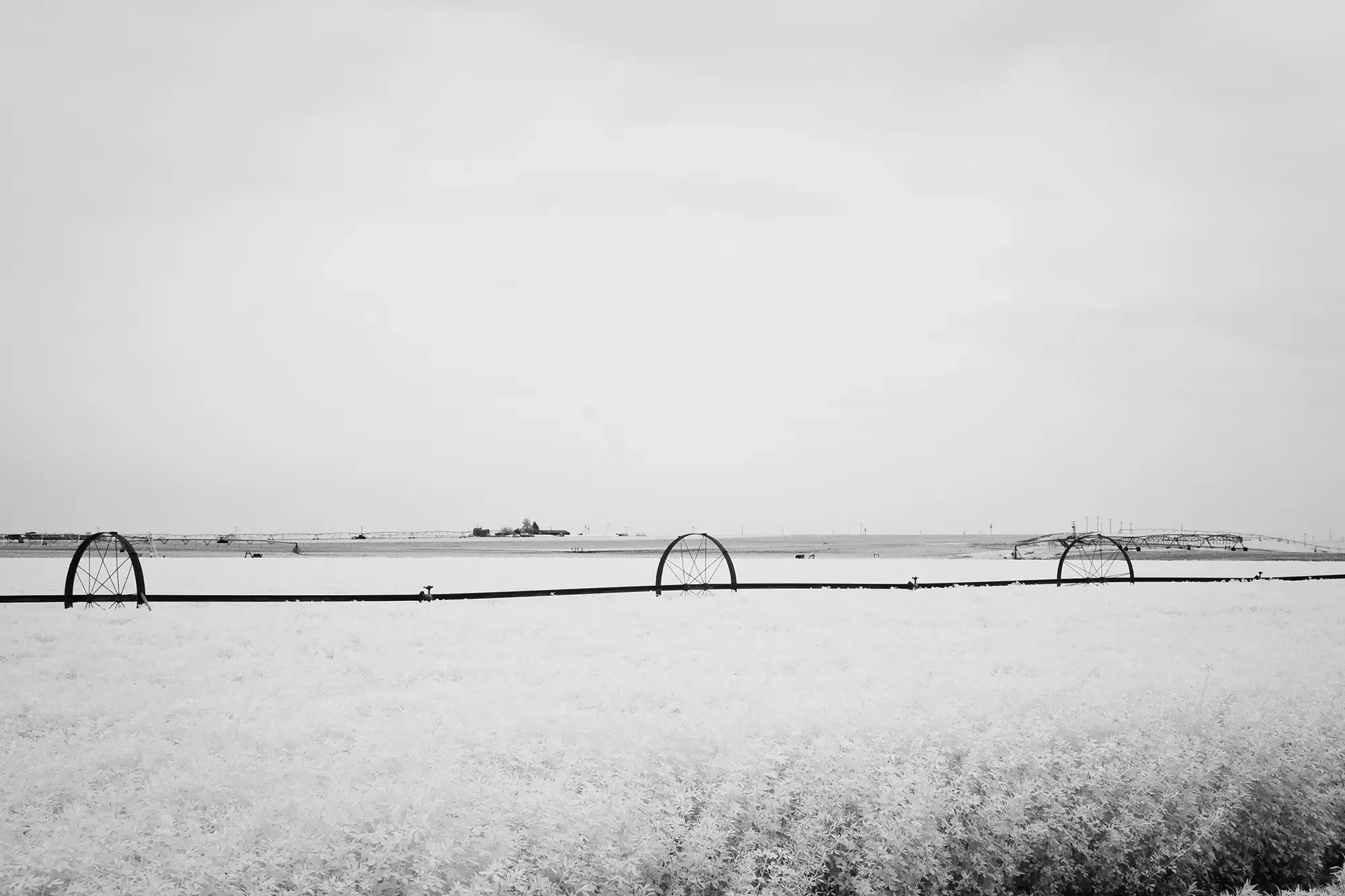
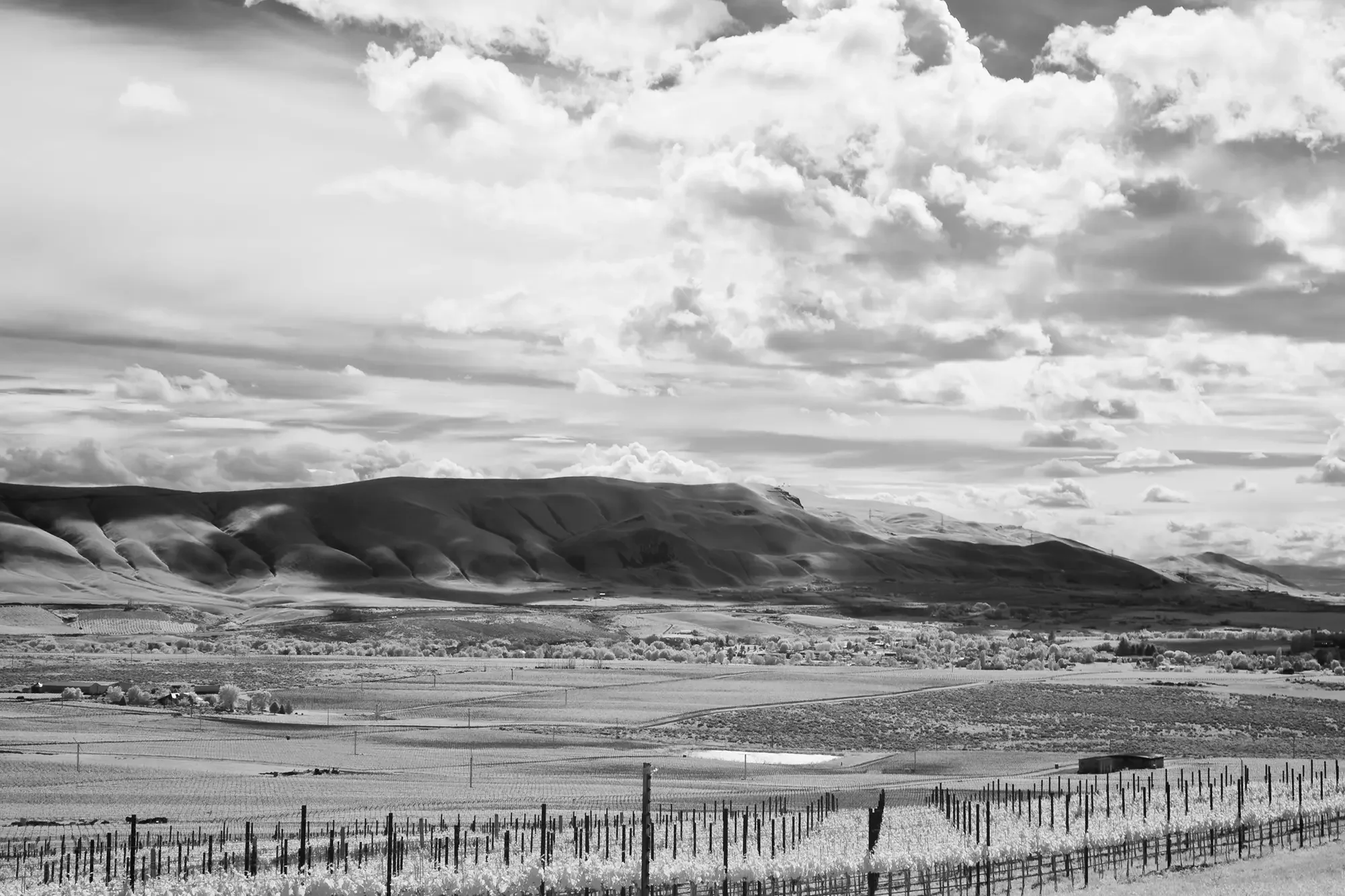
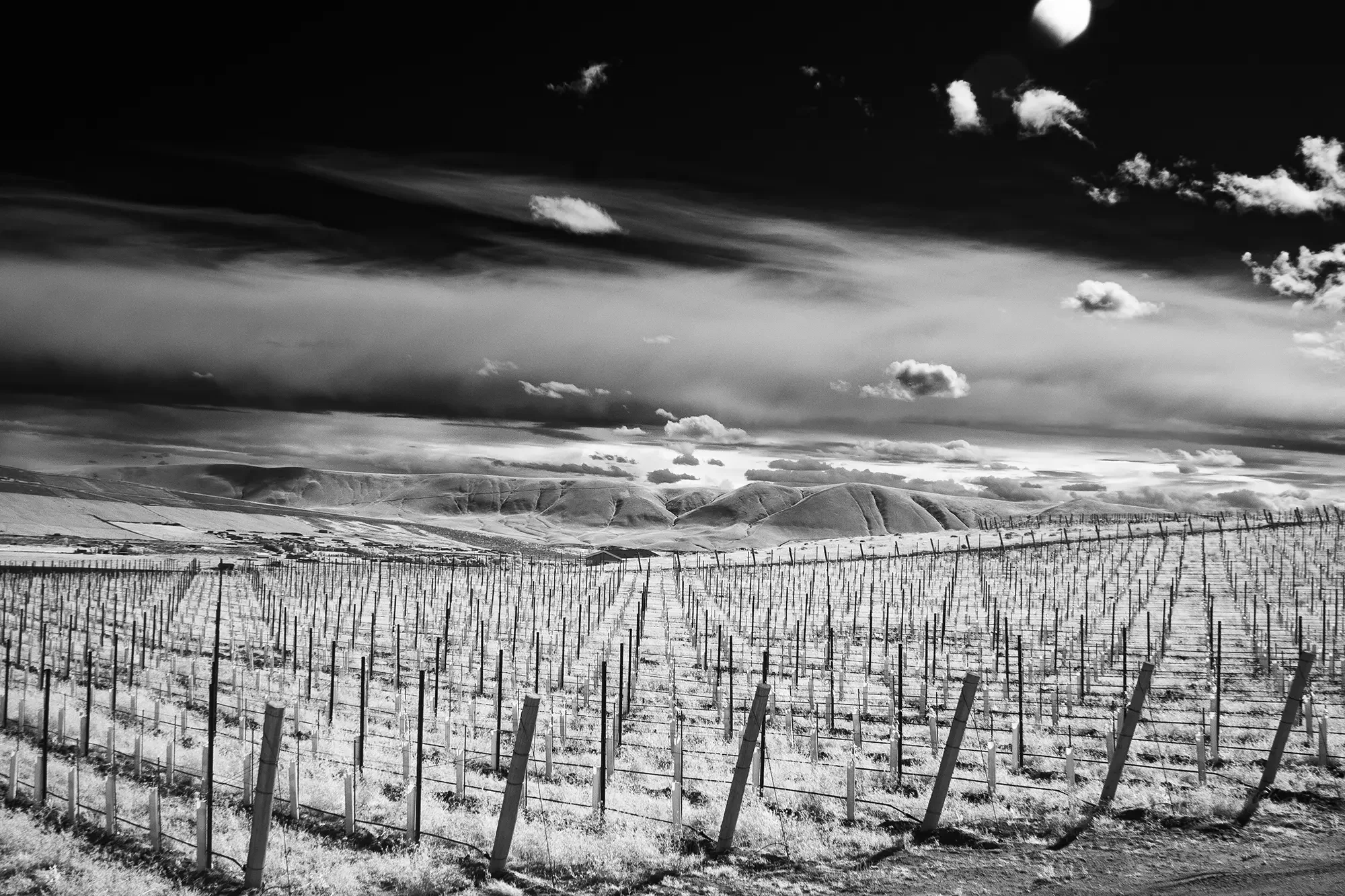
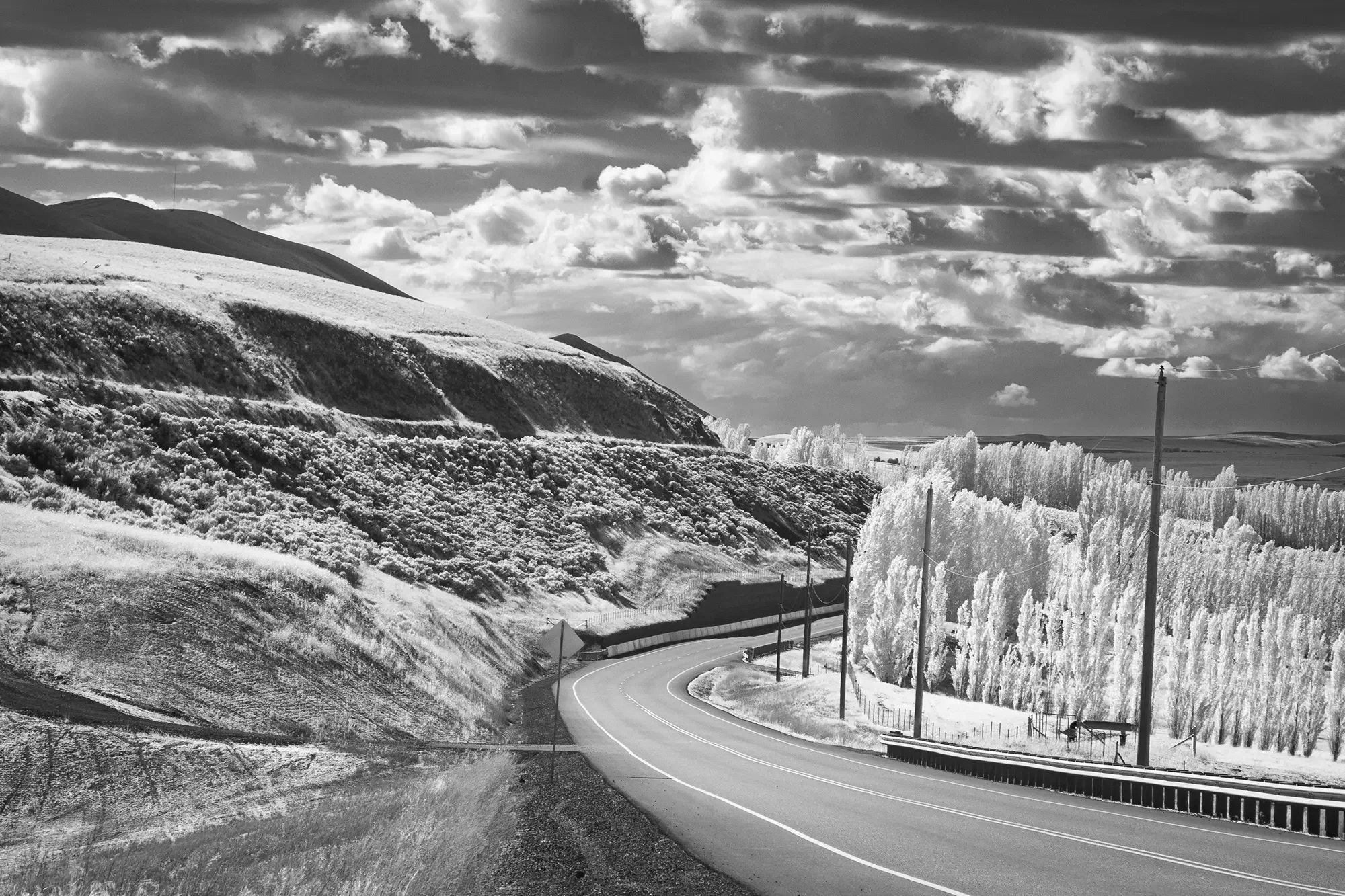
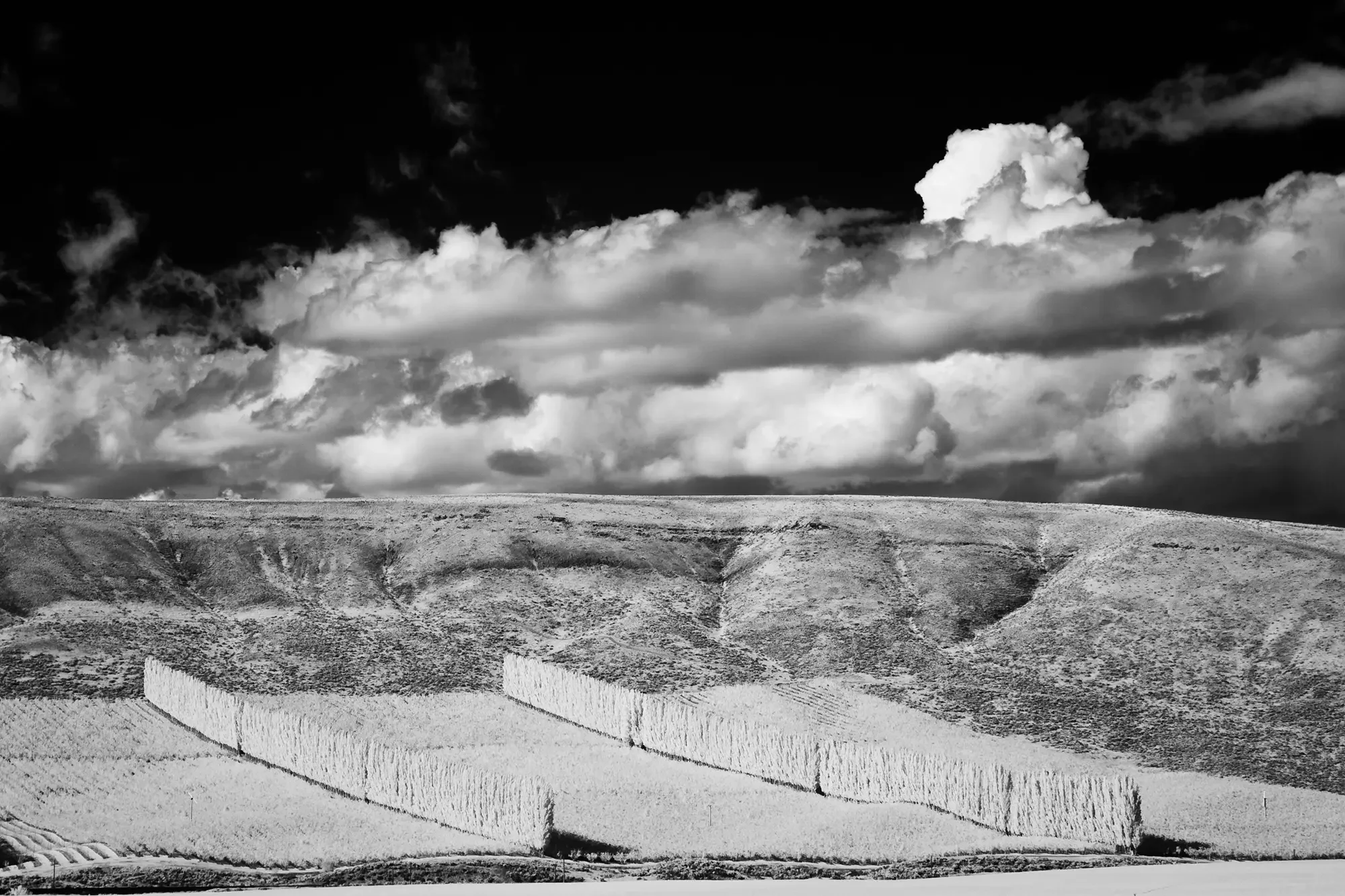
The Columbia Basin sits in the rain shadow of the Cascades, which means about seven inches of rain a year, compensated by some of the most elaborate irrigation infrastructure in the country. Center-pivot systems trace perfect circles across the plateau. Vineyards run in geometric rows along the south-facing slopes above the Columbia. Grain elevators mark the towns along the railroad lines. The basalt formations left by ancient lava flows divide the plateau into coulees and canyon country. And above all of it, in a way that has no equivalent in Kentucky's more humid air: sky.
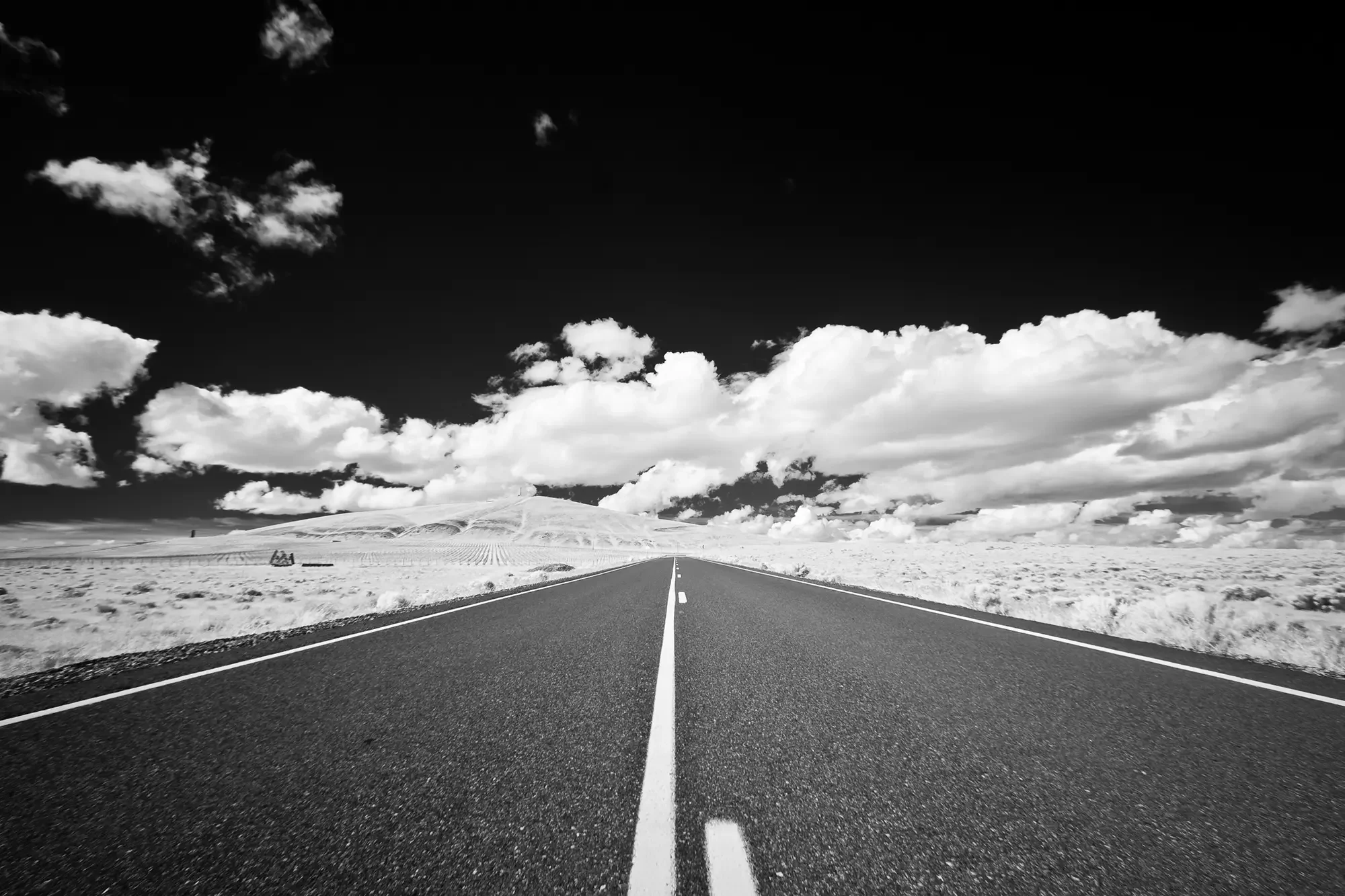
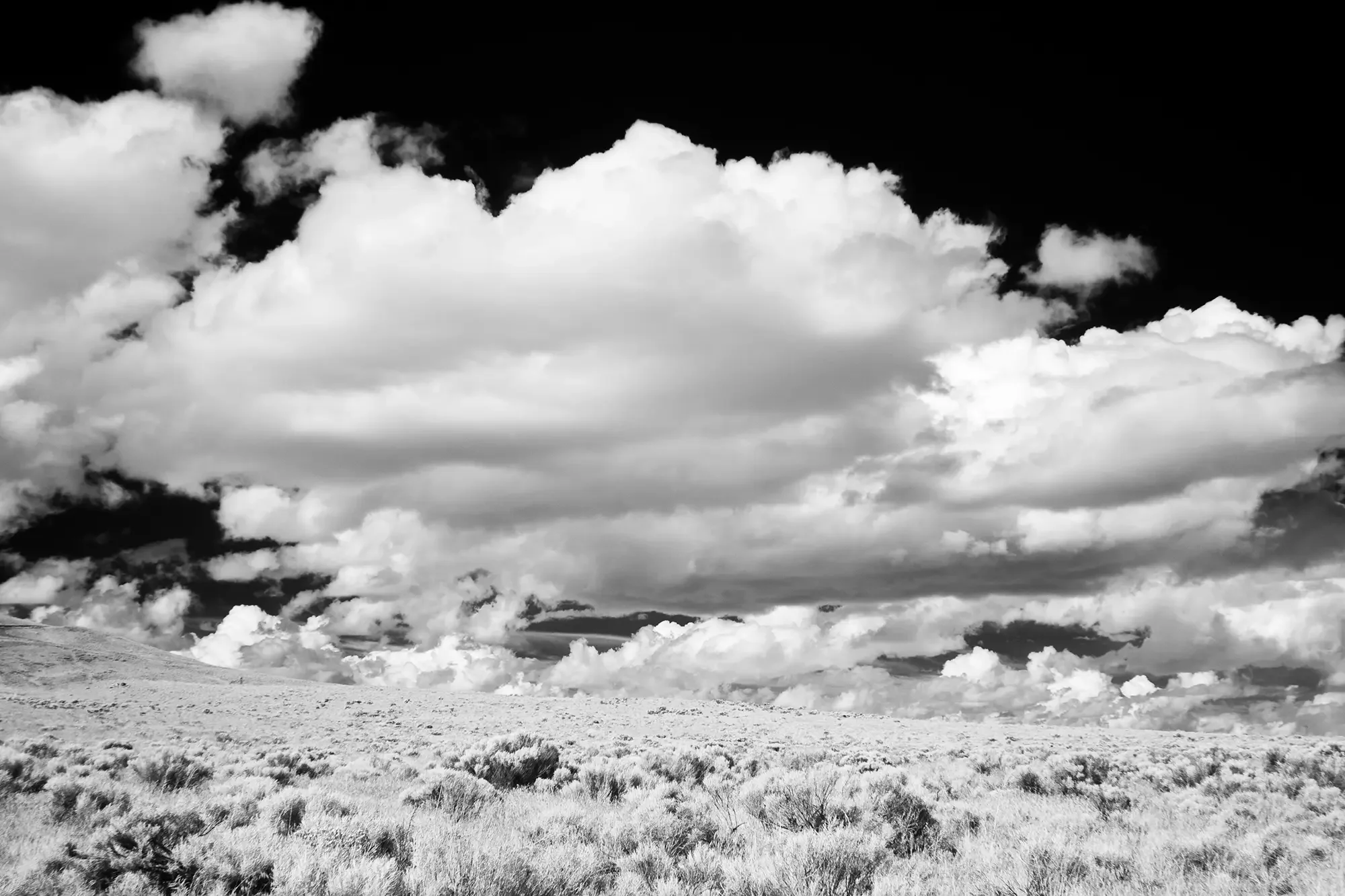
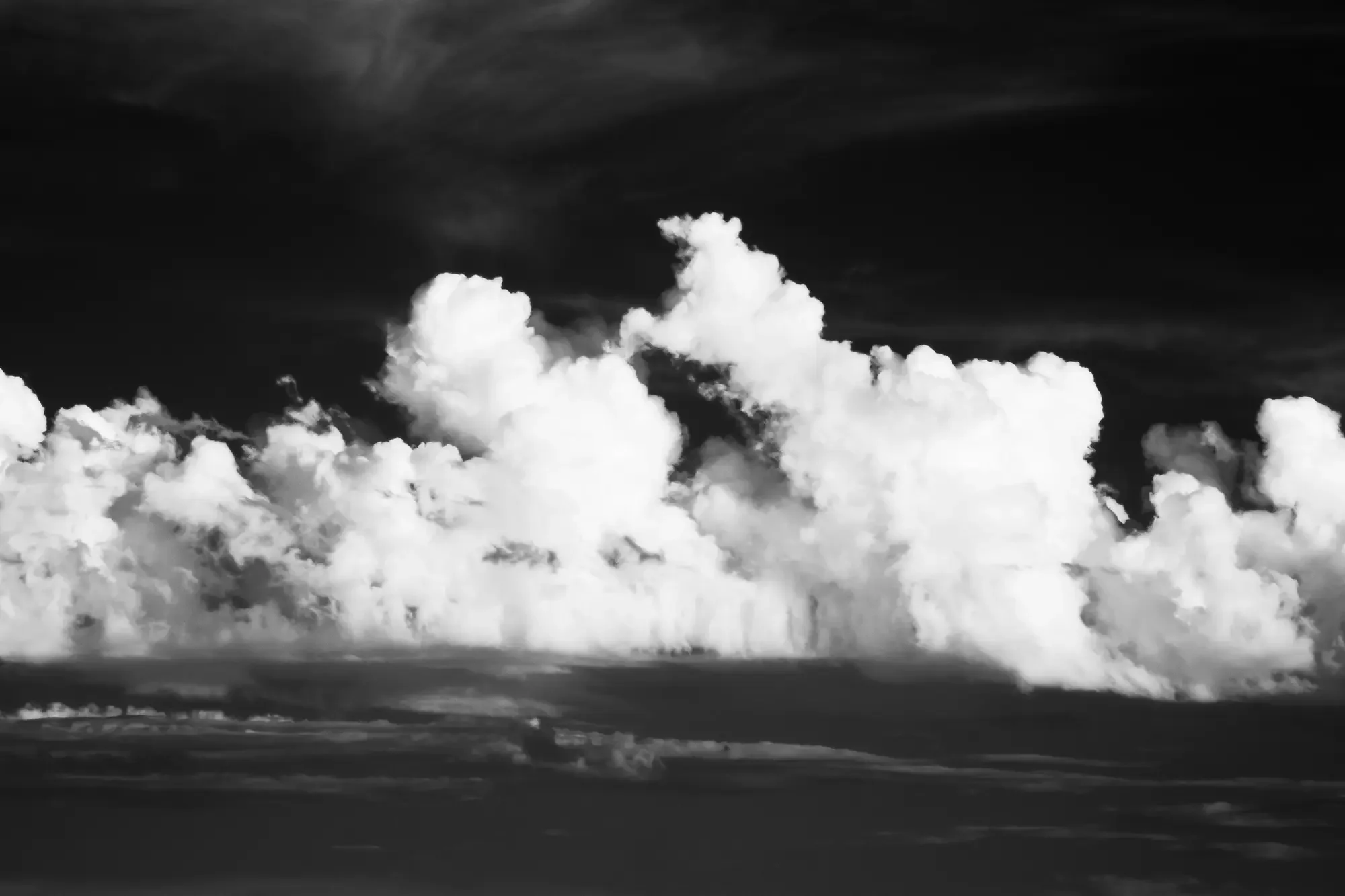
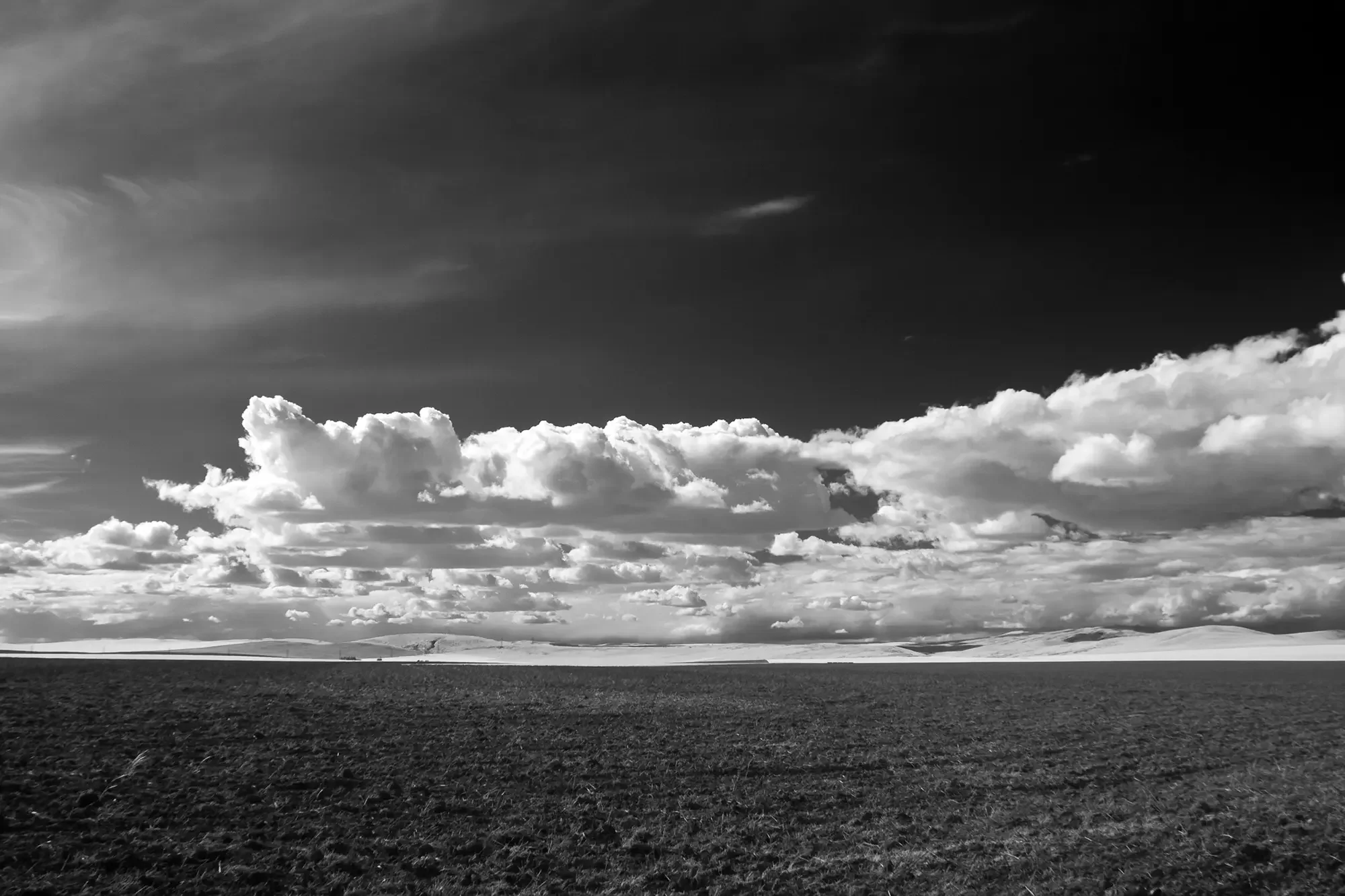
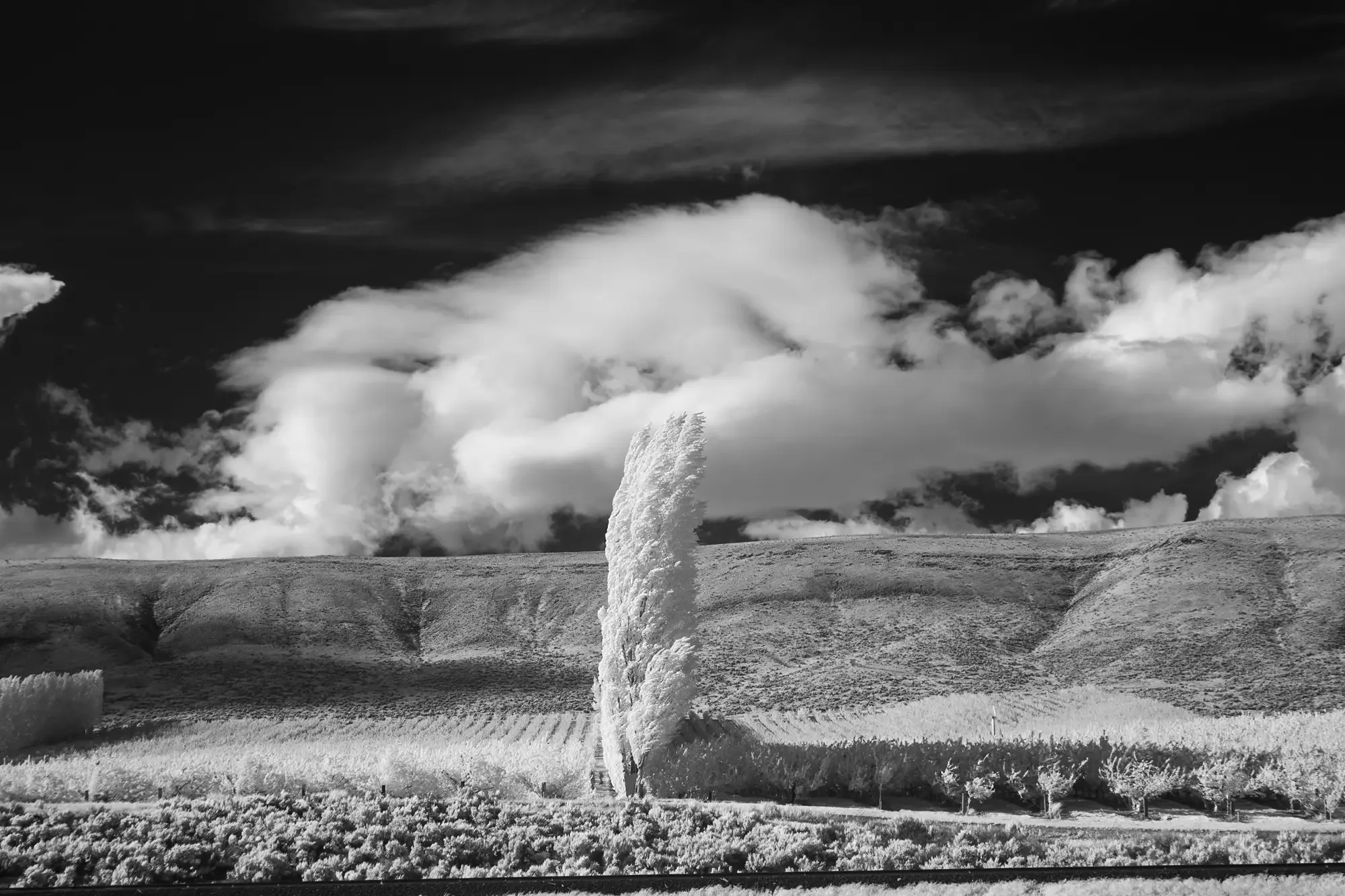
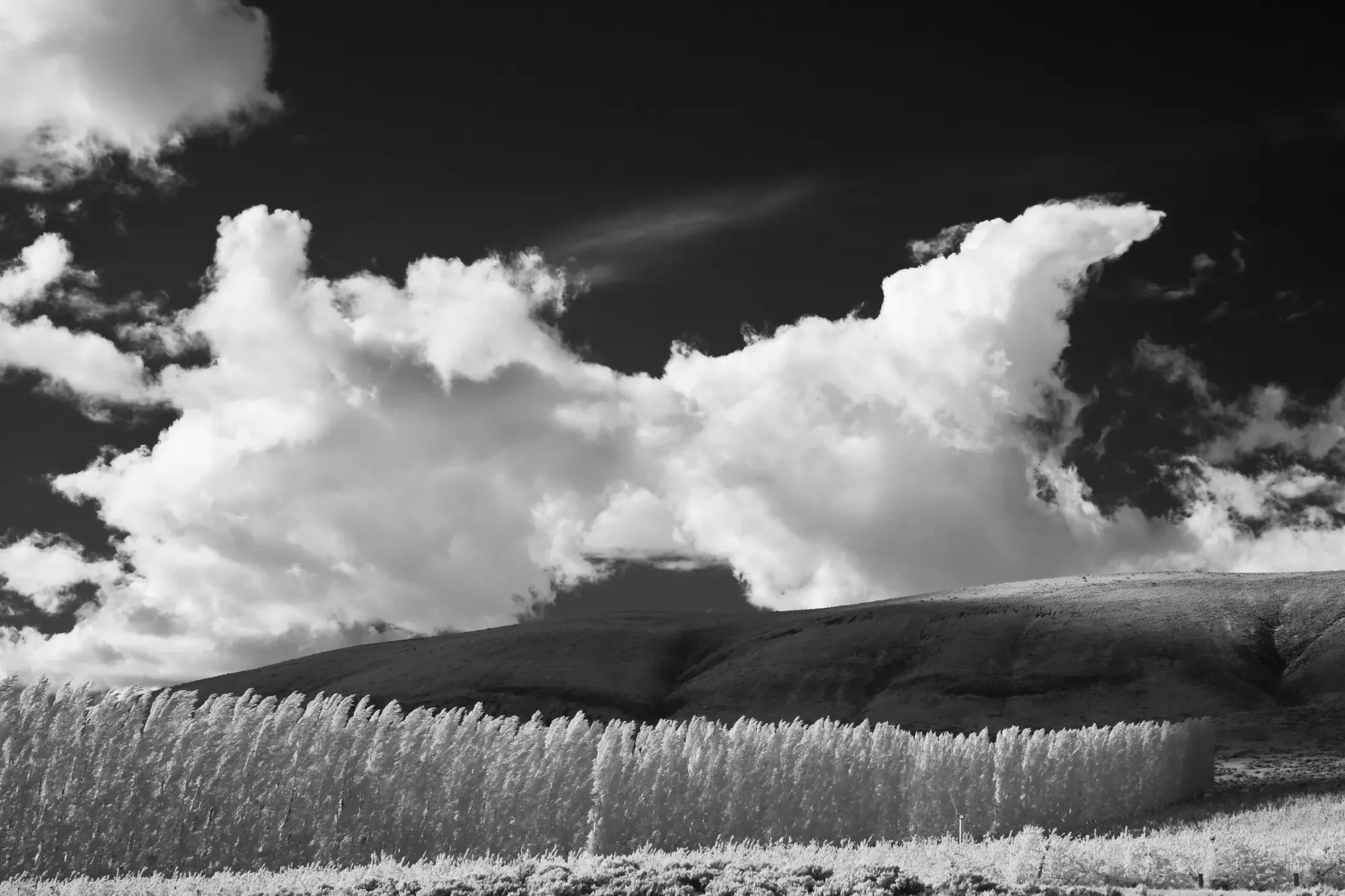
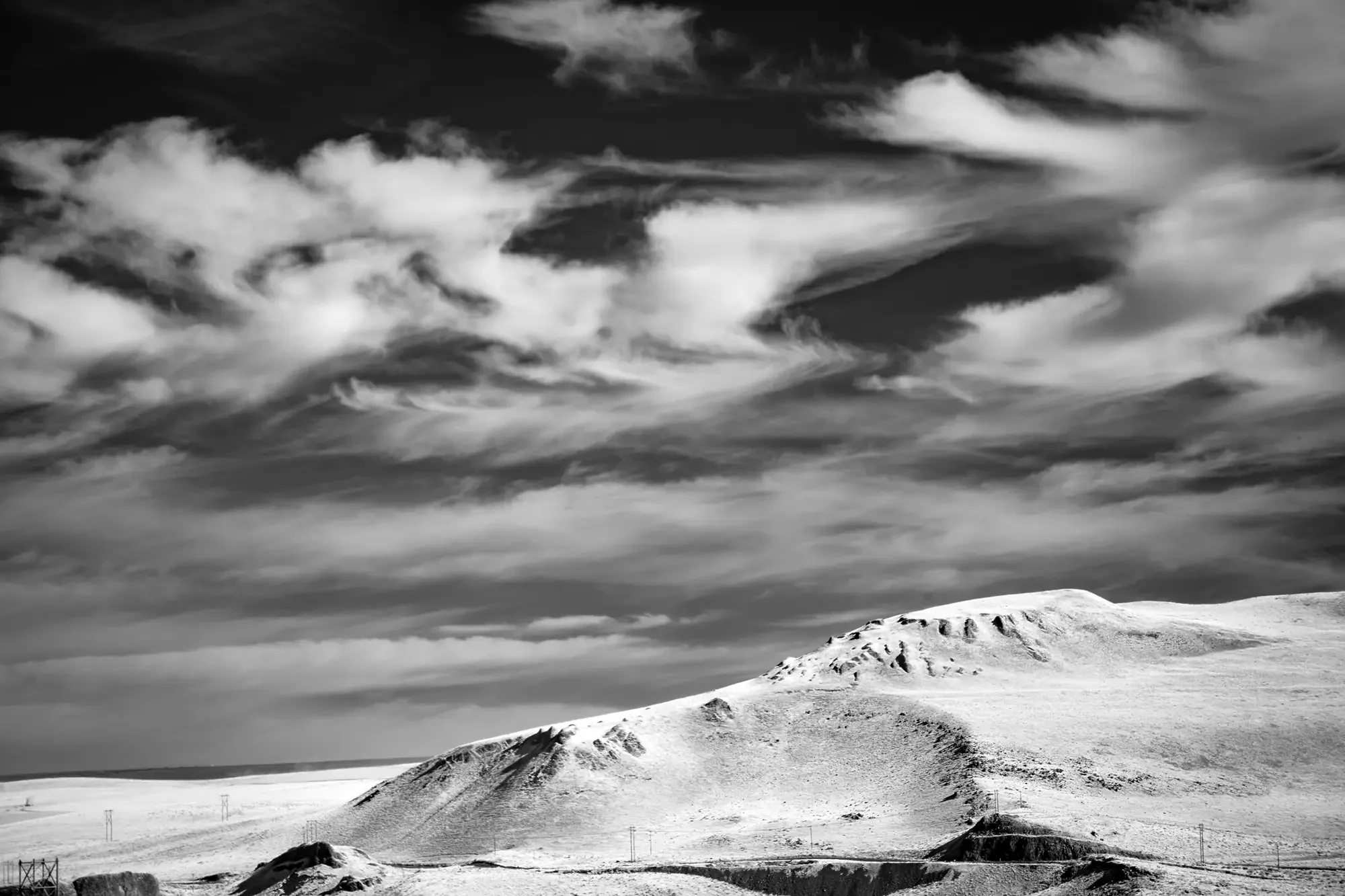
Infrared records a clear sky as nearly black. In eastern Washington, it turns out that's the most important thing the process can do. The cumulus buildups in the afternoon, the lenticular clouds forming over the ridgelines, the clarity that comes with altitude and desert air: all of it becomes dramatic in infrared in a way that a green, overgrown landscape wouldn't allow. I had to learn to see a place where the sky is as much the subject as the land.
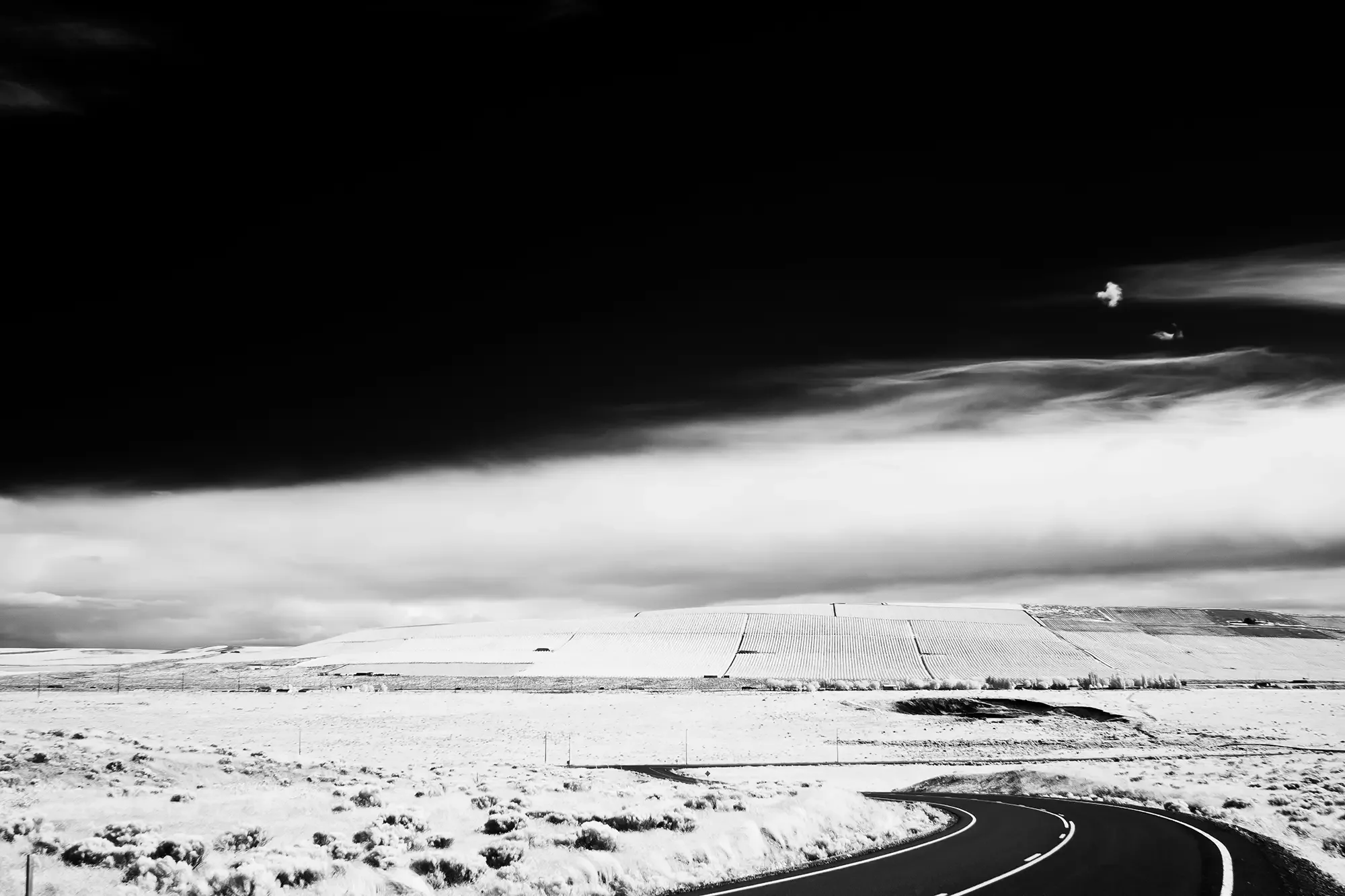
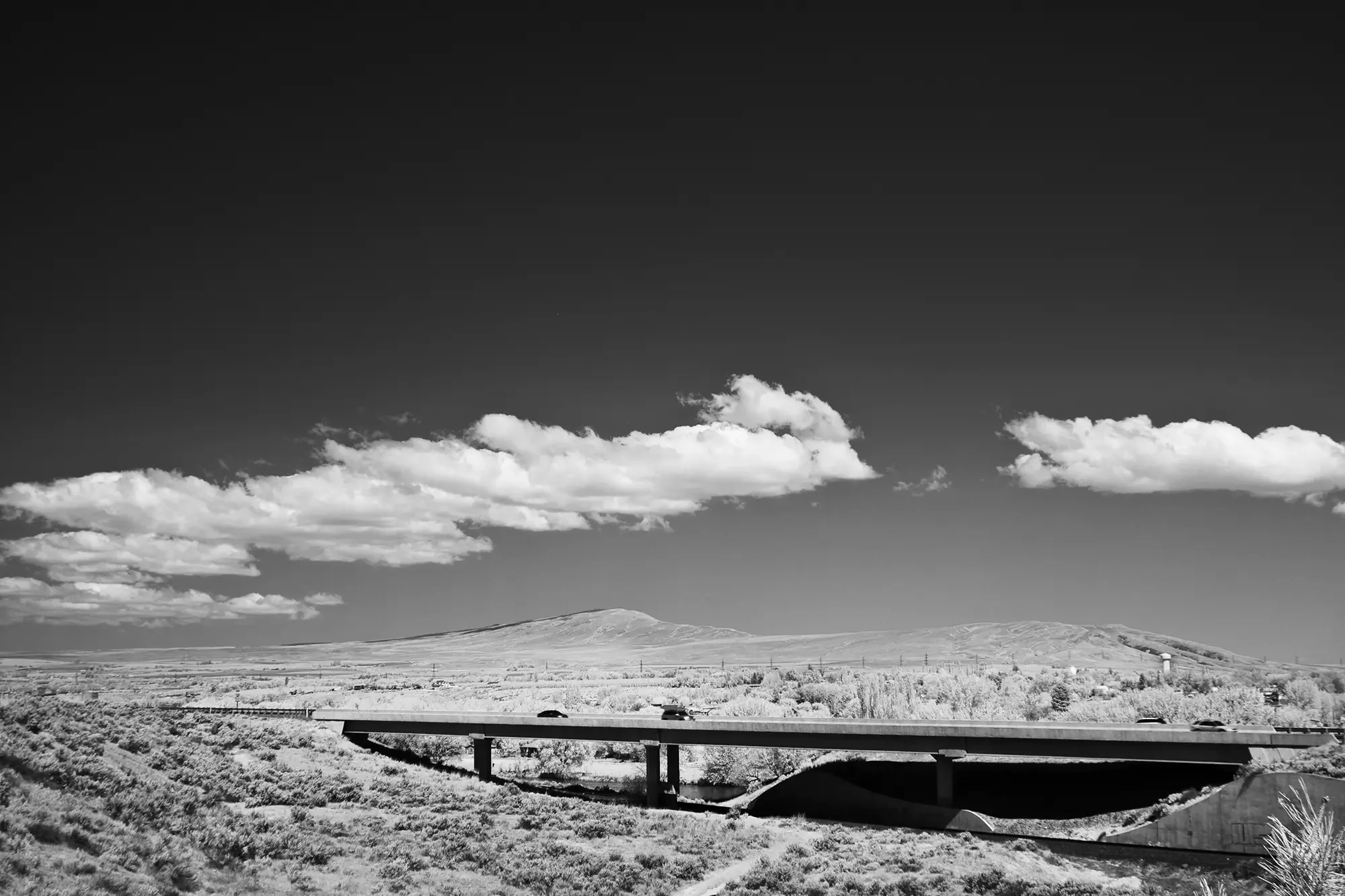
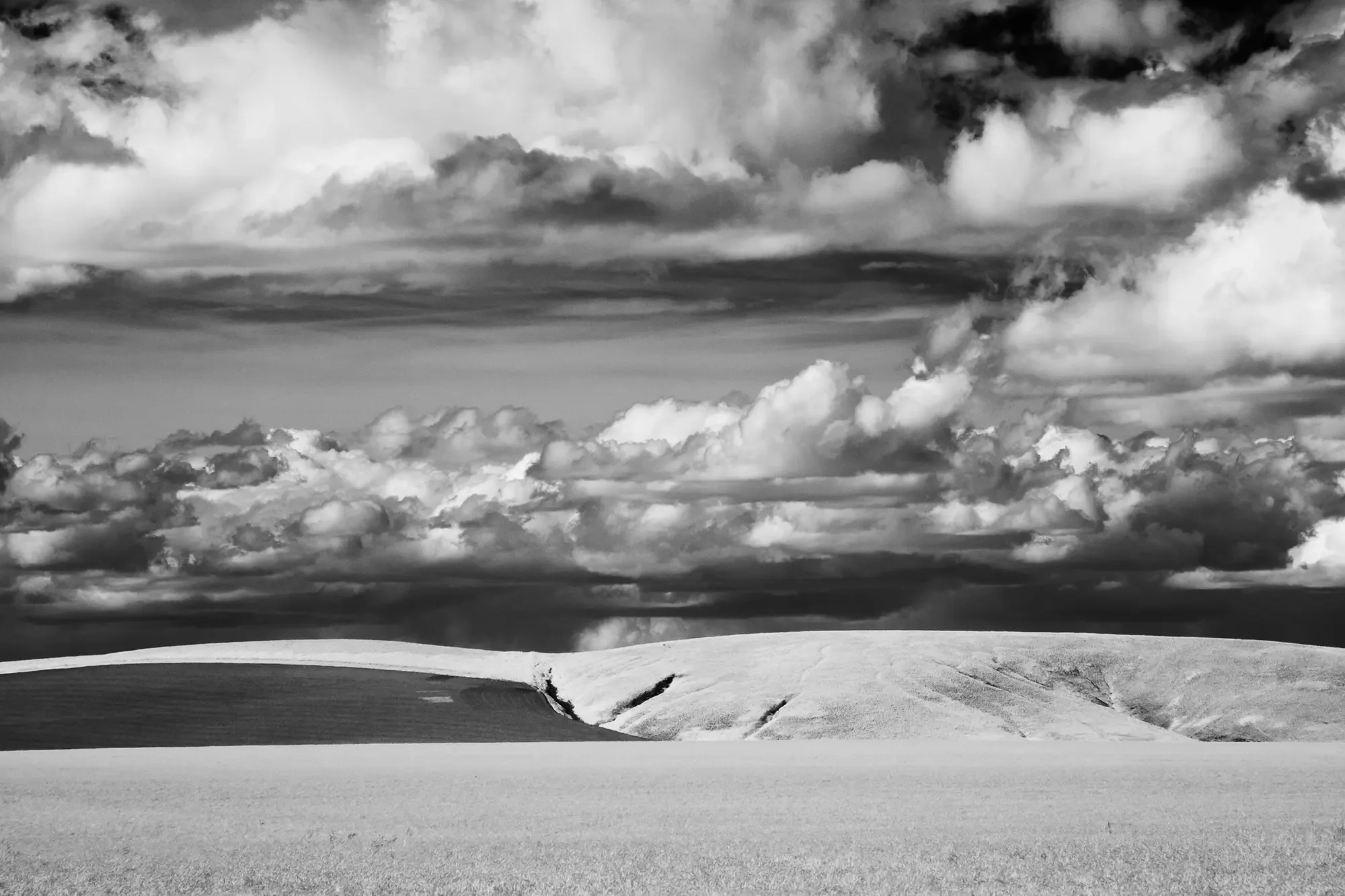
Badger Mountain
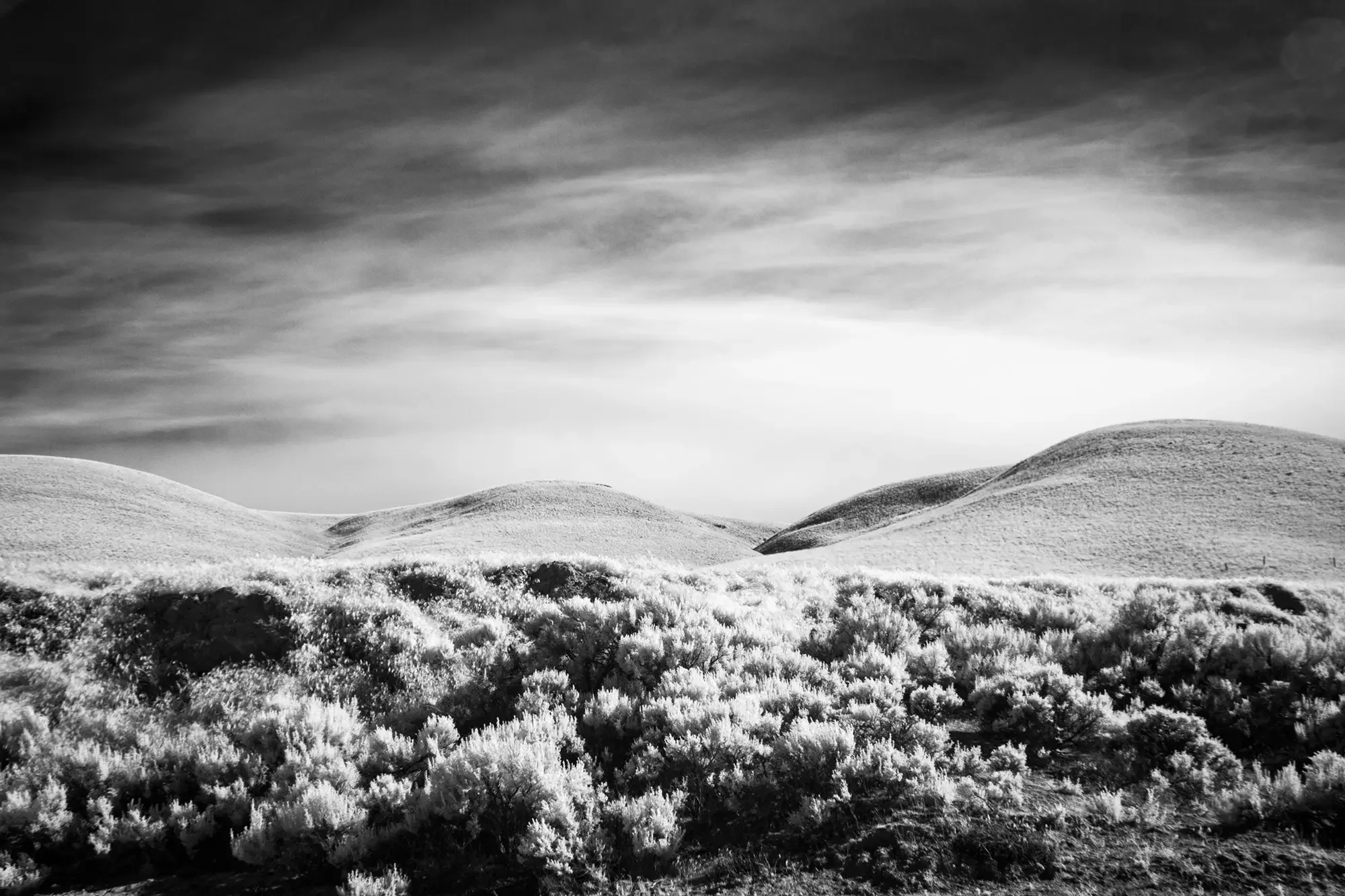
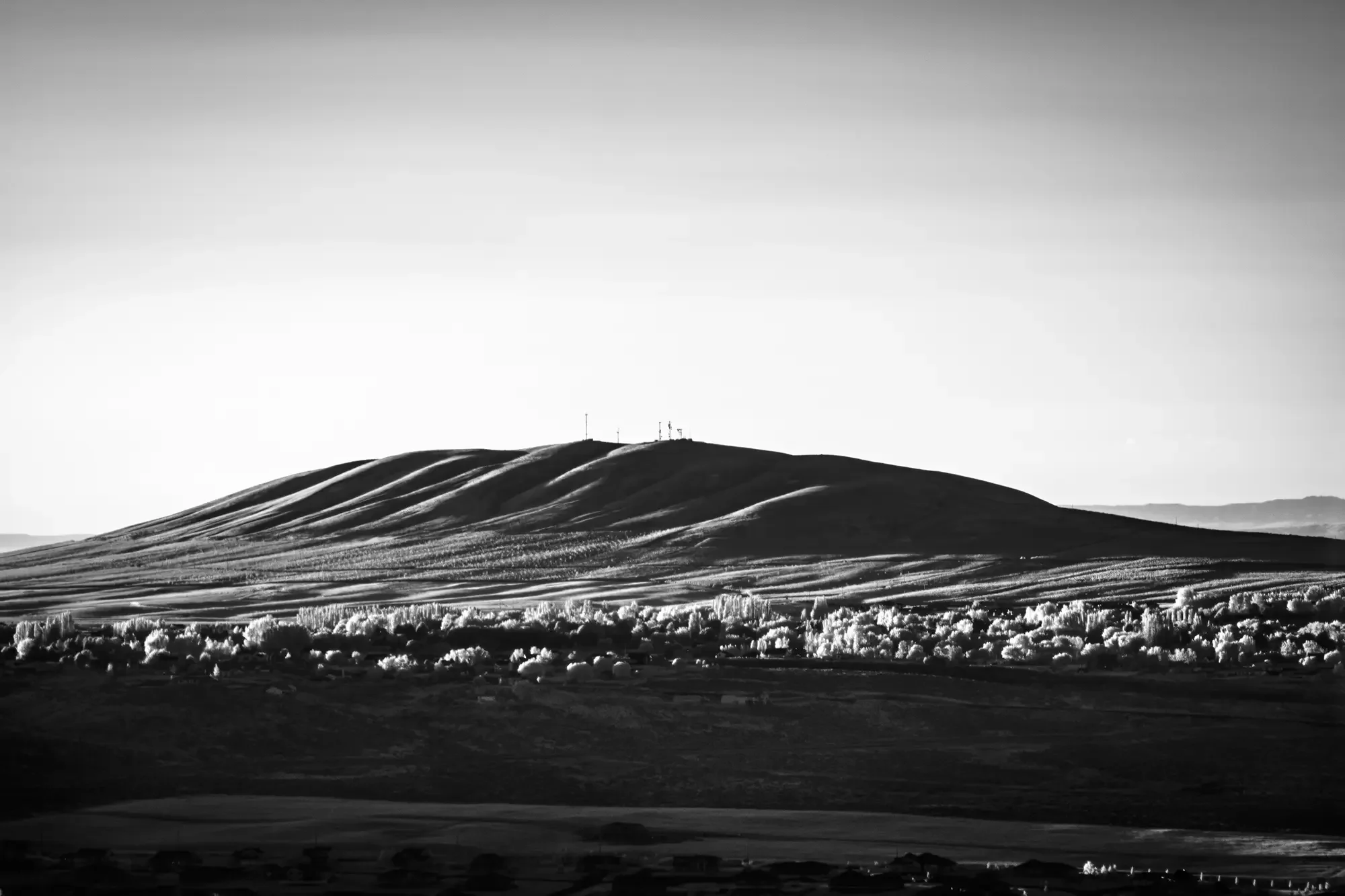
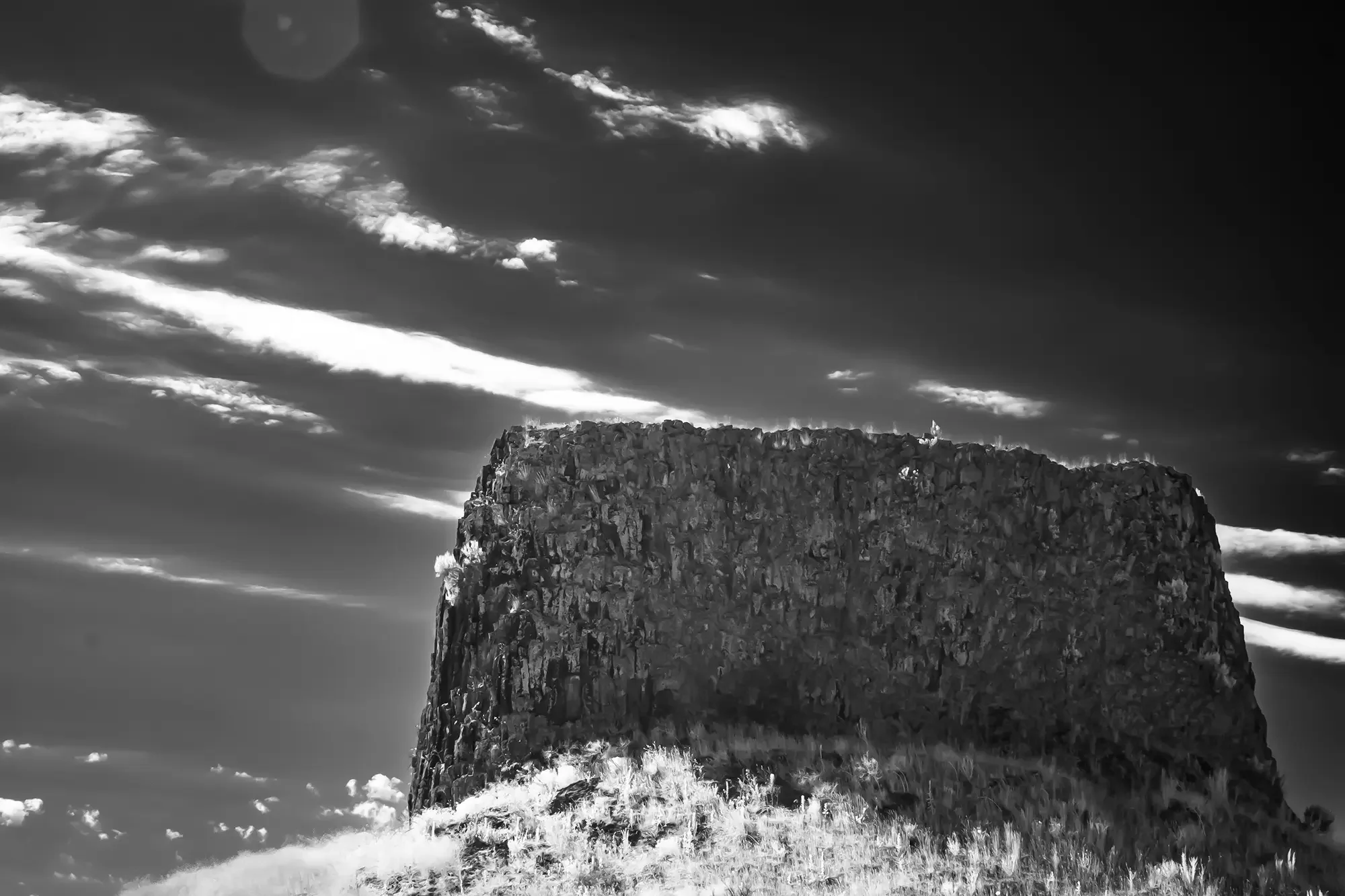
Badger Mountain is a rounded basalt butte in Kennewick, visible from most of the Tri-Cities and from most of the roads I drove every day for three years. I hiked it often enough that the trail felt familiar. The Badger Mountain Challenge 15K taught me what the hill actually costs, which the view does not fully compensate for. It shows up in this work with its communication towers on the summit, the practical human addition to a landmark that predates them by several million years, and it appears here as what it was to me: a fixed point in an unfamiliar landscape, the hill I oriented myself against while I was learning where I was.
That's the emotional difference between the early work in this series and Unseen: Kentucky. Kentucky I photographed while leaving, and the series carries that weight. The first years in eastern Washington I photographed while arriving, while learning to read a landscape that didn't behave the way I expected. The camera helped. What the infrared process reveals in a high desert is different from what it reveals in a bluegrass pasture, and figuring out what it was telling me took time.
By 2010 I knew the place. And by 2010 I also knew, the way you know things you're not quite ready to say out loud, that I wouldn't be staying.
The Later Work
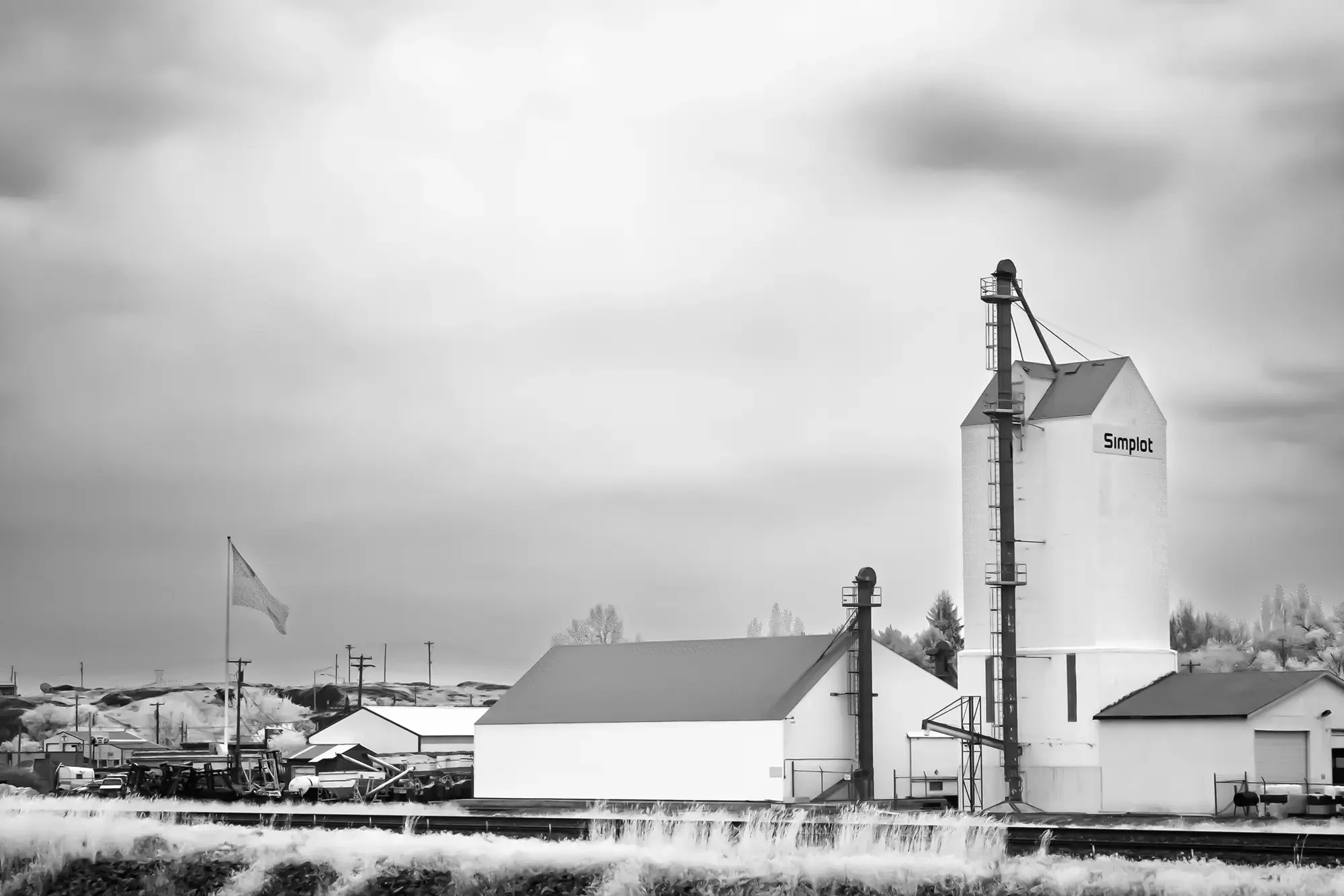
The more abstract images, the grain elevator, the train: those were made in the last year or so, coming home from Coyote Ridge.
Coyote Ridge Corrections Center is a state prison in Connell, about an hour north of the Tri-Cities. The facility ran a program where inmates were trained to train dogs, mostly hard-to-adopt animals pulled from shelters. The dogs lived with the inmates while they worked together, and by the time the dogs came out they were calm, socialized, and adoptable in ways that shelter life alone rarely produces. It was good for the animals. By most accounts it was good for the inmates too. I was there to document it.
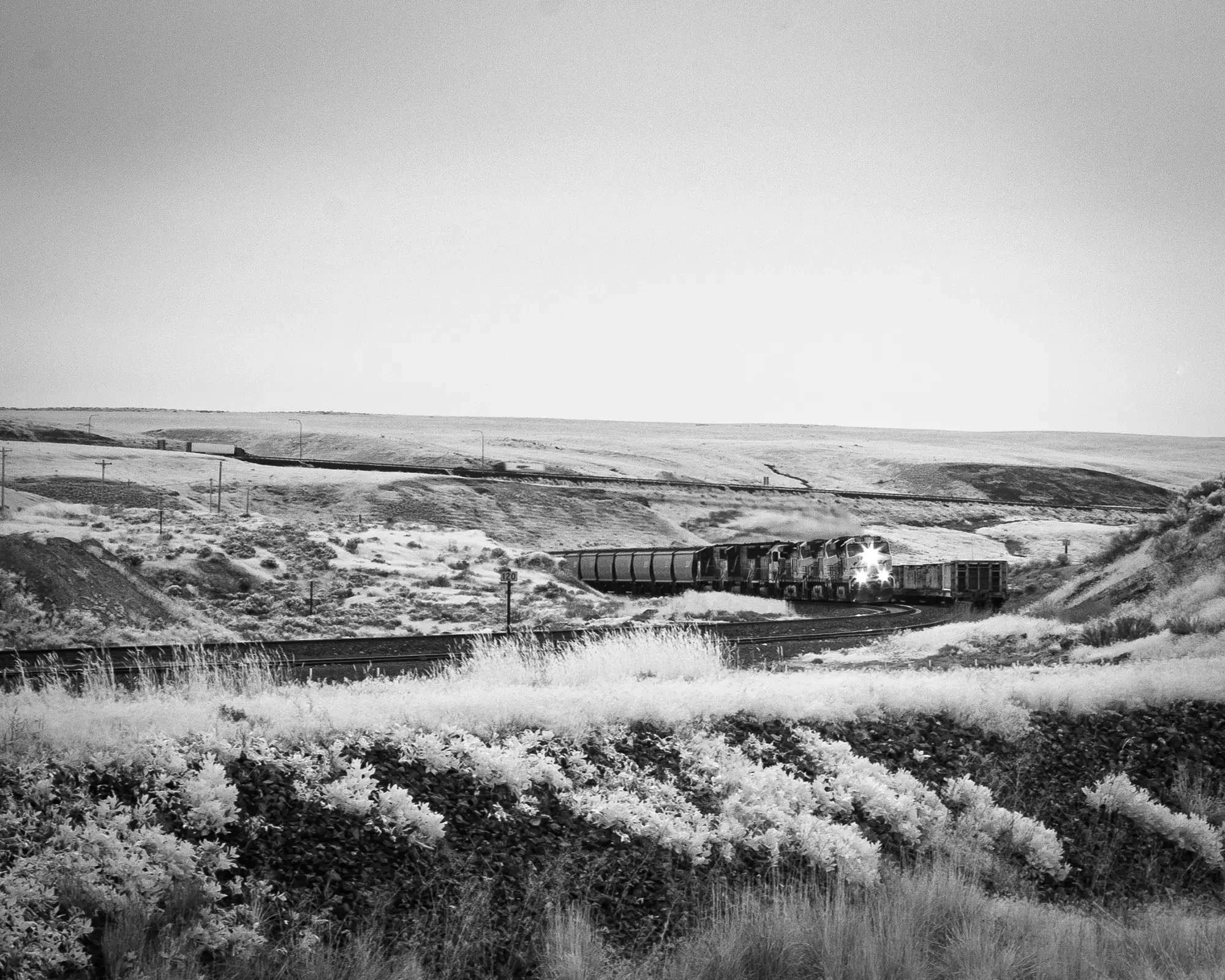
The drive home from those sessions went through the basin. An hour of wheat fields and basalt hills and the particular quality of Columbia Basin light, depending on the season and the time of day. I stopped for the Simplot elevator in a small farm town because the structure had been there every time I'd made that drive and I'd never actually looked at it, the Simplot name on the side, the railroad running behind it, the flag and the low overcast. The kind of thing you stop seeing when you see it every week. And I stopped for the train rounding a curve through the sagebrush because it was there, and because I was paying attention in a way you pay attention to a place when you've started the process of leaving it.
The Kentucky work taught me to recognize that feeling. The attention that comes with departure. I thought I was making arrival photographs. For the last year I was making departure photographs again, and I didn't realize it until after I'd moved to Tucson and was editing the files.
The Landscape
The center-pivot irrigation systems that water the Columbia Basin's crops. The vineyard rows of the Horse Heaven Hills and Red Mountain, establishing Washington's wine industry on land that had been dryland wheat farming a generation before. The basalt canyon country along the Snake and Columbia Rivers, carved by Ice Age floods and now regulated by a series of federal dams. The wide agricultural plateau north of the Tri-Cities where the sky is, without exaggeration, the dominant feature of every landscape.
I was doing two things in eastern Washington simultaneously, and this series is the record of one of them. The Coyote Ridge documentation, the dogs, the inmates, the program, was the other. The landscape work and the animal welfare work were always running alongside each other, in Kentucky, in Washington, and later in Tucson. They used different cameras and produced very different photographs, but they came from the same impulse: the habit of paying attention to things that are easy to overlook.
Pinhole Photographs
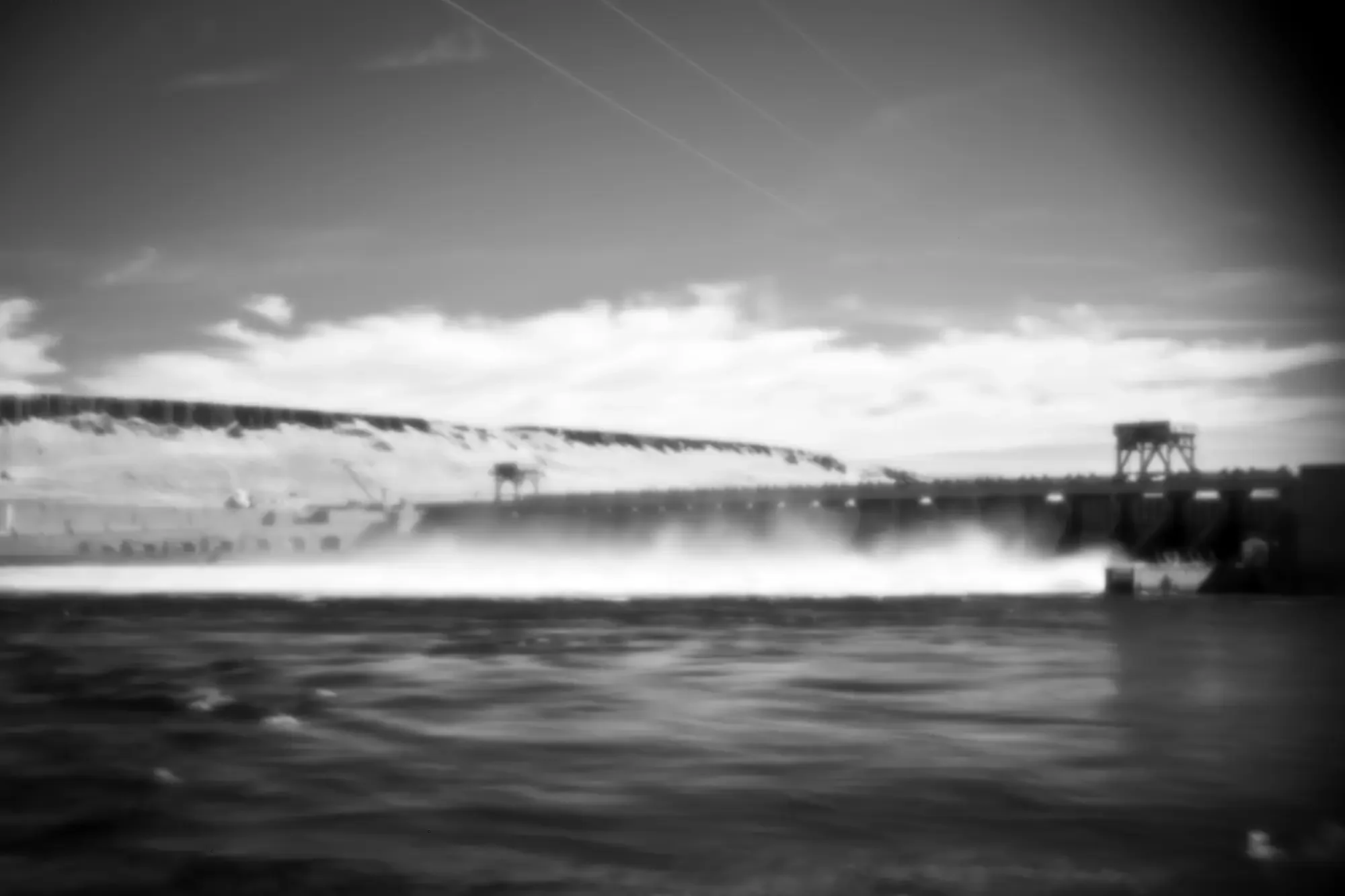
McNary Dam sits on the Columbia River south of the Tri-Cities, one of a string of federal dams that turned the Columbia from a free-flowing river into a series of reservoirs and made the agricultural economy of the region possible. It is a complicated piece of infrastructure to photograph. What it is and what it displaced and what it made possible are all complicated, and a sharp photograph of concrete and water doesn't quite carry that.
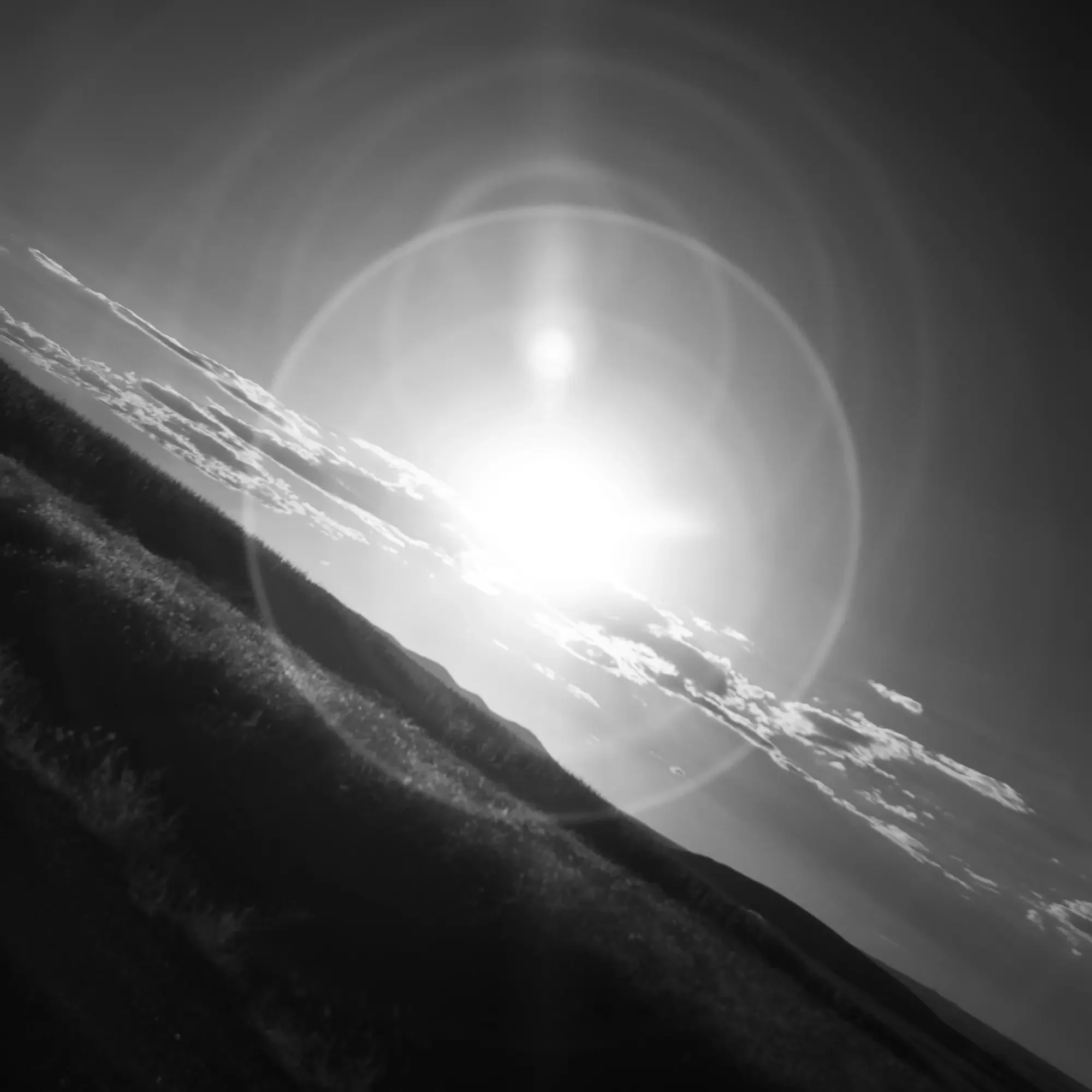
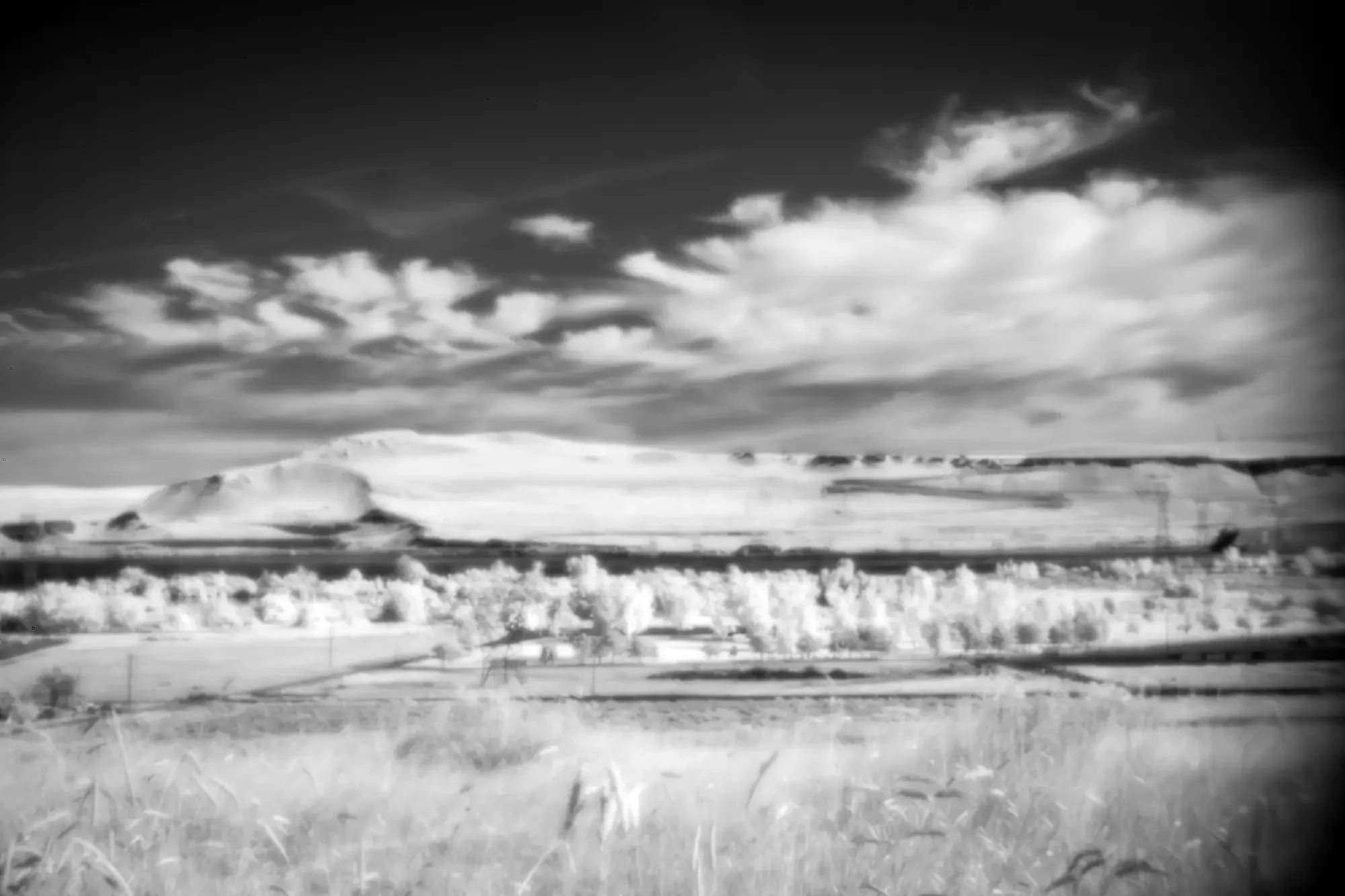
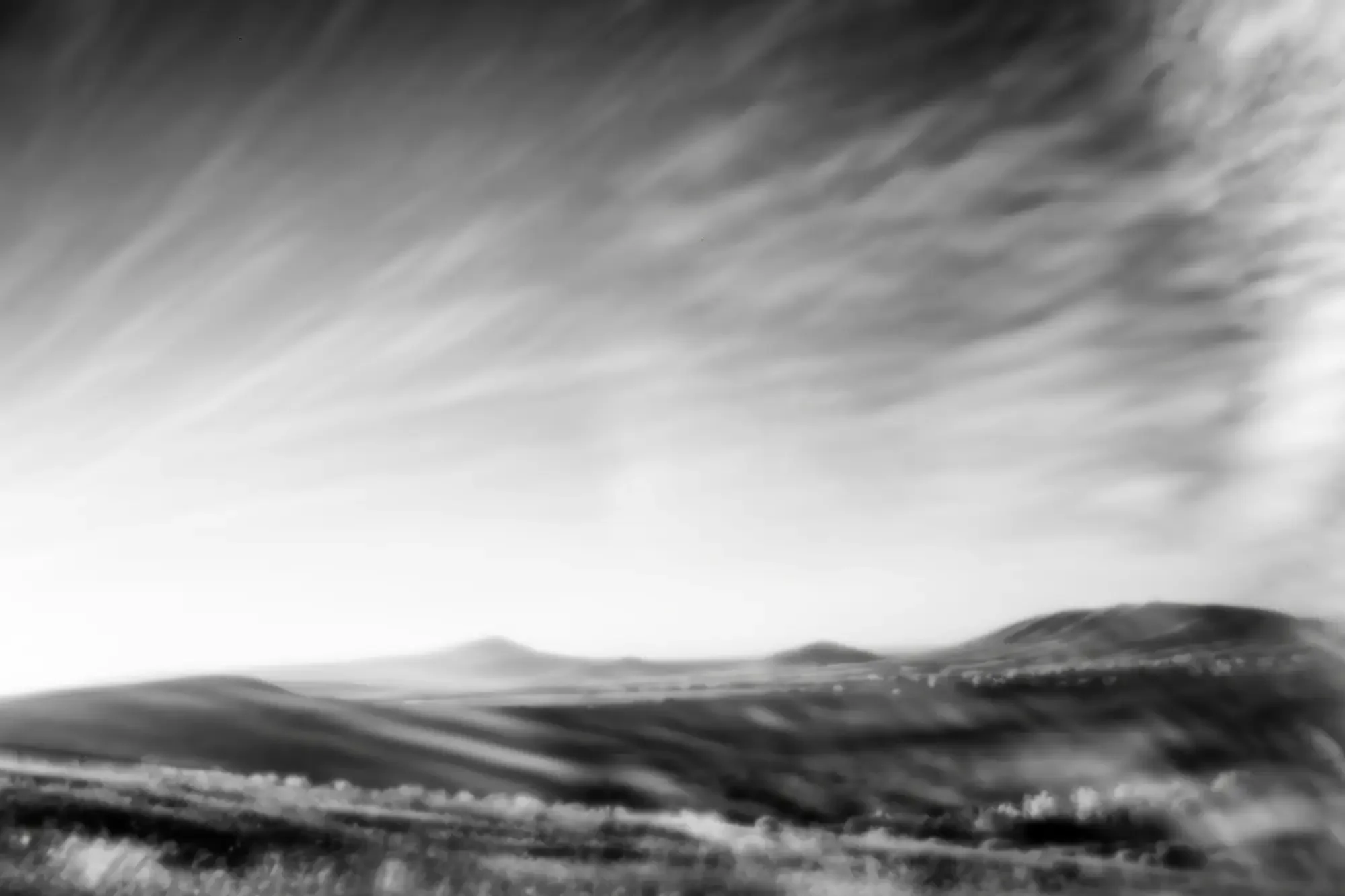
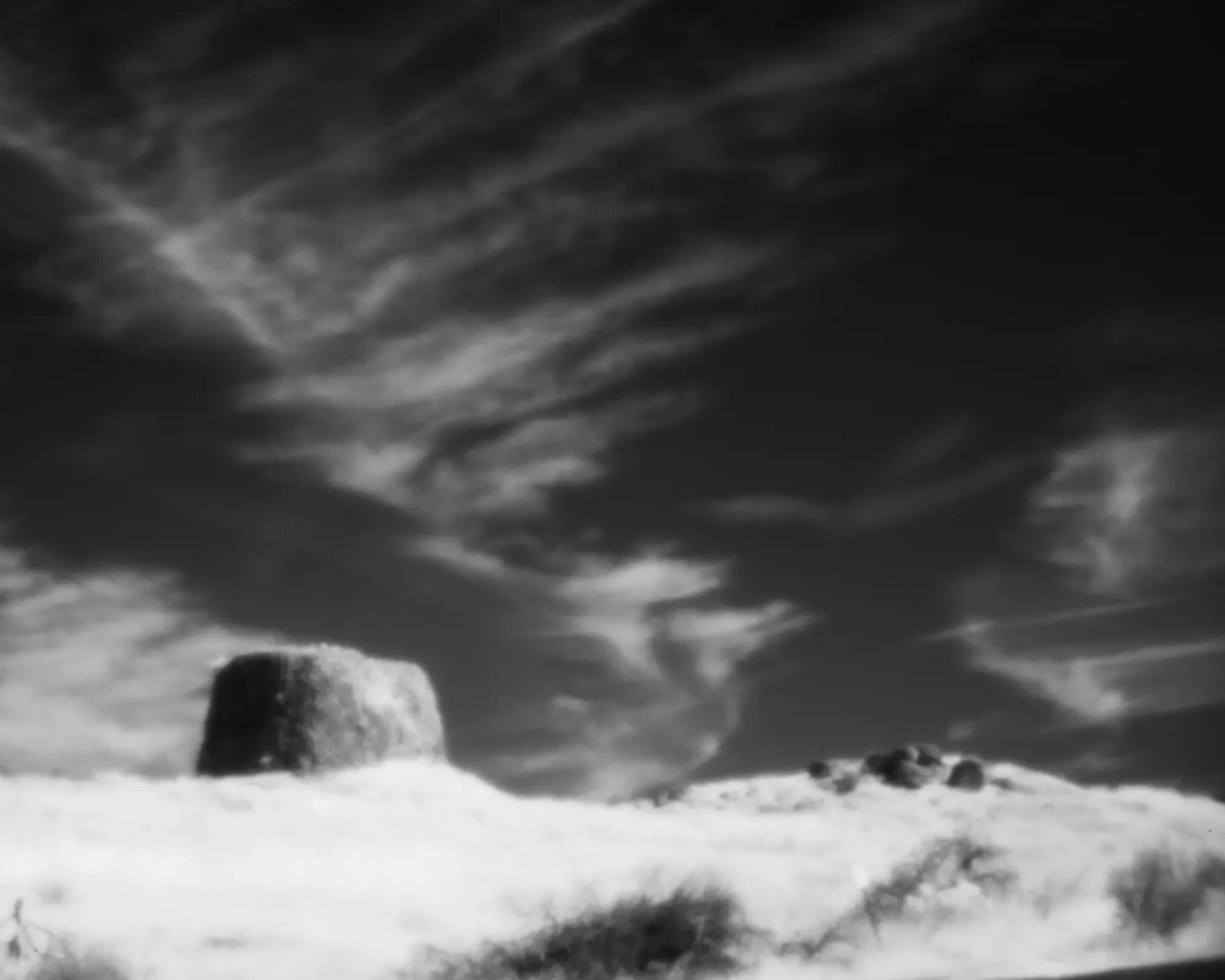
The pinhole images in this series were made with the same IR-modified camera used for everything else here, paired with a pinhole I made from a Canon body cap: the plastic disk that covers the lens mount when no lens is attached. Drill a small hole in it, mount it on the camera, and you've replaced every element of optical glass with a single point of light. The exposure can run seconds rather than fractions of seconds. Everything in the frame goes soft, not out of focus exactly, but rendered without the precision a lens produces. Objects lose their edges. Motion in the clouds streaks and blurs. The capture and processing are entirely digital. The only alternative element is the optic itself.
I made it as a classroom demonstration for the alternative process course I taught at Washington State University Tri-Cities, to show students what happens when you reduce an optic to its simplest possible form. Then I put it to use because captures something the regular lens cannot.
The result looks the way a place feels when you're trying to remember it rather than document it. That seemed right for the end of the Washington years. They sit alongside the infrared work because the question is the same one: what does the right instrument reveal?
Available as archival giclée prints in the Pacific Northwest Collection in my gallery.