
So You Got a New Puppy. Photograph the First Year Before It Disappears.
Bringing home a new puppy in Tucson rearranges your life surprisingly quickly. There are food bowls to buy, a veterinarian to find, some version of a plan for training, a growing collection of things that were obviously designed to be chewed, and probably several hundred photographs on your phone before the first week is over.
Meanwhile, the puppy keeps changing.
The ears that looked too large on Monday somehow fit better by Friday. The paws catch up with the legs. The soft puppy coat starts changing. A dog you could carry under one arm becomes a dog who occupies most of the sofa.
You’ll have plenty of photographs of it happening. The question is whether you’ll have the photographs you’ll still look at years from now.
Your Puppy Doesn’t Need to Know How to Pose
One of the most common concerns I hear from pet owners is some version of, “My dog can’t sit still. How are you going to photograph them?”
With a puppy, I assume they can’t sit still.
I started photographing shelter animals as a volunteer in Kentucky in 2005, continued that work after moving to Washington, and have photographed shelter animals in Tucson since 2013. Merrell published my second book, Shelter Puppies, in 2011. I’ve spent plenty of time sitting on the floor with puppies who had priorities other than participating in my photography.
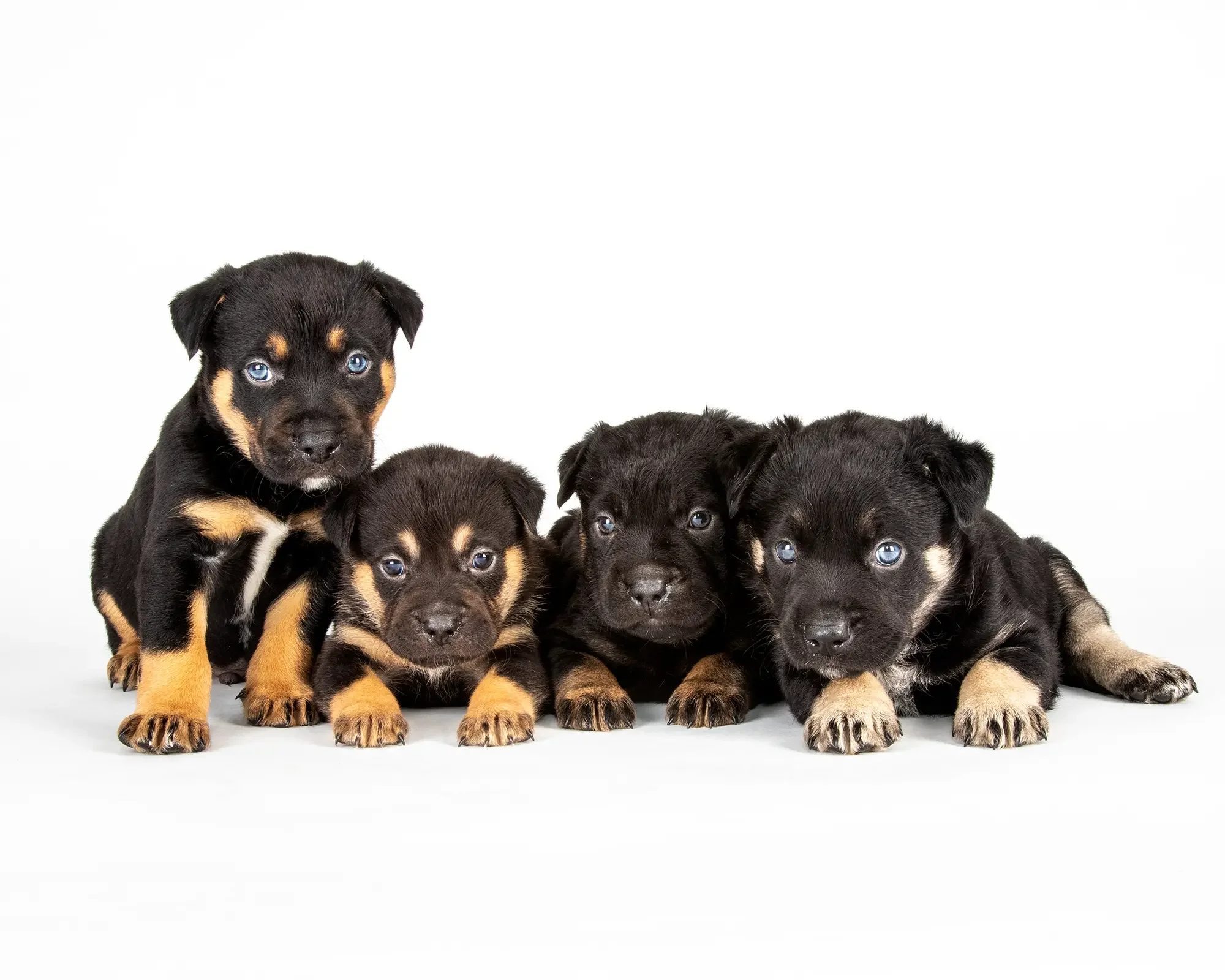
One foster at Pima Animal Care Center brought in four young puppies for their portraits. The car ride had made them a little sleepy, and the unfamiliar setup bought us a brief period when they were willing to remain more or less where we put them.
I set them up on a table so I could work quickly in front of subjects who might become considerably faster without warning. Their foster stood right beside the edge, both for safety and to help return the occasional wandering puppy to the group.
The photograph happened in the short window between sleepy and exploratory. A few minutes later, exploration began in earnest.
I care less about whether a puppy can hold a sit than I do about recognizing a useful window, knowing when they need a minute, when a toy will help, and when they’ve already had enough.
I watch how a dog responds to the room, the equipment, me, and you. I give them time to investigate things. We use treats and toys when they help. We take breaks when their attention disappears. Sometimes the expression I want happens in the fraction of a second between two completely different puppy plans.
A puppy doesn’t need to perform for me. I need to pay attention to the puppy.
I Bring the Studio to Your Puppy
My pet photography studio is mobile. I bring professional lighting, backgrounds, and the equipment I need to create studio-quality portraits in your home.
That’s convenient with any dog. With a new puppy, it solves a few additional problems.
You don’t have to put a puppy in the car, take them into an unfamiliar photography studio, and ask them to settle down in a room they’ve never seen before. We work in a place where they already know the smells, the sounds, the water bowl, and where to retreat when they need a break.
It can also help during the early weeks, when you and your veterinarian are deciding what kinds of public exposure make sense while your puppy works through their vaccination schedule. We can plan the session around the guidance your veterinarian gives you.
We Plan for the Photographs You Want to Live With
Before the session, we’ll have a design consultation. We’ll talk about your puppy’s temperament, what they’re comfortable with, and what I need to know before I arrive. We’ll also talk about what you want to do with the finished photographs.
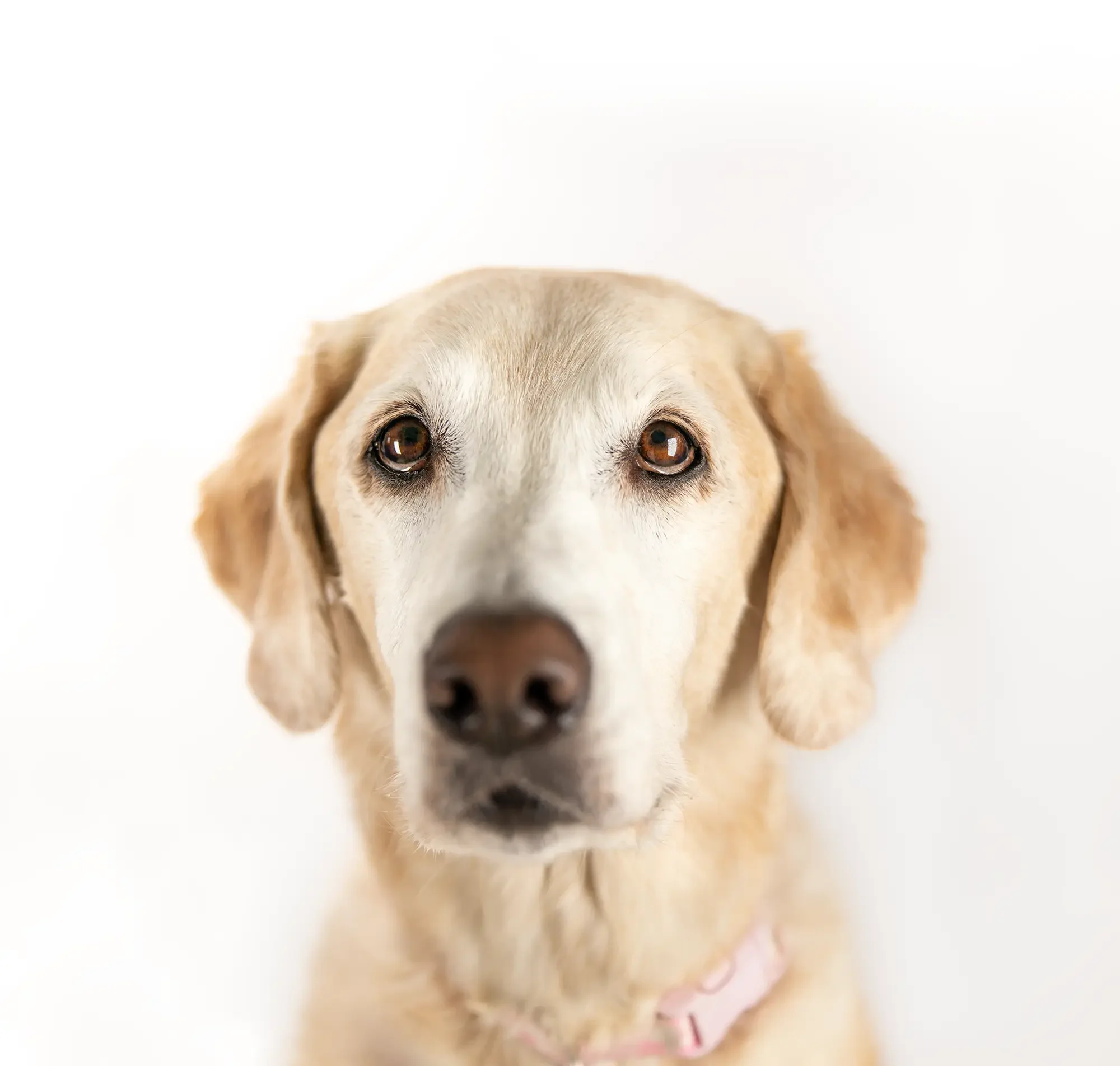
One client had just brought two Lab puppies into a family that already included a senior Lab. She wanted good portraits of all three dogs for a wall collage, but she didn’t need all three of them in one photograph.
That changed what we needed from the session.
I photographed the two puppies together and made a separate portrait of their older sister. The photographs could work together on the wall without requiring two puppies and a senior dog to cooperate in the same frame at the same time.
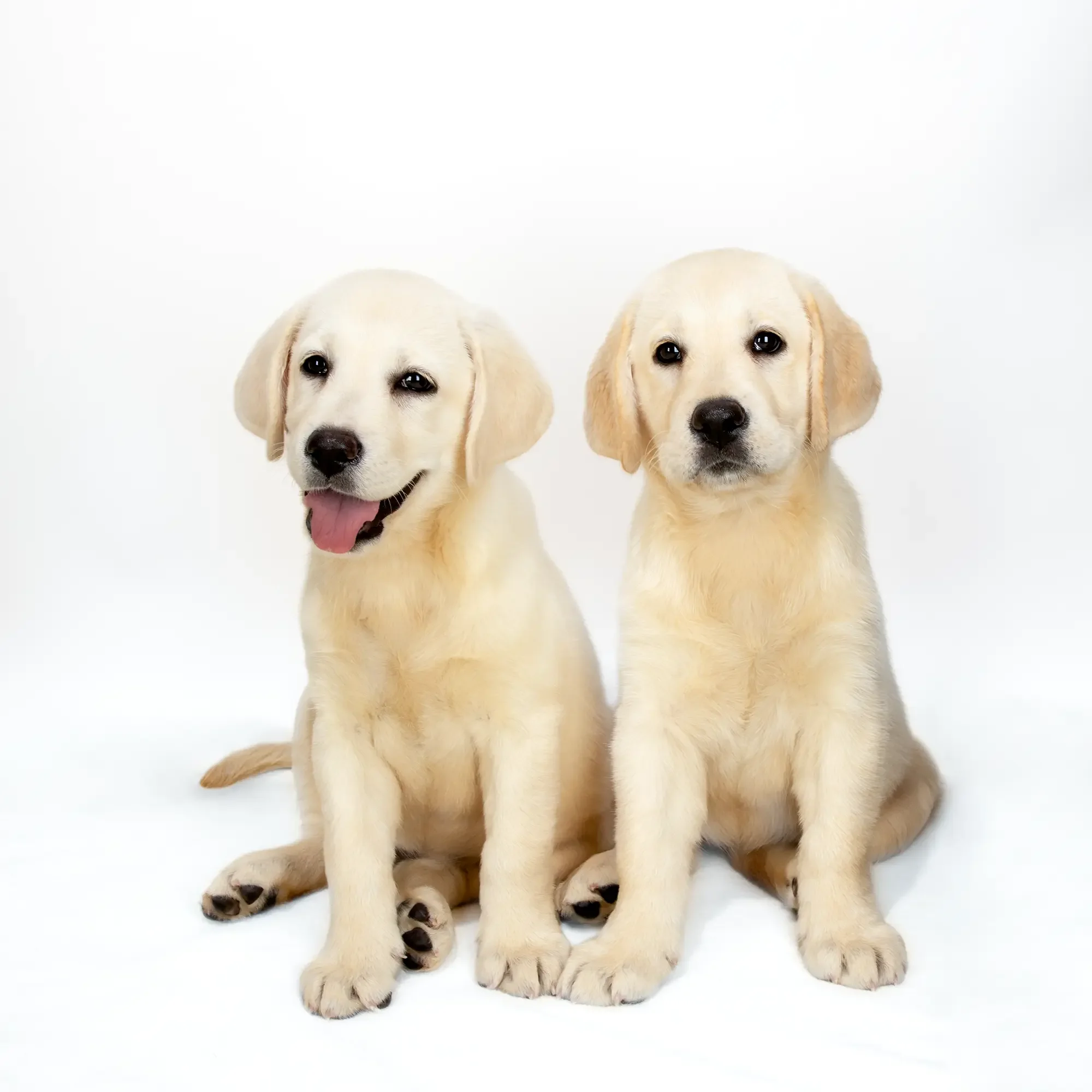
Sometimes a group portrait makes sense. Sometimes a collection of individual photographs solves the problem better.
If you already have a wall in mind, send me a quick photograph of it before our consultation. It gives us something specific to plan around.
Eight Weeks, Six Months, One Year
There’s an argument for waiting. Let the puppy grow up a little. Finish training. Get through the chaotic part. Schedule portraits when the dog settles down.
You should photograph the adult dog too. You can’t go back and photograph the puppy.
That’s the part people tend to underestimate. The first year doesn’t produce one version of your dog.
I recommend beginning while your dog is still unmistakably a puppy, ideally around eight to twelve weeks. This is the oversized paws, unpredictable ears, soft puppy coat stage.
Around six months, the proportions have changed and the adolescent dog has arrived. They’ve usually grown into their legs, although they may not have entirely figured out what to do with them, and their personality has become much clearer.
Around their first birthday, we can make portraits of the young adult your puppy has become. Those are different dogs in front of the camera.
Three sessions across that first year give you individual photographs from each stage, but they also show the transition between them. Put those photographs next to one another and you see something a single session can’t show.
You see the year. By then, you’ve also got enough material to make something beyond a group of favorite photographs. Sometimes that becomes a book.
When Should You Schedule Your Puppy’s First Portrait Session?
Earlier than you probably think.
You don’t need to wait for perfect training or adult behavior. If your puppy is already home, we can talk about whether now is the right time for a first session and what will work best for their age, temperament, and your goals for the photographs.
I photograph pets throughout Tucson, Oro Valley, Marana, Vail, and the Catalina Foothills. You can find current standalone session and package options on my pet photography pricing page, or contact me to talk about documenting your puppy’s first year.
Your phone will probably contain thousands of photographs by their first birthday. I’d like to add some to your wall too.
