
Can a Photographer Make You Look Better Without Making You Look Fake?
“Can a good photographer make me look better than I do in real life?”
The honest answer is that I can probably make you look better than you do in most casual photographs. Better than you do in real life is the wrong standard.
My goal isn't to create a version of you that only exists in a photograph. I want to create a portrait that looks like you on a good day, under flattering light, with a natural expression and none of the tension that tends to appear when someone points a camera at you.
That sounds simple until you are the person in front of the camera.
How do I look good in a headshot if I feel awkward?
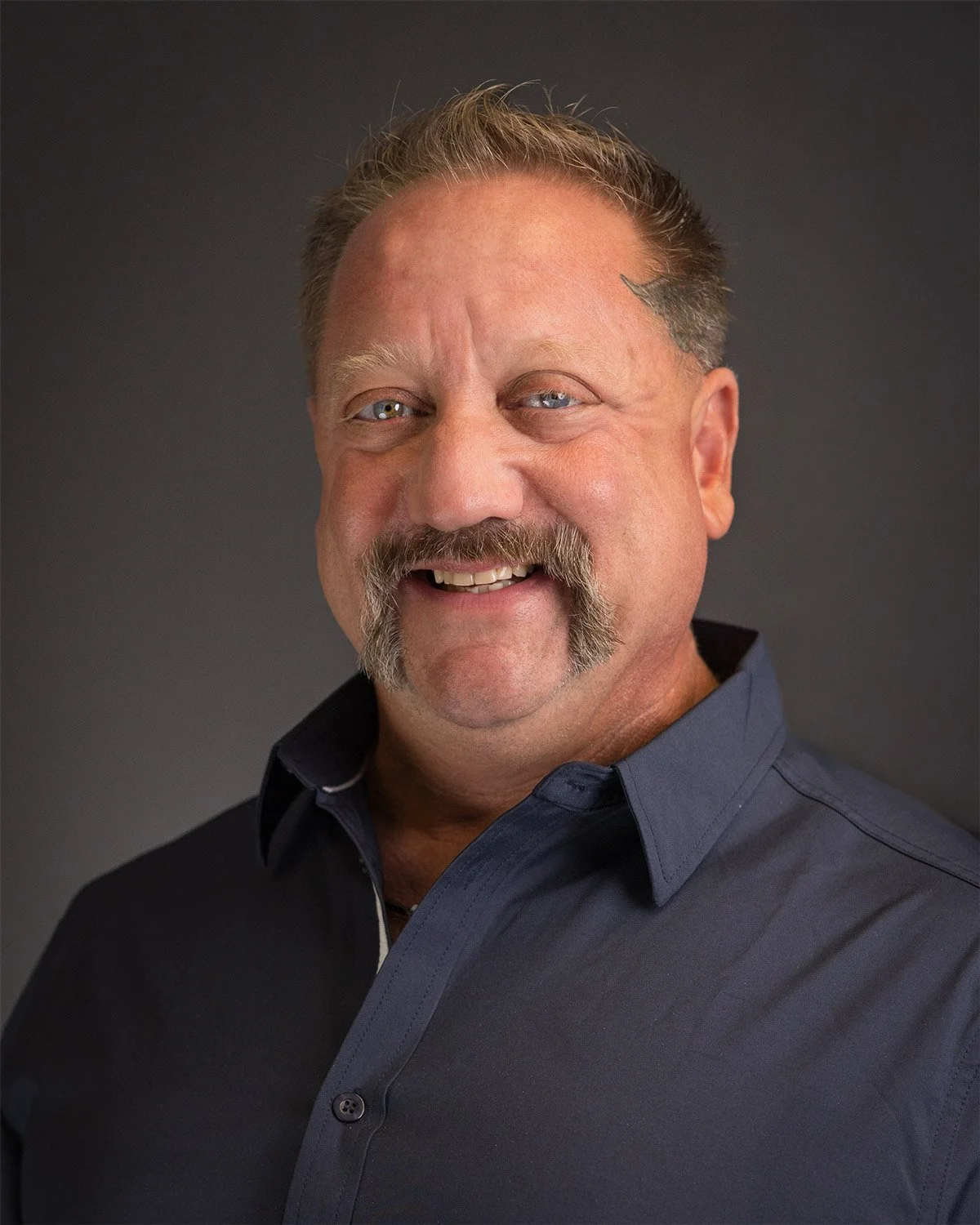
This portrait session lasted about five minutes, this image was selected, and he was done.
Most people feel at least a little strange during a headshot session. You are standing in a specific place, looking toward a camera, and trying to produce an expression that normally appears without any conscious effort.
The situation can feel even more uncomfortable when your employer scheduled the session. You may not have chosen the photographer, the timing, or the fact that your portrait will appear on the company website. A model release can make the public nature of the photograph feel more immediate.
You don't need to pretend that none of this feels strange. For most of us (yes, me too), it is strange.
I start by giving you a few basic directions. I show you where to stand, how to angle your body, and where to place your weight. From there, I make small adjustments based on what I see.
For a single professional headshot, I will usually take you through a few different directions rather than a long list of poses. You do not need a long sequence of poses. You need enough direction to create a portrait that works for your professional needs.
How much direction counts as enough depends on the person.
Good direction feels smaller than you expect
People sometimes imagine portrait direction as a photographer constantly moving their arms, turning their head, repositioning their hands, and correcting every inch of their posture.
That approach can make someone more self-conscious.
I would rather give you one manageable instruction, let you settle into it, and then adjust from there. I may ask you to lean forward slightly from the waist or extend your neck a little. These changes feel more pronounced than they look.
That matters because your body knows the pose feels unfamiliar, but it cannot see what the camera sees.
Sometimes the expression starts to lock up. The smile stops changing, the eyes open a little too wide, and the shoulders begin to rise. At that point, I may ask you to close your eyes, relax your shoulders, and shake off the pose before we continue.
It takes a few seconds.
The reset doesn't turn you into someone who loves being photographed. It interrupts the effort of trying to look right long enough for your face to look like yours again.
Seeing the photographs changes the session
I photograph headshot sessions tethered to a computer so you can see the images as I create them.
Some of my directions feel strange from inside the pose. Seeing the photograph helps you understand why I'm asking you to do weird things.
The first few images give us useful information. You can see the lighting, the framing, your expression, and the general direction of the portrait. You can also spot anything you want to change before we finish.
The effect is often visible even when no one says anything.
The shoulders drop a little. The posture becomes less guarded. The session stops feeling like an unknown test and starts feeling like something manageable. Manageable you can do.
You know what we are creating, and you have a voice in selecting the image that will represent you.
For clients who need one or two portraits, this also keeps the process efficient. We can review the photographs, make any useful adjustments, and choose the final image during the session.
By the time I pack up, you know we created something that works.
A portrait photographer needs to read body language
I usually see the discomfort before you say anything about it.
I watch for raised shoulders, a fixed smile, a stiff posture, or an expression that becomes less natural with each frame. Those changes tell me when I need to adjust the direction, pause, or give someone a moment to reset.
I've spent more than two decades photographing shelter animals. That work taught me to pay close attention to body language because animals rarely explain what has made them uncomfortable.
People and animals obviously don’t send the same signals, but the underlying skill carries over. I watch what happens in front of the camera, not only what someone tells me.
A client may joke that they are “a model now” or laugh about being forced into the session by their boss. I hear the discomfort underneath the joke. I don't need to turn that into a discussion. I need to keep the process clear, move at a useful pace, and notice when their posture begins to change.
That small shift from “I have to do this” to “this is not so bad” may never become a spoken sentence.
I can still see it.
What makes a headshot flattering?
I do most of the work with light before retouching begins.
With the right light, I can soften under-eye shadows, reduce the prominence of skin texture, define the face, and keep every small feature from competing for attention. Camera position, body angle, lens choice, and posture also affect how the face and body appear.
Casual photographs rarely control all of those variables. Phone cameras often use wide lenses at close distances. Overhead lights create deep shadows. Low camera positions can exaggerate the jaw and neck. People tense up because the photograph happens without much preparation.
A professional session gives me the chance to correct those conditions.
That does not mean I need to correct you.
What should retouching change?
I apply a light, consistent amount of finishing to every selected portrait.
I will remove a temporary blemish, clean up stray hairs, soften under-eye shadows, and reduce the prominence of some wrinkles when needed. I will also prepare the photograph for the format where you plan to use it, whether that calls for a square crop, a vertical crop, or another layout required by your company website.
I usually leave permanent features alone.
I leave moles, beauty marks, and natural skin texture intact because they are part of how people recognize you. If you feel particularly self-conscious about something, I can reduce its prominence, but I advise against removing a permanent feature entirely.
The person who arrives for the meeting should look like the person in the portrait.
When a headshot changes someone so much that a new client or colleague hesitates for a moment, the portrait has lost part of its value. A professional image should help people recognize you and form an accurate first impression. It should not create a visual promise that you cannot, and should not need to, maintain in person.
Looking good is not the same as looking perfect
In 2026, perfection has become easy to manufacture.
AI headshots can smooth skin, reshape facial features, adjust hair, change clothing, and create a polished version of someone who looks almost familiar. Glamour retouching can produce a similar effect through different tools.
Some professions use a more polished beauty aesthetic as part of the brand. A dermatologist or plastic surgeon may make that choice deliberately.
Most people need something else.
They need to look competent, approachable, healthy, and recognizable. They need a portrait that works on a company website, LinkedIn profile, conference program, or professional biography. They need an image that creates trust before a meeting and still feels accurate once the meeting begins.
You do not need to look perfect for that.
You need to look like yourself on a good day.
You do not need to know how to pose
You do not need to practice expressions in the mirror before your session. You do not need to arrive feeling confident in front of a camera. You do not need to know which side of your face photographs better or what to do with your shoulders.
That is part of my job.
I will give you enough direction to create the portrait, show you what we are getting as we work, and make small adjustments based on what I see. The session does not need to become a performance, and it does not need to last longer than the work requires.
A good photographer can help you look better than you do in most casual photographs.
The more useful question is whether the finished portrait still looks like you.
It should.
If you need professional headshots in Tucson and the thought of sitting for one makes you tense, that is the session I plan for. You can see how I work, and book a time to discuss your needs, on my Tucson headshots page.
