
Unseen: Pacific Northwest
I was editing the eastern Washington files in Tucson when I understood what some of them were.
Not all of them. The early work I understood fine: three years in the Columbia Basin with an infrared-modified camera, learning a landscape that didn't behave the way Kentucky had. I came from two years shooting horse country, where the infrared process turns foliage luminous and pale and makes an ordinary pasture strange enough to actually look at. Eastern Washington has almost no foliage. What it has is sky, and what infrared does to a desert sky is turn it black, and the cumulus buildups and the lenticular clouds and the particular clarity of high desert air at altitude all become the subject in a way that a greener landscape never quite allows. That part I figured out in the first year. The wide basin views, the Badger Mountain images, the vineyard rows along the south-facing slopes above the Columbia: those were arrival photographs. I knew that. I was learning to read a place, and you can see the looking in them.
The later work I misread until I was already gone.
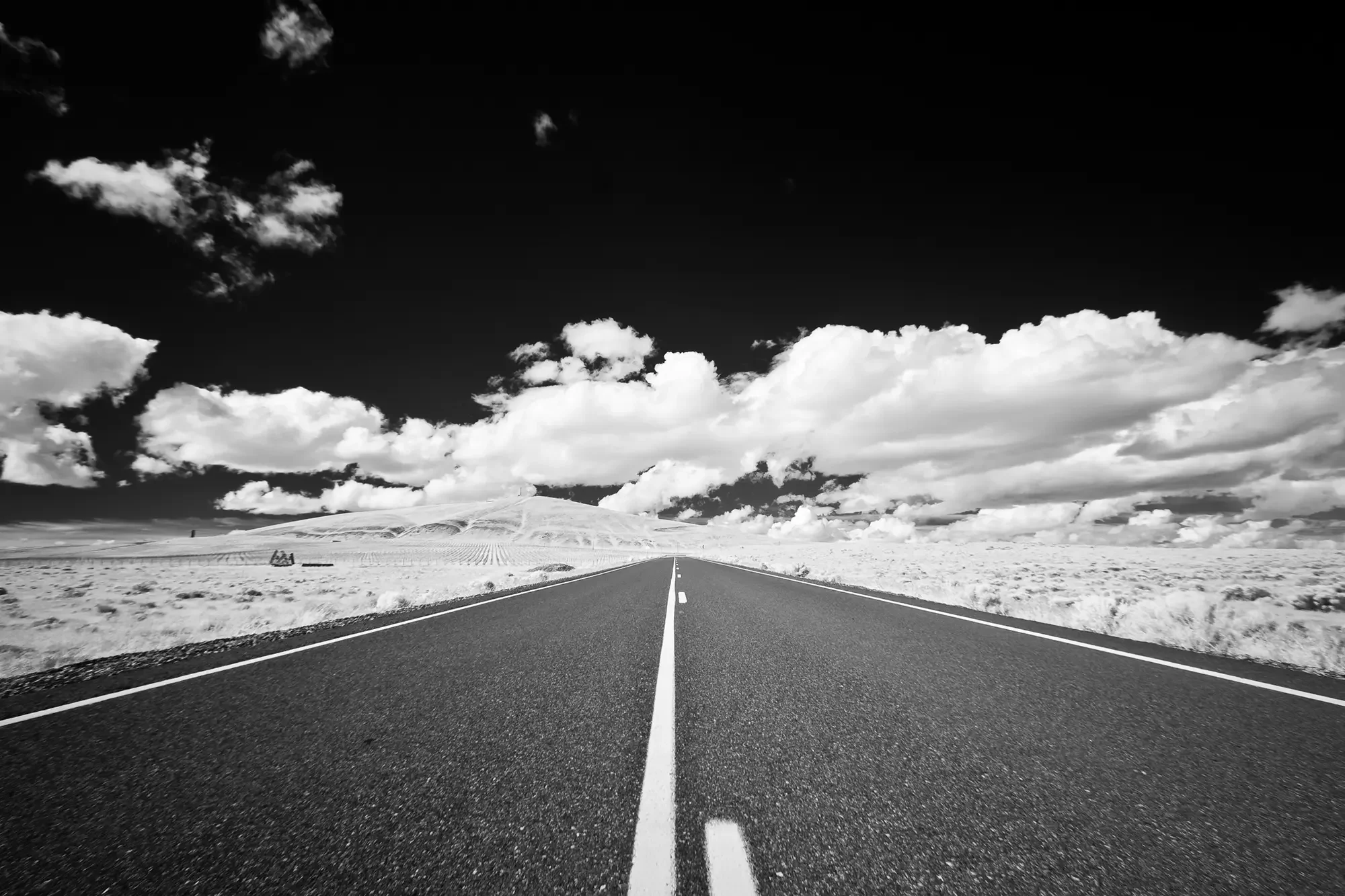
High Desert Road - From my time in Eastern Washington State
The grain elevator, the train rounding a curve through sagebrush: I made those in the last year, driving home from a corrections facility north of the Tri-Cities where I was documenting a program that trained shelter dogs. An hour of wheat fields and basalt hills and Columbia Basin light, and I started stopping for things I'd been driving past for three years without actually looking at them. The Simplot name on the side of the elevator in a small farm town. The flag. The low overcast. I had seen it every week. I had never seen it.
The Kentucky work had taught me to recognize that feeling. The attention that arrives with departure.
I thought I was still making arrival photographs. I wasn't, for the last year. I was making departure photographs again, and I didn't know it until I was in Tucson editing the files, and the two kinds of work were sitting next to each other, and the difference was visible.
That's what Unseen: Pacific Northwest is. Not a travelogue of a place I lived for three years, and not an infrared technique demonstration, though the process is doing real work throughout. It's the record of two different relationships to the same landscape, made without knowing they were two different things. The arrival work and the departure work share the same camera, the same process, the same plateau. The light is different in them. The looking is different.
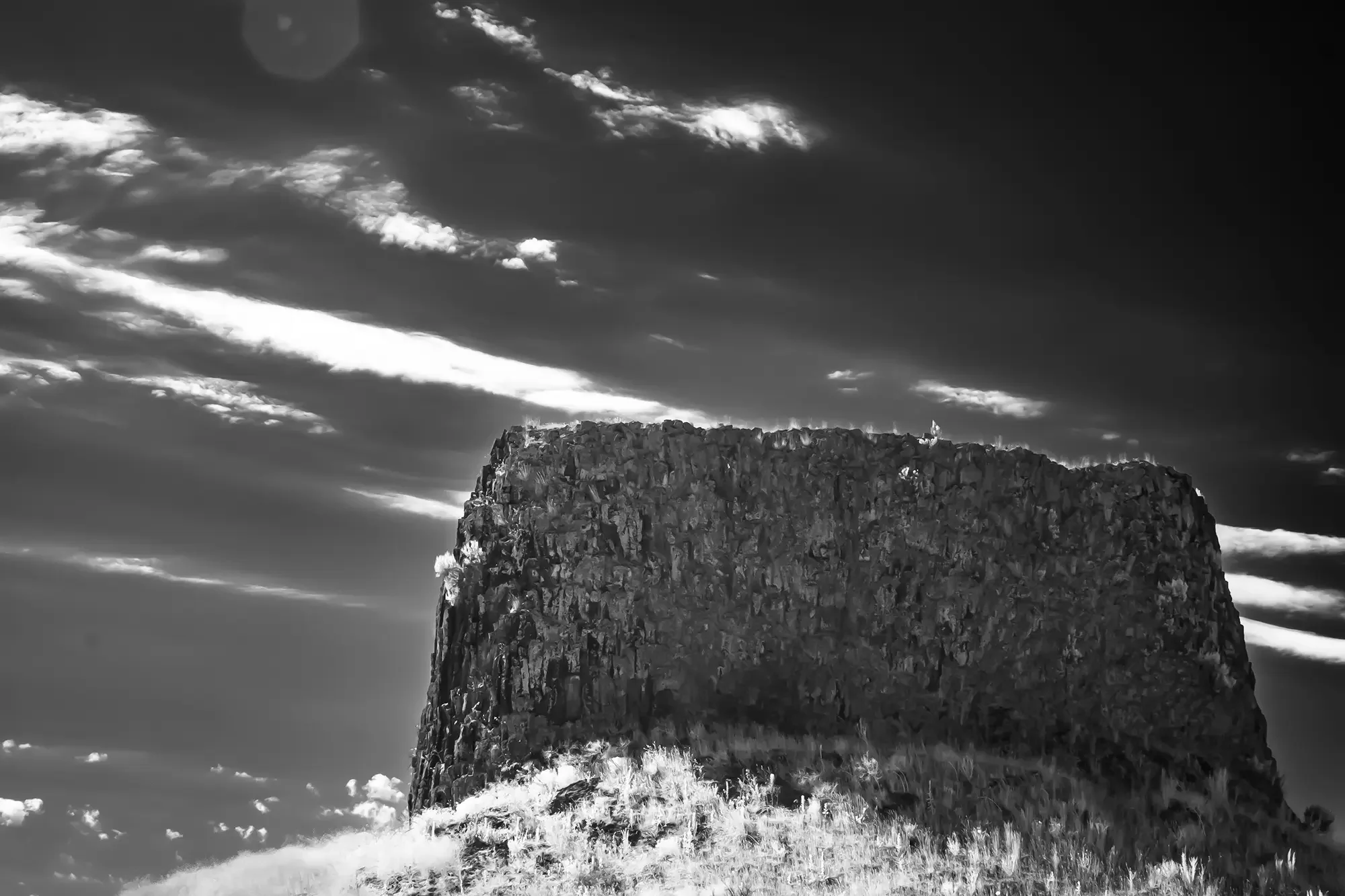
Basalt Butte, Eastern Washington
The full gallery is now live at michaelklothphotography.com. It includes the Columbia Basin landscapes, the basin sky studies, the Badger Mountain work, and the agricultural images from the last year of the series, alongside the series introduction. If you know the Kentucky work, you'll see the continuity. If this is the first of the infrared landscape series you've encountered, the road photographs are a good place to start.
