
Even Odds
In 2008, I finished my MFA thesis on shelter euthanasia. I called it "Even Odds" — because at the time, that's what the ASPCA data showed. Half the animals that entered a shelter didn't leave alive.
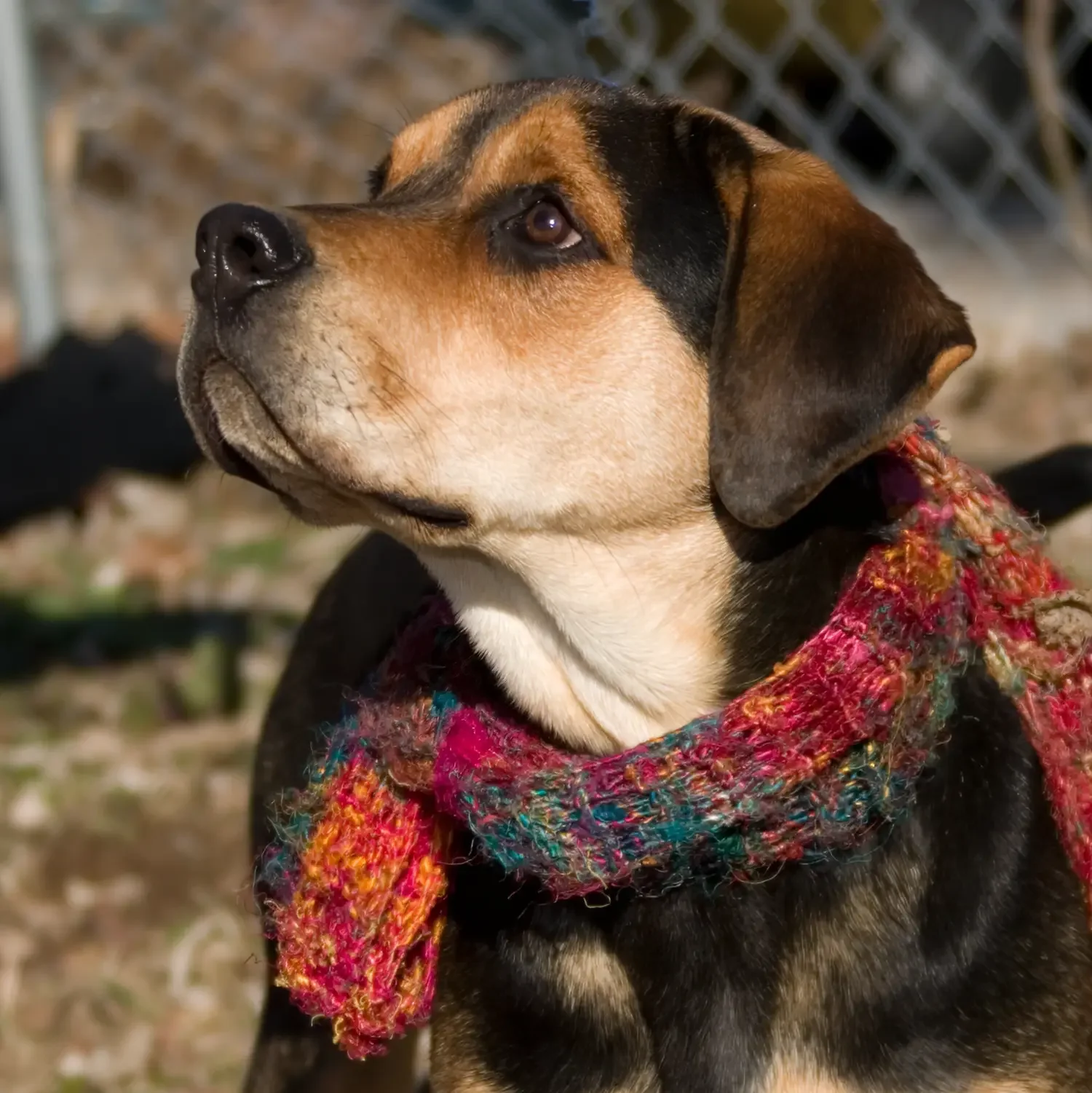
One of the early photos at Woodford Humane Society from 2006. It wasn’t long after this that I shifted to studio work for shelter animals as my default.
That thesis didn't come out of nowhere. I'd been photographing shelter animals at Woodford Humane Society in Versailles, Kentucky since 2005 — a year before I opened my photography business, three years before the degree was finished. When I moved to Washington state, I started working with the Benton-Franklin Humane Society and the Tri-Cities Animal Shelter. The thesis was the formal structure built around something I was already doing.
When I moved to Tucson at the end of 2011, I connected with Arizona Greyhound Rescue and PAWSitively Cats while I was getting established here. By September 2013, I was at Pima Animal Care Center. My first session there was September 10. I know because I still have the metadata.
Twenty years is a long time to do anything. What it produces isn't a highlight reel — it's something more like muscle memory. The particular patience you develop when an animal needs ten minutes just to settle. The way you learn to read a room before you set up the backdrop. The drive home after a session that went nowhere special. That's most of what sustained volunteer work actually is. Not the standout moments. The accumulation of unremarkable ones.
I remember one early PACC session where I drove out in a torrential rainstorm. The county had essentially shut down for the day. I'd already started setting up in the cat room when I realized what they actually needed that day wasn't photography. It was help cleaning kennels. So that's what I did.
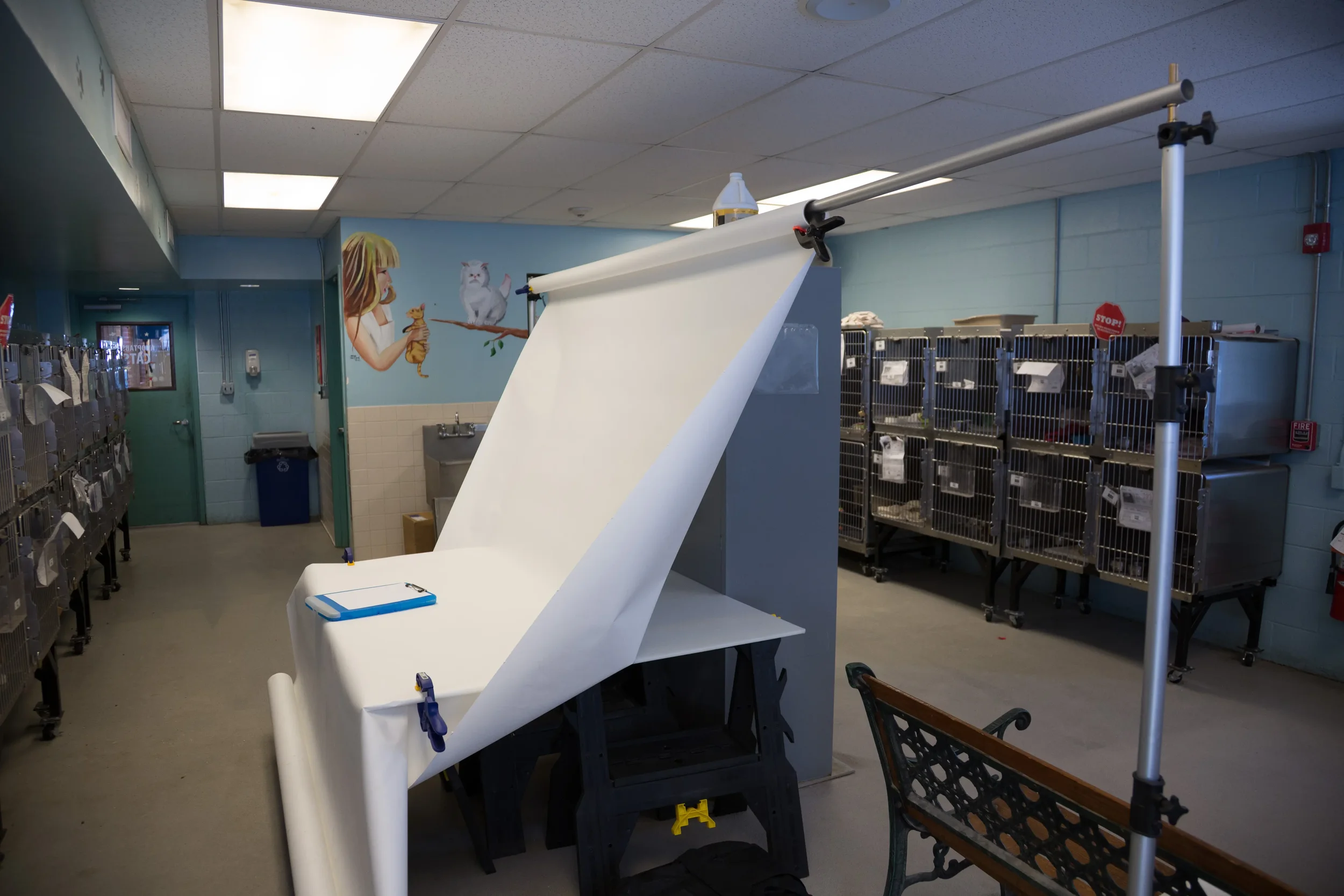
September 10, 2013. My first time working in the old cat room at PACC. That was well before the PACC upgrades.
That's the part of shelter volunteer work that doesn't make it into the portfolio.
The photography mattered too, though, in ways that occasionally surprised me. Around 2015, PACC was working to build the case for a dedicated behavior program — the goal was to create material strong enough to support grant applications. I documented a week-long pilot with an outside dog trainer: the work, the dogs, the process. Voice-inclusive video of trainers working with animals that might have been euthanized for behavioral reasons the year before. That footage went into grant proposals. Those grants funded a permanent behavior and enrichment team. Better behavior support means more animals become adoptable. More adoptable animals means more go home.
A photograph is rarely just a photograph in a shelter.
The numbers tell the broader story. In 2010, PACC euthanized more than 14,000 animals. By 2019, that number was under 1,000 — the lowest in the shelter's known history — with a live release rate above 91%. That transformation happened because of sustained investment in medical care, foster programs, behavior support, and a community that showed up. I was there for most of it, camera in hand, watching it happen one session at a time.
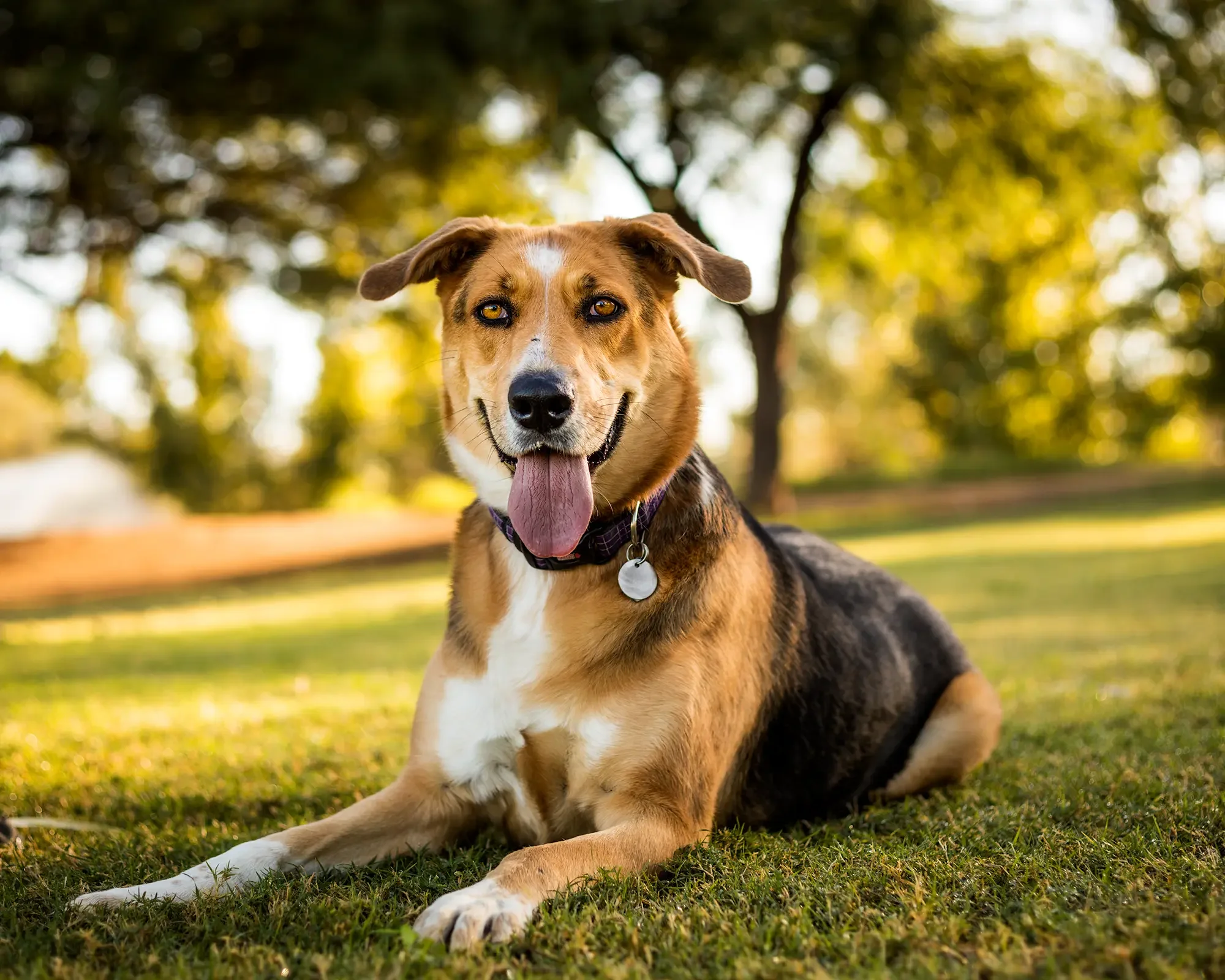
I photographed Sunny at Ft. Lowell park. If he looks familiar, you’ve probably seen him as one of the face of the public art at PACC. See the final image below.
This work extended beyond the camera in ways I didn't plan for. After Shelter Cats was published in 2010, I became a founding member of what would become HeARTs Speak — a network connecting photographers with shelters across the country. For six years I helped other photographers improve their shelter work, which felt like a way to multiply whatever impact a single person could have. I was also invited to help select the artist for Wild at Heart, the permanent sculpture at PACC's Silverbell Road location, and contributed my own shelter photography to Roger Stoller's stainless steel design. That sculpture is still there.
In 2020, I received the Community Service Recognition Award from the Southern Arizona Volunteer Management Association for the impact of volunteer photography on animal welfare advocacy at PACC and Friends of PACC. I include that not as a credential but as evidence that this work registers — that showing up with a camera, consistently, over years, adds up to something.
It's 2026 now. Early last year I started volunteering with the Humane Society of Southern Arizona as well, working with their team on video and photography for fundraising and adoption campaigns. The US shelter save rate is 82%, up from under 60% when I started this work. PACC is nationally recognized. The progress is real.
But PACC is also facing capacity pressure again. Early 2025 saw more dog euthanasia than the same period in 2024. The work isn't finished.
I'll be back out to do more of this work - it’s important.
If you're in Tucson and want to support PACC's work, fostering even one animal creates space for another.
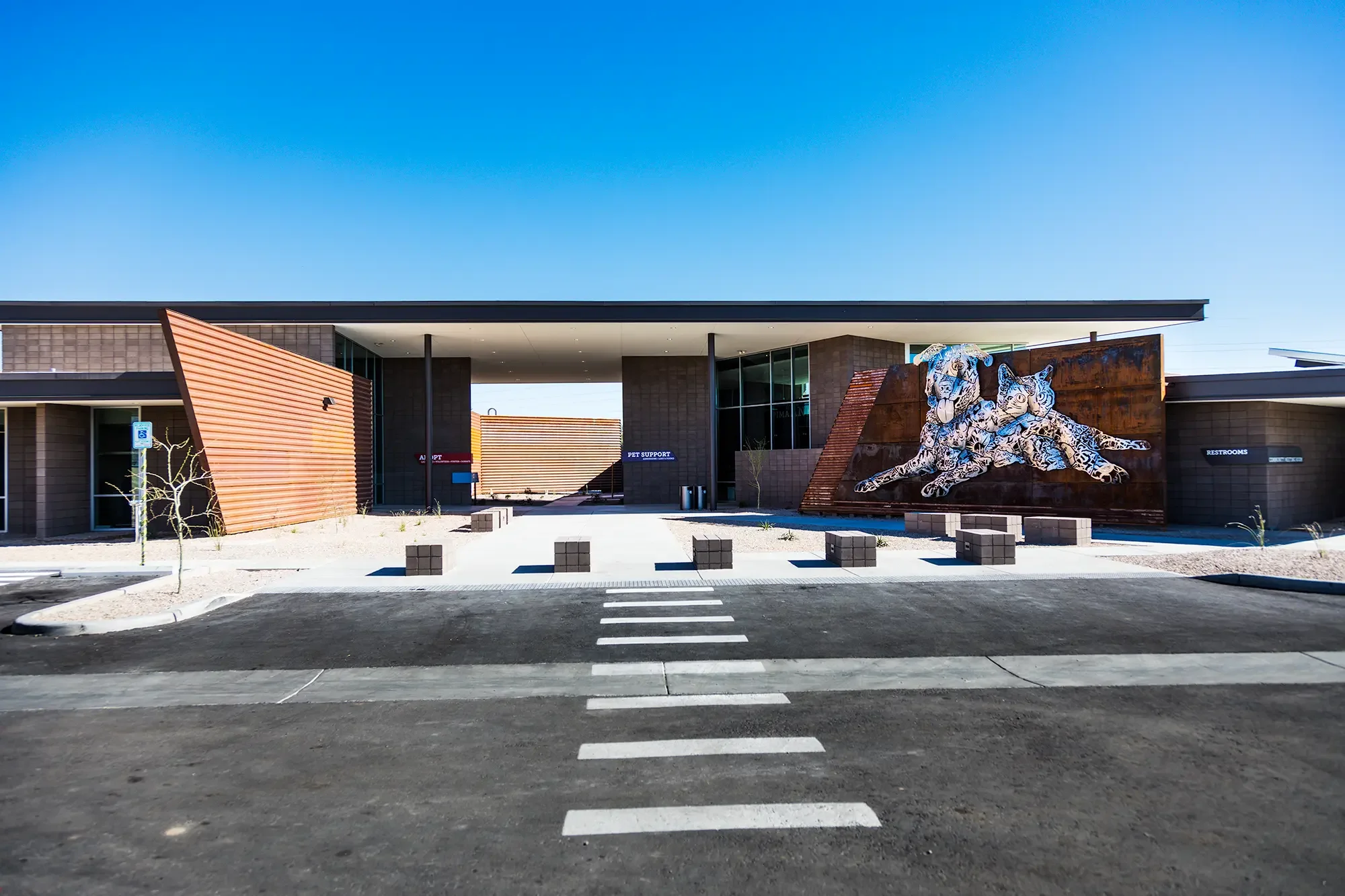
Pima Animal Care Center photographed shortly after the public art project was installed. The campus looks less fresh today and the trees are larger, but this is pretty much the same view today.
