
Why Professional Pet Photography Matters More Than You Think
I'm a professional photographer with an MFA, a CPP certification, and nearly 20 years of experience photographing animals. And my phone is still full of blurry photos of my own pets.
You know the ones I'm talking about. Your dog turns their head at exactly the wrong moment. Your cat moves just as you hit the shutter button. That perfect expression you've been waiting for gets captured as a motion-blur disaster. We've all been there, because smartphone cameras—as impressive as they've become—simply aren't designed for the reality of photographing animals who don't understand the concept of holding still.
But here's what I've learned after years of photographing pets professionally: the frustration with blurry phone photos isn't really about technical quality. It's about the gap between what you see with your heart and what the camera actually captures.
That time Chica moved too fast for my smartphone.
What Phone Cameras Miss
When you look at your dog, you don't just see fur and eyes. You see the way their entire body language changes when you come home. The intelligence in their expression when they're working through a puzzle toy. The trust and affection they show in quiet moments. Your phone camera captures pixels. Your mind sees personality.
Professional pet photography bridges that gap. It's not about making your pet look like a magazine cover model—it's about creating images that actually match what you see when you look at them. The patience in an older dog's eyes. The mischief in a young cat's posture. The bond between you and the animal who greets you every single day with genuine enthusiasm.
I've photographed thousands of pets over the years, both as commissioned work and through my regular volunteer photography, including at Pima Animal Care Center and the Humane Society of Southern Arizona. The technical requirements are the same whether I'm photographing a family's beloved companion or helping a shelter dog find a home: proper lighting that shows coat texture and eye detail, fast enough shutter speeds to freeze movement without blur, composition that emphasizes personality rather than just documenting appearance, and patience to wait for authentic moments instead of forcing poses.
The Time Factor Nobody Wants to Think About
There's something I hear from clients more than any other comment: "I wish I'd done this sooner."
Puppies become adult dogs faster than seems possible. Kittens grow into cats with surprising speed. That senior dog you've had for years? The grey around their muzzle appeared gradually, but one day you realize they've transitioned into their distinguished years and you don't have many sharp, clear photos from their younger days.
I photograph senior dogs regularly, and there's a specific beauty in their faces—the wisdom in their eyes, the character in their greying muzzles, the dignity in how they carry themselves. But almost every client wishes they'd also captured their dog at two years old, or five, or eight. Phone photos from those years exist, sure, but they're mostly blurry action shots or awkwardly lit snapshots that don't quite do justice to who that dog was at that moment in their life.
Professional photography isn't about vanity. It's about creating intentional documentation of someone who matters to you, while you still can.
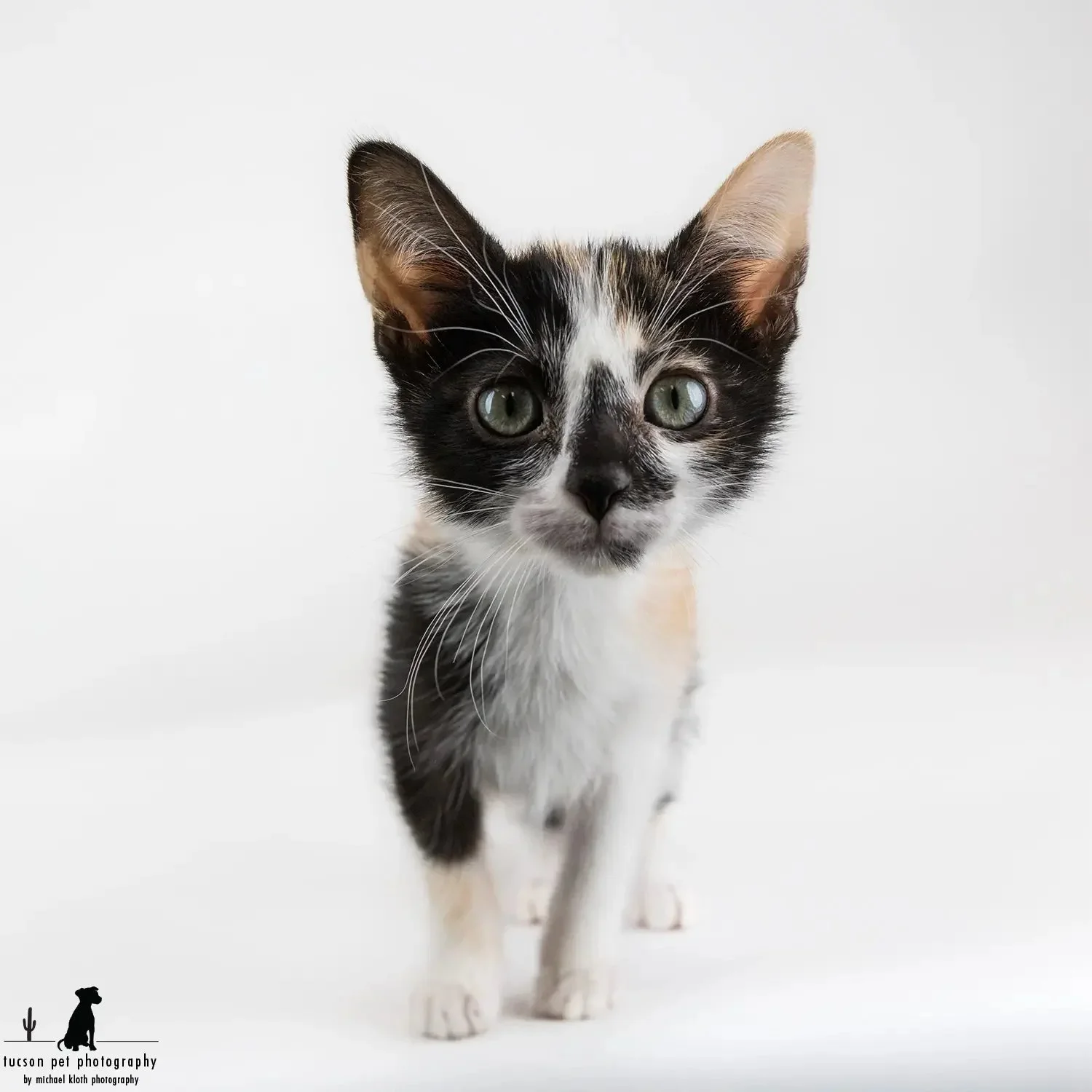
What Makes the Difference Technically
The gap between smartphone snapshots and professional pet photography comes down to three main factors: equipment capability, technical knowledge, and experience working with animals.
Equipment matters because pets move unpredictably. Professional cameras with fast autofocus systems, high frame rates, and excellent low-light performance can capture sharp images in situations where phones struggle. I can photograph a dog mid-run with every hair in focus. I can work in your home's natural light without everything turning grainy or blurry. I can freeze a cat mid-leap without motion blur.
Technical knowledge matters because lighting transforms how animals photograph. Your black lab might look like a dark blob in most snapshots, but proper lighting reveals coat texture, facial expression, and personality. Your light-colored dog photographed in bright sun might blow out to a featureless white shape, but controlled lighting maintains detail throughout.
Experience with animals matters because timing is everything. I know the body language that precedes a head tilt. I recognize when a dog is about to shift position. I understand cat behavior well enough to anticipate movements. This comes from photographing shelter animals weekly for nearly two decades and creating commissioned portraits of family pets throughout Tucson. You develop a sense for when to shoot and when to wait.
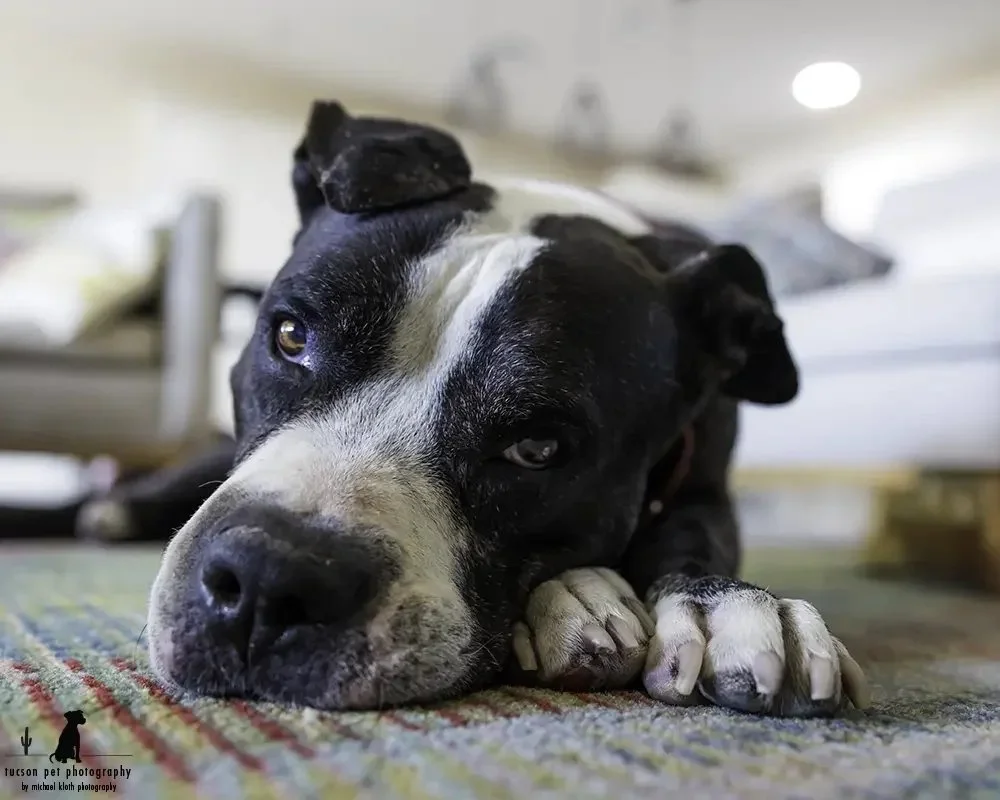
A senior pit bull pup photographed while resting in their living room.
Where We Create These Images
Tucson offers remarkable variety for pet photography locations. The dramatic desert landscape provides natural beauty that makes every image distinctly Southwestern. Saguaro silhouettes at sunset, mountain backdrops, the unique character of our local parks—these aren't just pretty backgrounds, they're part of your pet's actual life here.
I work throughout the greater Tucson area including Oro Valley, Marana, and Vail, bringing professional equipment to whatever location serves your vision best. Some clients prefer their home where their pet is most comfortable. Others choose local parks where their dog loves to play. The mobile studio approach means the location works for you and your pet rather than forcing you to adapt to a studio environment.
For clients who want controlled conditions, I also offer studio sessions where lighting is completely predictable and there are zero distractions. This works particularly well for cats, small animals, and dogs who get overstimulated in outdoor environments.
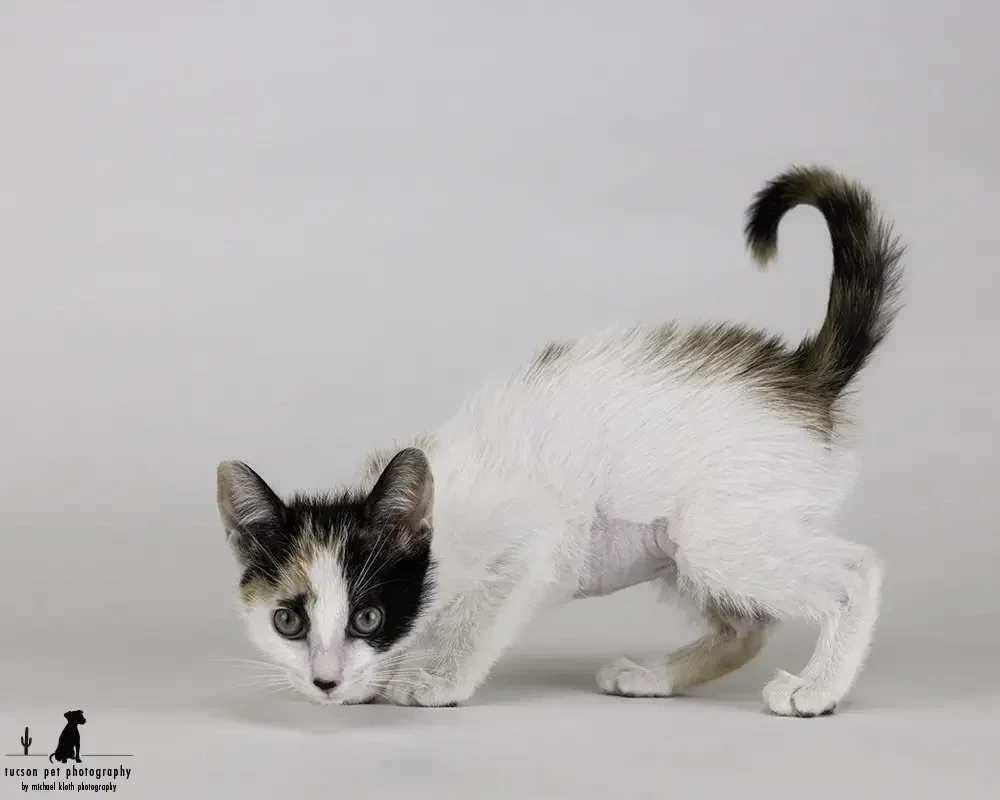
A studio portrait of a kitten
The Practical Reality of Investment
Professional pet photography sessions range from $275 to $1,500 depending on scope and deliverables. This represents a meaningful investment, and I understand the hesitation some people feel about spending that amount on pet photos.
Here's how I think about it. You spend thousands of dollars on veterinary care throughout your pet's life. You invest in quality food, comfortable beds, engaging toys, training classes. You do this because your pet's wellbeing matters to you. Professional photography is another form of that same investment—not in their physical health, but in preserving the relationship and memories you're building together.
The cost breaks down to something like a year's worth of fancy coffee drinks. It's a fraction of what you'll spend on pet care over a year. And unlike most things you spend money on for your pet, these images become more valuable over time rather than less.
Sessions include professional editing, high-resolution digital files with full personal use rights, print credit toward your first order, and all the patience and treats necessary to get genuine expressions rather than forced poses.
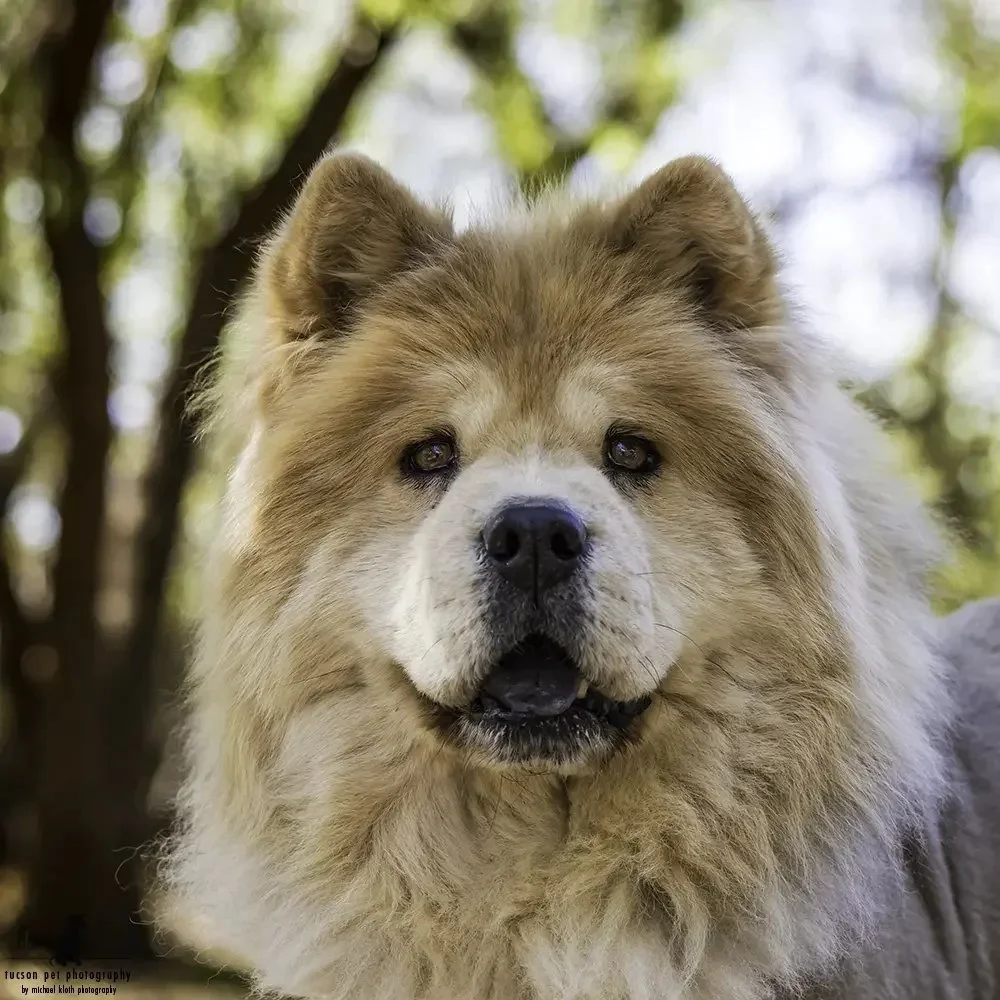
Simba posing like a king at Fort Lowell Park.
Why People Actually Book Sessions
Based on conversations with hundreds of clients over the years, people book professional pet photography sessions for a few recurring reasons.
The most common is simply reaching a point where they recognize their phone photos aren't capturing what they actually see when they look at their pet. They scroll through their camera roll and realize everything is slightly blurry, poorly lit, or just doesn't convey the personality they know is there.
Milestone moments drive many bookings. Adoption anniversaries, birthdays, or that realization that their "puppy" is now seven years old and they don't have a single sharp, well-lit photo from their adult years. Some people book sessions because their pet has just been diagnosed with a serious health condition and they want quality images while their companion is still healthy enough to enjoy a photo session.
Gift sessions are increasingly popular—friends or family members booking portraits for the pet-obsessed people in their lives. These tend to be among the most appreciated gifts because they recognize and honor the significance of that pet relationship.
And some people simply decide they're tired of having beautiful art on their walls that represents places they've visited or generic prints from stores, when the being who brings them the most joy daily is their pet. They want their home to reflect what actually matters most to them.
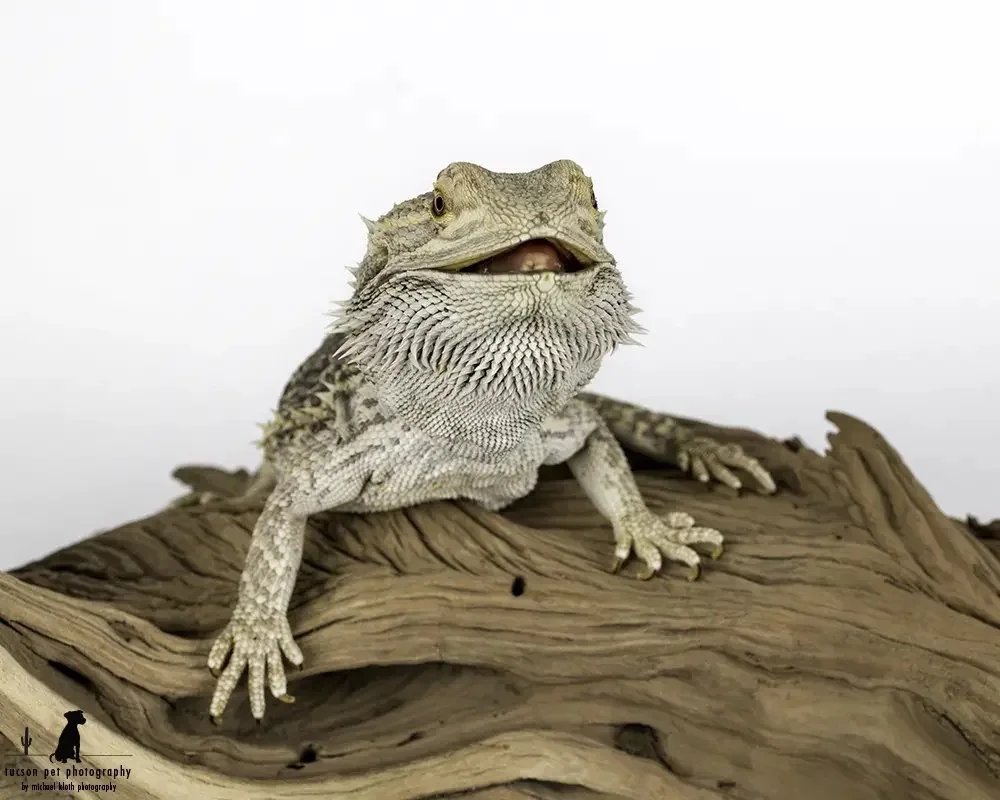
Don’t forget about your bearded dragons (or rabbits, hamsters, ferrets, or other beloved pets too)
What You Actually Get From a Session
Beyond the digital files and prints, professional pet photography creates something specific: images that match the emotional reality of your relationship with your pet.
You know how when you look at your dog, you see their entire personality? Their quirks, their expressions, their unique way of interacting with the world? Professional photography captures that in a way smartphone snapshots typically don't. The images show not just what your pet looks like, but who they are.
This matters more than you might expect. Years from now, those sharp, well-lit, personality-filled images will be what helps you remember not just what your pet looked like, but how they made you feel. The way they tilted their head when listening to you. The expression they had when completely relaxed and content. The energy they brought to everything they did.
I've photographed pets who've since passed away, and the feedback I hear from those clients consistently emphasizes how much those professional images matter after the loss. Phone snapshots exist, sure, but the professional portraits are the ones they frame, the ones they look at regularly, the ones that genuinely help them remember and celebrate their companion.
When to Actually Book This
The practical answer is: now, or at least soon.
Not because I'm trying to create urgency for sales purposes, but because the reality of pet lifespans means waiting doesn't work in your favor. Your pet is the age they are right now, at this moment. Next year they'll be older. In five years, significantly older. You can't go back and photograph your eight-year-old dog when they're twelve.
If you're reading this and thinking "we should probably do this," that thought is your answer. People rarely regret getting professional photos of their pets. They frequently regret waiting until it's too late or their pet's health has declined to the point where a photo session isn't realistic anymore.
Your pet doesn't need to be perfectly trained. They don't need professional grooming. They just need to be themselves. I work with whatever personality and energy level they bring to the session, whether that's calm and dignified or chaotic and enthusiastic.
Ready to Move Forward?
If you've read this far, you're probably already leaning toward booking a session. Let's talk about what that would look like for your specific situation—your pet's personality, your vision for the images, and timing that works for your schedule.
Professional pet photography isn't about perfection. It's about creating honest, beautiful documentation of someone who matters enormously to you, while you still have the time to do it.
I've specialized in professional pet photography throughout Tucson since 2011, combining MFA-level fine art training with nearly 20 years of regular volunteer photography at Pima Animal Care Center. Every session brings the same commitment to quality and patience I apply to helping shelter animals find homes—because your pet deserves images that genuinely reflect who they are.
