
Where Photography Takes You: Inside Tucson Medical Center's Operating Rooms
A camera opens doors you never expect to walk through. Operating rooms at Tucson Medical Center. Robotic surgery suites. Pediatric recovery rooms where families wait for their children to wake up. Each place taught me something different about photography, and reminded me that the most useful lessons often come from the strangest assignments.
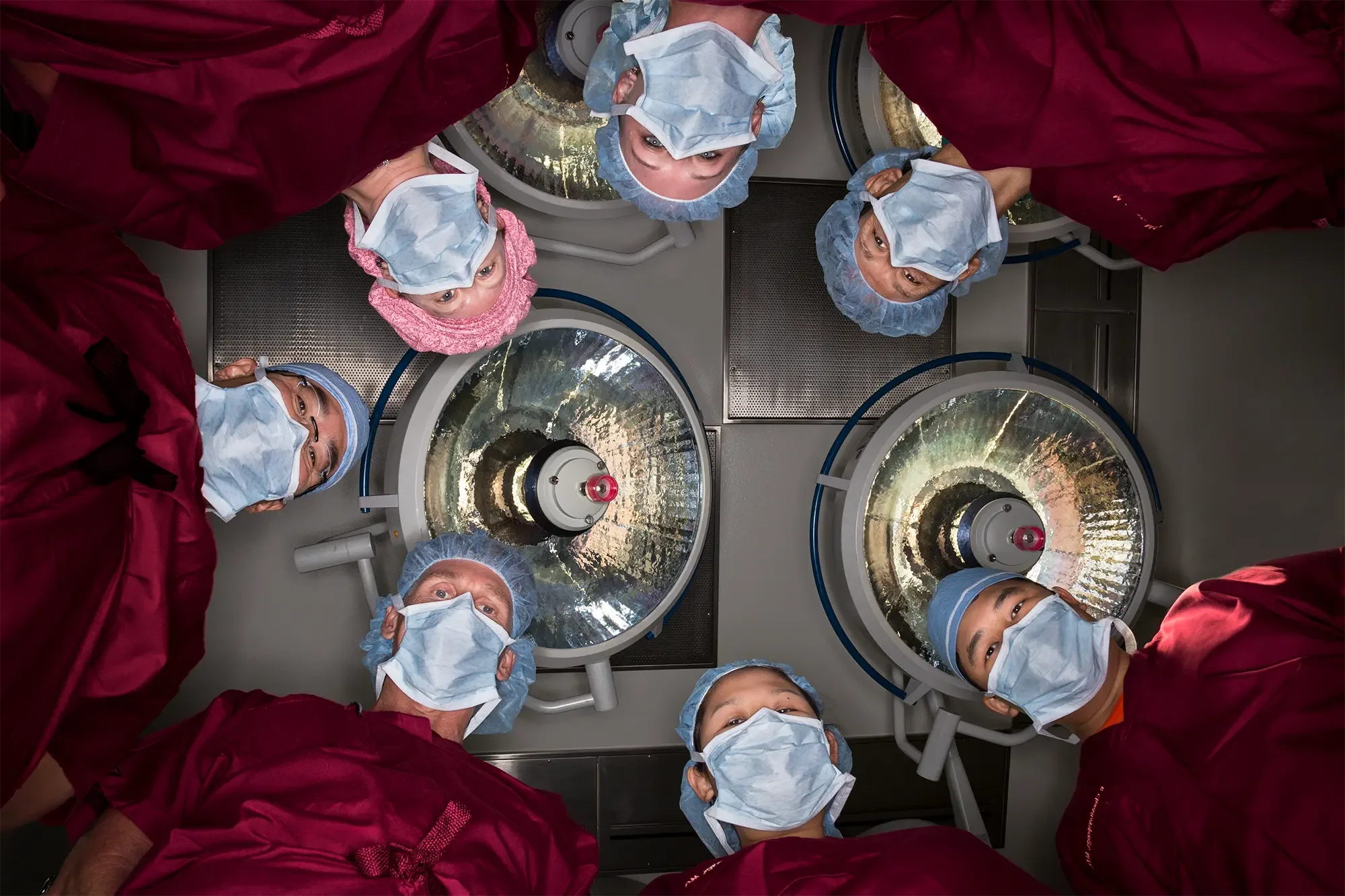
Photographing in TMC's operating rooms required finding angles that told the story without compromising sterile fields or patient care.
The first time I photographed in an OR at TMC, I thought I knew what I was agreeing to.
The Setup
An anesthesia group needed marketing materials for their website and Tucson Lifestyle magazine advertisements. I knew the practice manager, which got me in the door for the initial conversation. The first project seemed straightforward enough: photograph the group in an empty operating room on a weekend. No patients, no active procedures, just a clean team photo for print advertising.
That session went well. Two years later, they came back wanting to build out their stock photography library—this time documenting actual patient care.
Simple enough request. Until I started thinking through what that actually meant.
The Challenges
Patient privacy wasn't just important—it was legally mandated. Every release had to be coordinated in advance, every patient fully informed and consenting. There was no room for "we'll figure it out later."
Sterility protocols were absolute. The sterile field around the surgical site couldn't be compromised. Period. If I needed a different angle, I found it without crossing that line. If the angle didn't exist, I worked with what I had.
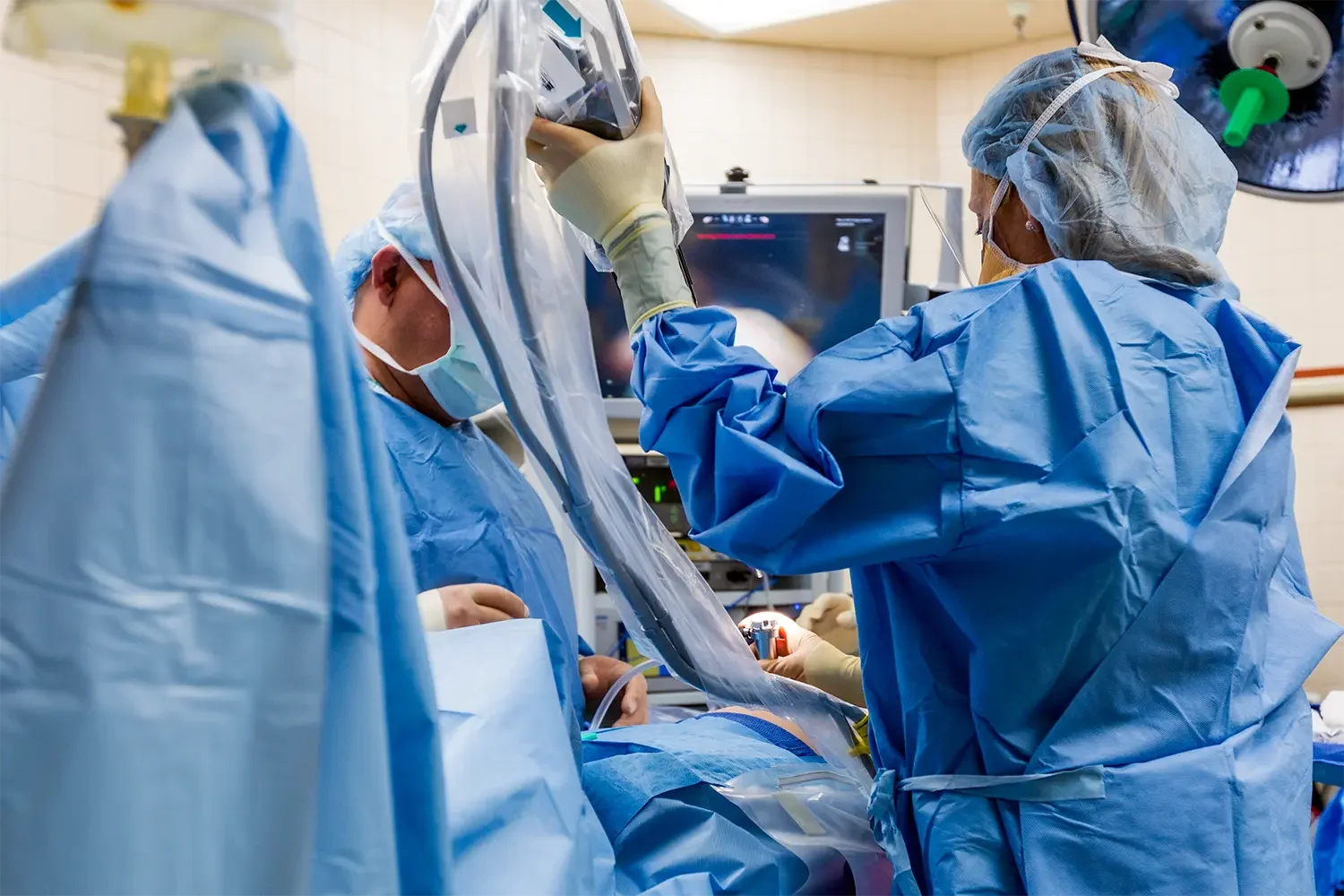
Documenting robotic surgery preparation meant staying invisible in a space barely large enough for the equipment and surgical team.
The spaces themselves weren't designed for photography. Operating rooms were built for the medical efficiency of decades past, workflows that don't necessarily reflect current surgical needs, much less visual storytelling. Equipment crowds every corner. Surgical lights create harsh overhead illumination. There's no moving furniture to improve composition, no adjusting the lighting setup to create better angles.
And above all else: I could not disrupt patient care. The anesthesiologists' attention stayed on their patients. If I needed something, I waited. If a procedure demanded their full focus, I disappeared into the background.
The logistics took coordination. Surgical calendars, patient consent timelines, everyone's availability. We shot over multiple sessions, grabbing moments when everything aligned.
The Execution
The active patient care session happened during real procedures. I documented epidural placements, nerve blocks, intubations. The core work of anesthesiology, captured without interfering with the medical team's workflow.
For the robotic surgery prep, I watched the team position the Da Vinci robot's arms around the patient. High-tech choreography in a space barely large enough for the equipment and the surgical team, much less a photographer trying to stay out of the way.
We scheduled a separate weekend session in the pediatric recovery room, photographing their pediatric anesthesiologists in the colorful, child-friendly space where young patients wake up from surgery. No active patient care this time, but the environment told its own story about the range of their practice.
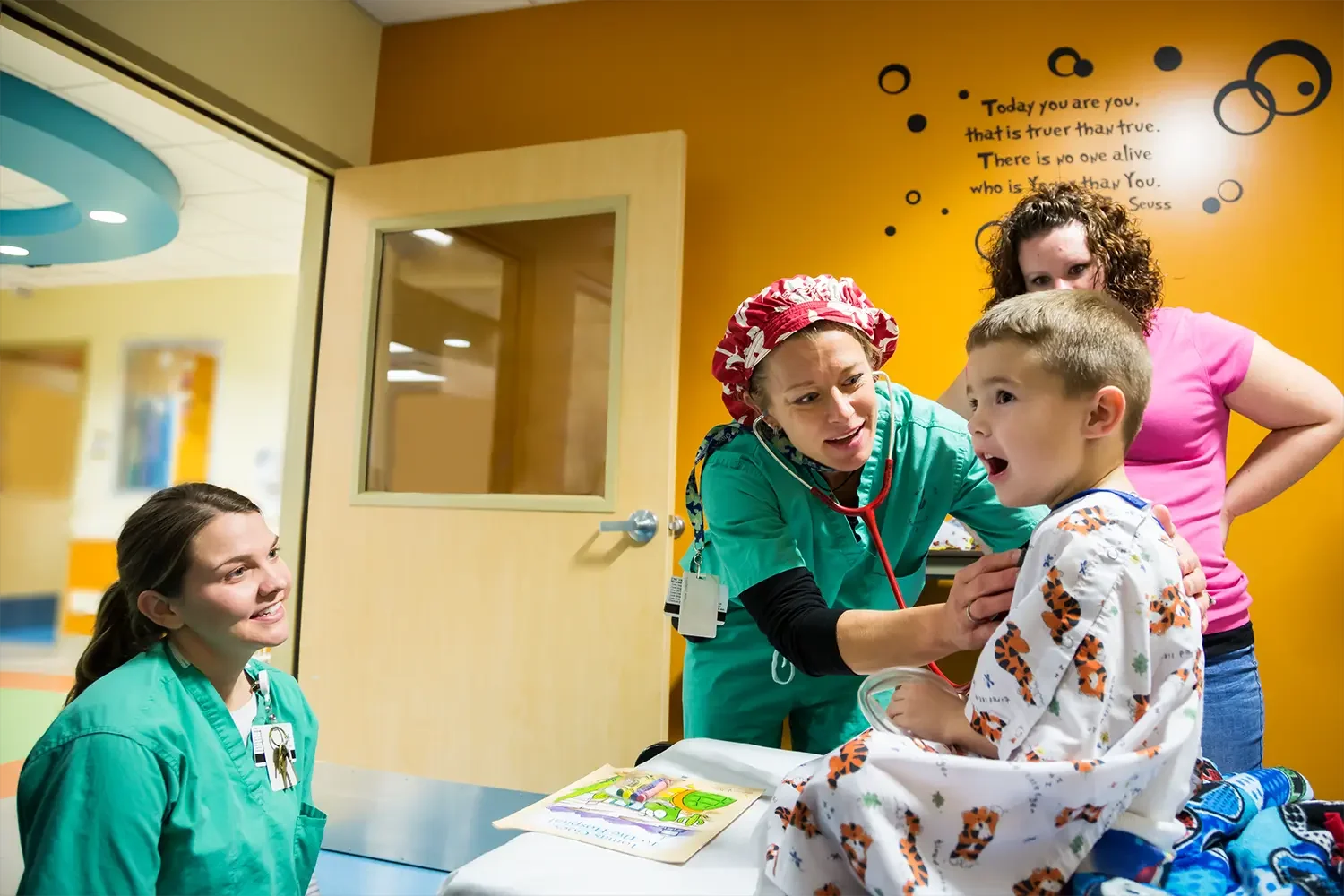
Weekend sessions in the pediatric recovery room showed the full range of anesthesiology—from complex procedures to the gentle care of young patients.
Some things worked. Some didn't. I photographed in a recovery room decorated for Valentine's Day and spent an hour in post-production removing heart cutouts from doors because I hadn't wanted to slow things down by taking five minutes to remove them during the shoot.
The sterile field taught me about non-negotiable constraints in medical environments. The Valentine's decorations taught me something else: some elements of my practice should be non-negotiable too. I was hired for my expertise. My point of view matters. Taking those five minutes to address the decorations wasn't an imposition—it was part of delivering professional work that would serve their marketing needs for years, not just that afternoon.
By planning together and respecting what matters to both sides, we create imagery that actually works. Their expertise in patient care. Mine in creating images that tell their story effectively.
Looking back, I can see better angles I might have found. Moments I could have anticipated more effectively. You learn by doing, and you keep learning.
What Carried Forward
I use patience from those surgical suites when I'm photographing an anxious shelter dog who needs ten minutes to decide I'm not a threat. The discipline of working within absolute constraints shows up when a nervous executive tells me they hate cameras but need headshots anyway. Staying professional and invisible in high-stakes environments translates to every mobile studio session where I need to work with whatever space a client has available.
The anesthesia group isn't in business anymore, but what I learned in those TMC sessions shows up in every project. Expect the unexpected. Stay adaptable. Be ready for what comes next. Whether I'm photographing your medical practice, creating portraits of your companion, or documenting your professional headshots, the same approach applies.
Over the next few months, I'll share more stories about where this work has taken me and what each place taught me about photography.
