
From the Parking Lot to the OR:
A Morning at Friends of PACC Community Pet Clinic
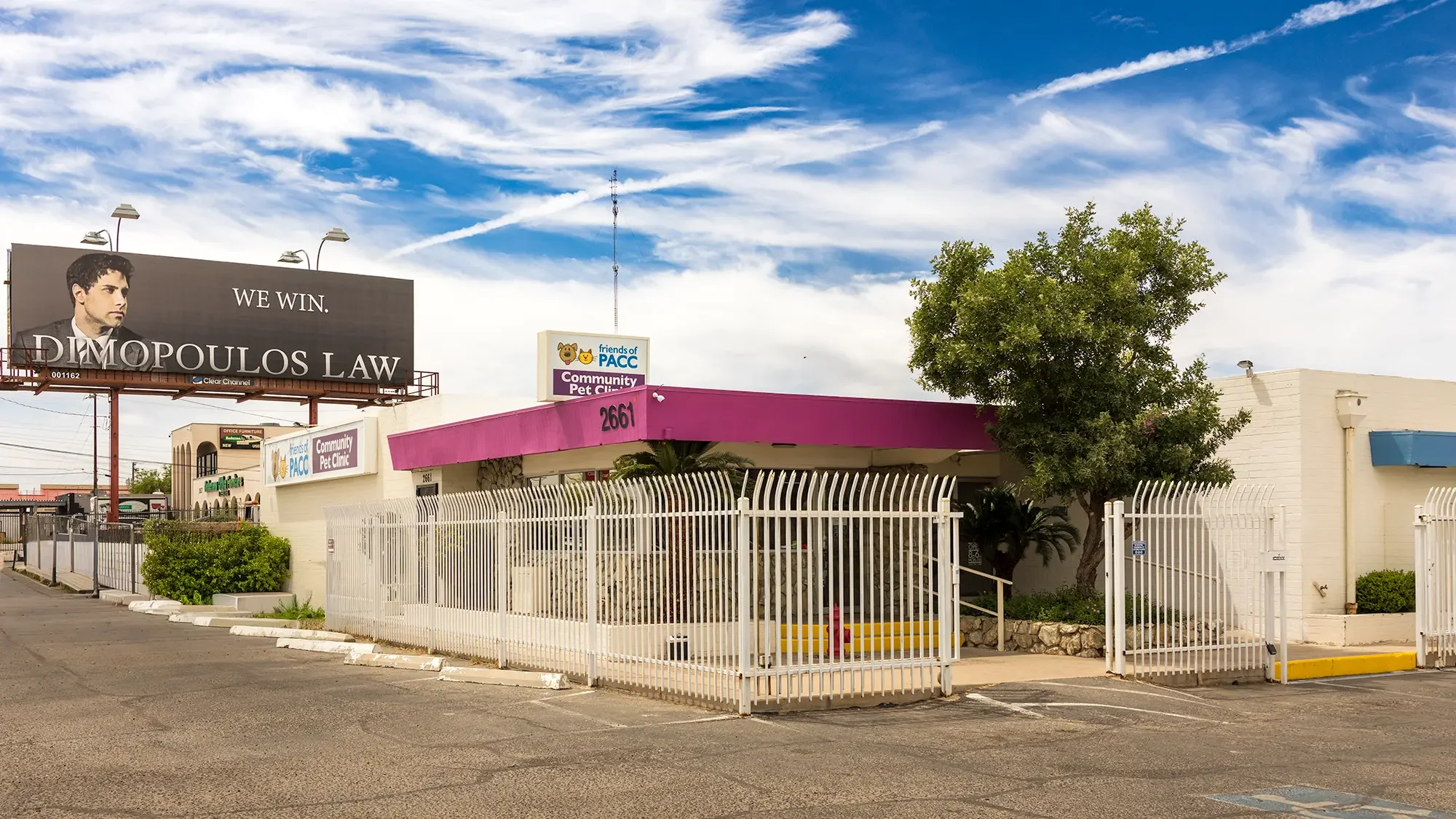
The Friends of PACC Community Pet Clinic is dedicated to providing affordable veterinary services to the Tucson community.
I arrived at 7:15, while the parking lot was still mostly empty. The plan was to get a few clean exterior shots before the morning drop-off rush filled the lot with cars. The light was good, the signage was readable, and I had the place to myself. That part went fine.
What I didn't plan on was catching a dog.
A client was waiting near the gate with her dog when the leash got away from her. The dog made a break for it just as another dog was coming through the lot, and I had maybe a second to react. Camera bag over my shoulder, camera in my right hand, I grabbed the leash with my left before things got complicated. One of the staff came out to open the gate a moment later, and I followed them in to start setting up.
That's how I got inside the Friends of PACC Community Pet Clinic on a Monday morning. Not quite how I'd planned it, but I can be flexible.
I've been volunteering as photographer for Friends of PACC since the organization was founded in 2016. (You can read more about that history on my community involvement page.) When Torre, the Executive Director, and Cessie, the clinic's Practice Manager, reached out about creating images for their website and marketing materials, saying yes was easy. The more interesting question was how to make the most of a single morning.
The answer, it turned out, was: a lot.
Studio Portraits First
We'd agreed in our pre-session planning meeting to start with portraits. I converted their largest exam room into a temporary studio, which is the mobile studio model I use for veterinary practice photography: professional lighting, no fixed location, everything travels with me and gets set up wherever it's needed.
Five clinic staff members brought their dogs in for portraits, and we photographed each person with their animal. Three board of directors (a mix of Friends of PACC board members and clinic-specific board members) came in for individual portraits as well. Everyone got in and out quickly, which was the point. Board members have their own jobs to get back to. The portraits needed to be professional and efficient, and they were, most sessions done inside of five minutes.
Once the studio sessions were finished, I moved everyone outside for a group portrait at the clinic's front entrance, then broke down all the gear and loaded it back into the car.
There's a specific mental shift that happens when you pack down a studio. The controlled part of the day is over. You've managed the light, the background, the direction, the timing. Everything that comes next is the opposite of that: whatever is happening in the clinic, as it's happening, and your job is to be in the right place when it does.
Inside the Clinic
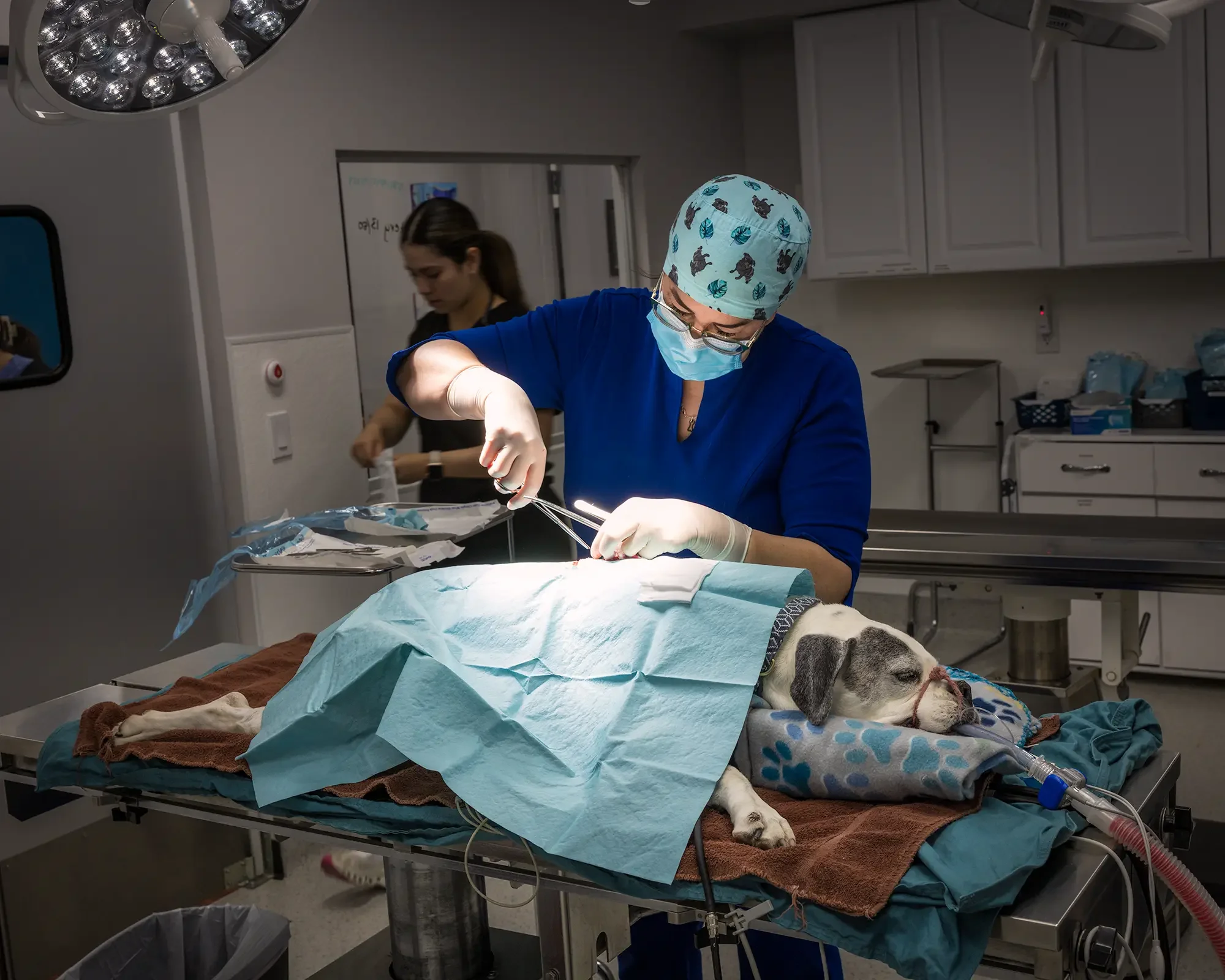
It turns out a dog’s back is the best place to do this kind of surgery - the loose skin makes closing easy.
The next few hours were documentary work: following the staff through their actual day, photographing the care as it happened.
Here's what the morning covered:
Dog exams
Customer service staff at the front desk
Cyst removal surgery. The dog was already on the table when I walked in, anesthetized and draped, the veterinarian mid-procedure. Surgical light has a quality you can't replicate anywhere else in a clinic, focused and cold and oddly beautiful. The surgeon at work, a second staff member visible in the background, instrument trays to the side: it's one of the stronger frames from the day, and also one of the more unusual ones to have made in the context of a nonprofit subsidized clinic.
Intubation of the next dog in the surgical queue (a spay)
A full radiograph series. Valley fever was suspected, which means imaging every joint, not just the obvious ones. Valley fever is a fact of life in southern Arizona for pets and people alike. Seeing it show up in a veterinary context, the tech in a lead apron positioning each limb carefully under the InnoVet unit while the previous image populates on the monitor, is a reminder of how much this desert environment shapes the medicine practiced here.
Abdominal ultrasound
Bloodwork on the IDEXX machine
A cat examined and treated about a week post-spay for infection
Feline dental cleaning. When I came into the room, two techs were working on the cat: one holding her, the other trying to get an IV line placed so she could administer the propofol. The cat wasn't cooperating. After a few minutes, Cessie stepped in, got the line, and they moved the cat to the dental table. Then someone noticed the heart rate monitor wasn't reading. There was a moment of concern before I spotted it: the power adapter had separated at the connection point. I mentioned it, they plugged it back in, and the monitor came to life. Photographer's eye for detail has its uses. The cleaning itself, once underway, was the kind of focused close work that photographs well precisely because everything is small and deliberate: hands, instruments, patient, all in one frame.
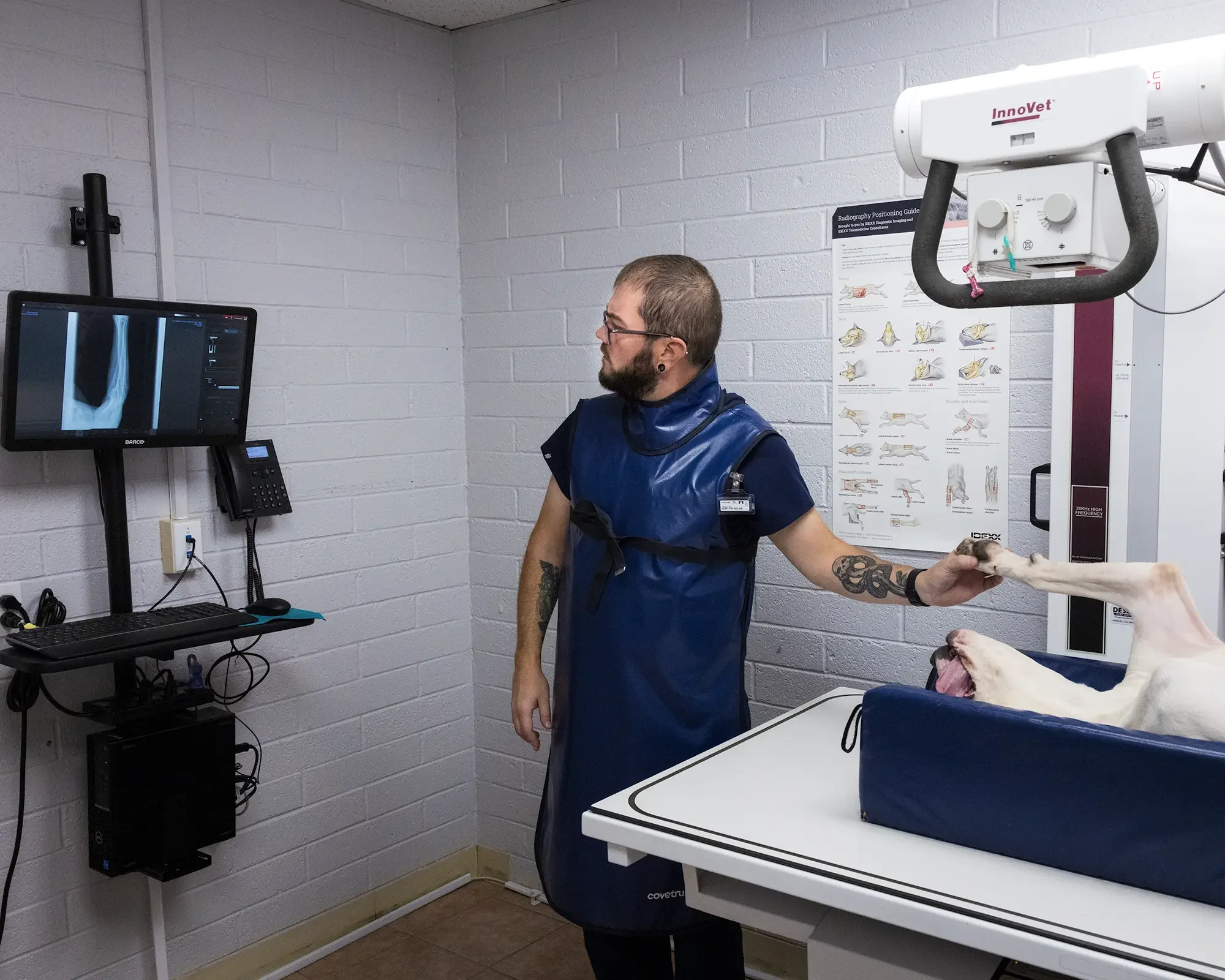
The vet tech holds the leg in position while checking to make sure he got what the doctor needed.
Clients of the subsidized clinic sign waivers allowing their animals' care to be used in the clinic's promotional and fundraising materials, so this kind of documentary access is built into the program.
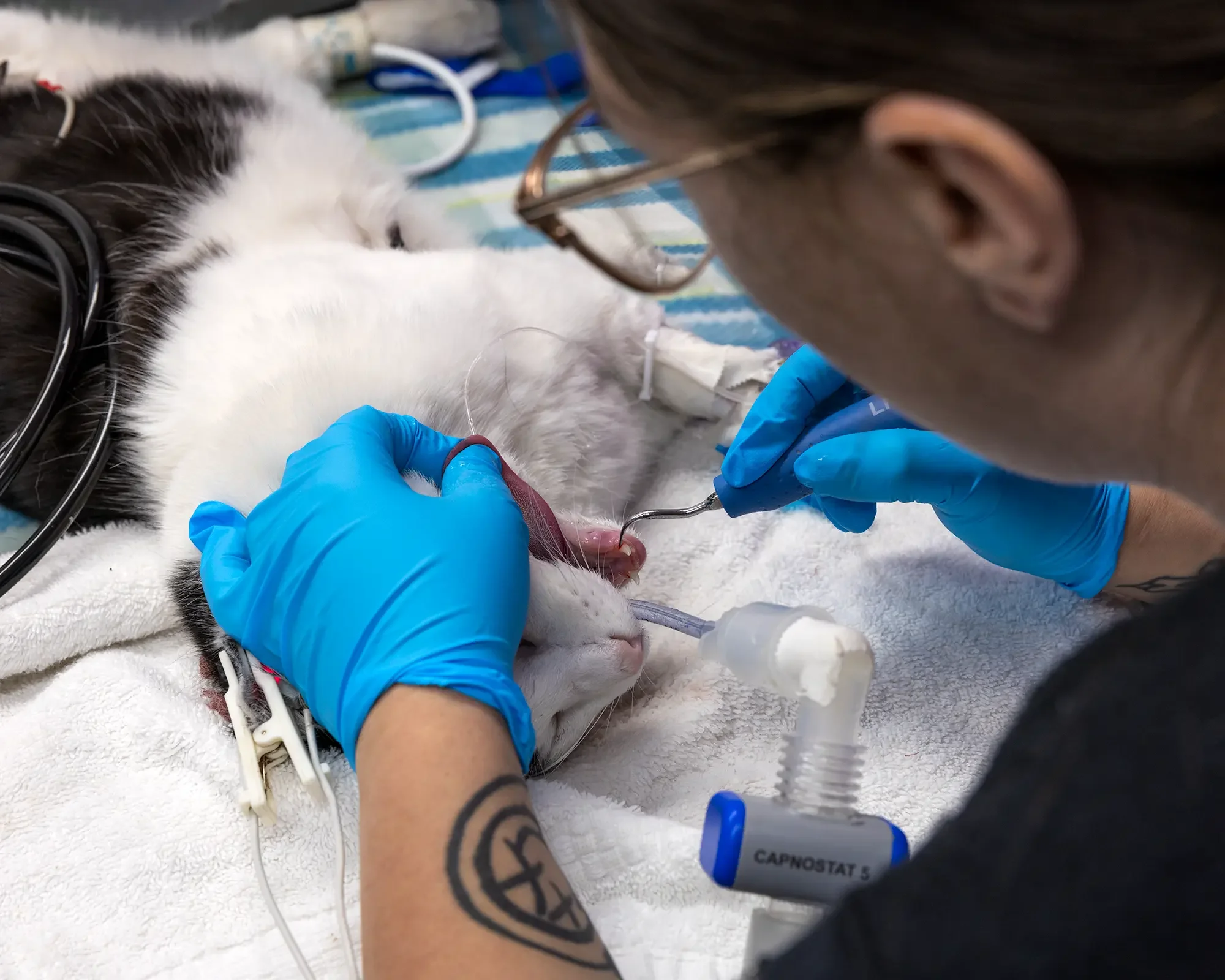
I didn’t expect the holding the tongue out of the way detail before the procedure started.
What This Kind of Assignment Looks Like
From the outside, "a photo shoot at a veterinary clinic" sounds like a morning of smiling staff portraits. And that's part of it. But the full scope of organizational photography for a place like this runs from the exterior shot before anyone arrives, to the studio portrait with a board member who has somewhere to be in an hour, to standing in a surgical suite while someone removes a cyst from a sedated dog, to noticing that a power adapter has come loose.
Five hours. Eight studio portraits, one group photo, and more clinical documentation than I can count.
The cull and post-processing come next, and then I'll deliver a library of images the clinic can use across their website and marketing materials. That's the part that takes longer than people expect. But it's also the part where a morning's work turns into something the organization can use for years.
If you work with a veterinary practice that needs updated imagery, you can find more about how I approach that work at michaelklothphotography.com/veterinary-practices.
